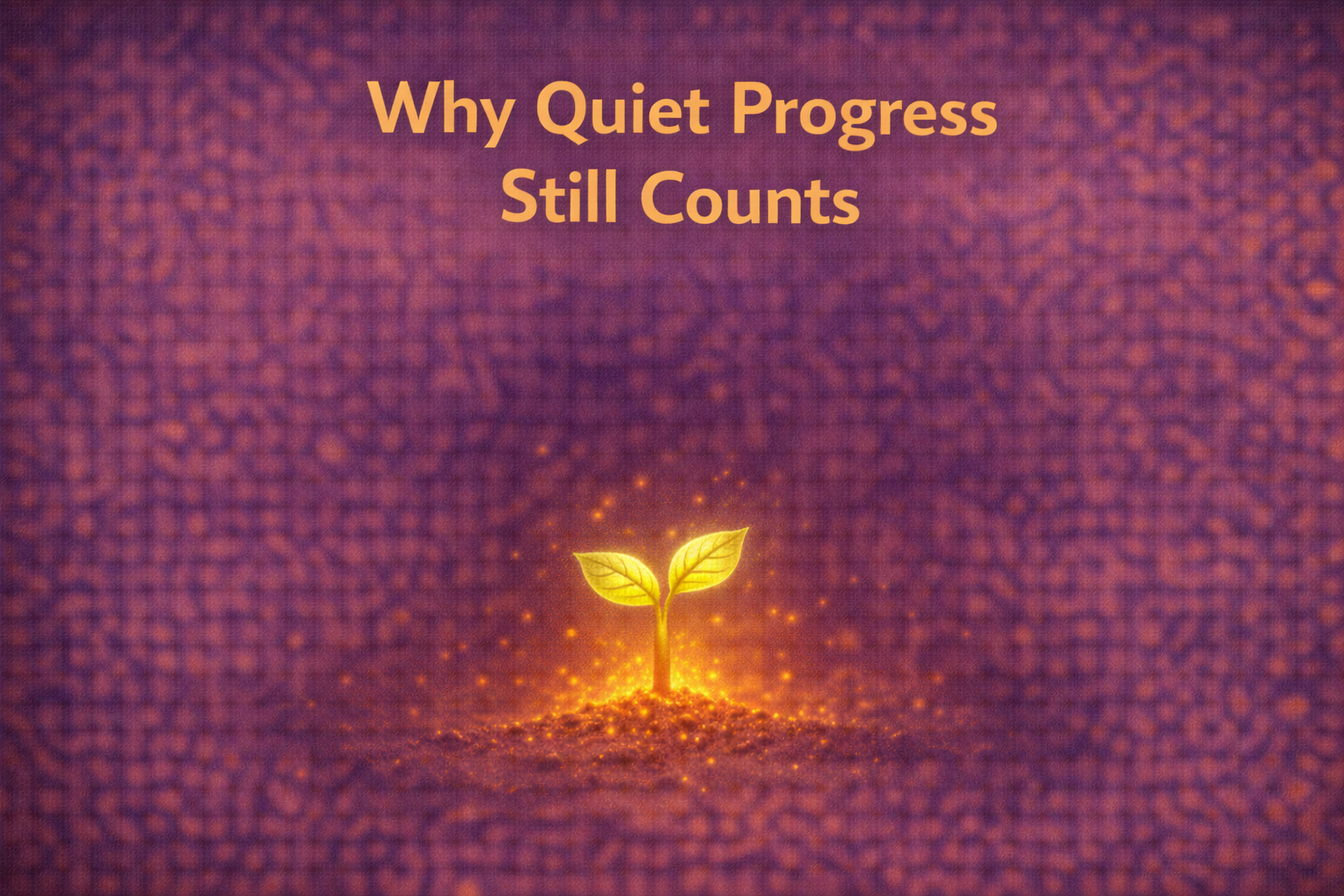
Not all progress is visible.
Sometimes there are no likes.
No comments.
No big wins to point to.
Just effort.
And because it’s quiet… it’s easy to think it doesn’t count.
But it does.
The Illusion of Visible Success
Online, it looks like everything happens fast.
- Big launches
- Viral posts
- Overnight results
But what you don’t see is the work behind it:
- The early posts no one read
- The emails no one opened
- The systems that took time to build
Most progress happens before anyone notices.
What Quiet Progress Looks Like
Quiet progress is:
- Writing when no one is watching
- Learning when results are slow
- Improving without immediate feedback
- Showing up without recognition
It’s not exciting.
But it’s necessary.
Why It Matters More Than You Think
Every small action builds something:
- Skills improve
- Systems get stronger
- Confidence grows
- Clarity increases
Even if there’s no visible result yet…
You’re not in the same place you were before.
The Danger of Ignoring It
If you only value visible results, you’ll feel stuck.
And when you feel stuck, you’re more likely to:
- Quit early
- Change direction
- Abandon what’s working
Not because it failed…
But because it hasn’t been seen yet.
Progress Before Results
Results are delayed.
Progress happens immediately.
That means:
- You can control progress
- You can measure effort
- You can build momentum
Even when results haven’t caught up yet.
A Better Way to Track Growth
Instead of asking:
“What did I get?”
Ask:
“What did I build?”
Track things like:
- Content created
- Systems completed
- Actions taken
- Skills improved
These are the real indicators of movement.
Trust the Process
Quiet progress feels slow.
But it’s often the phase right before things start working.
What looks like nothing… is usually something building.
Final Thought
Not all progress needs to be loud to be real.
Keep showing up.
Keep building.
Keep improving.
Because the work you do quietly today…
Is what creates visible results later.