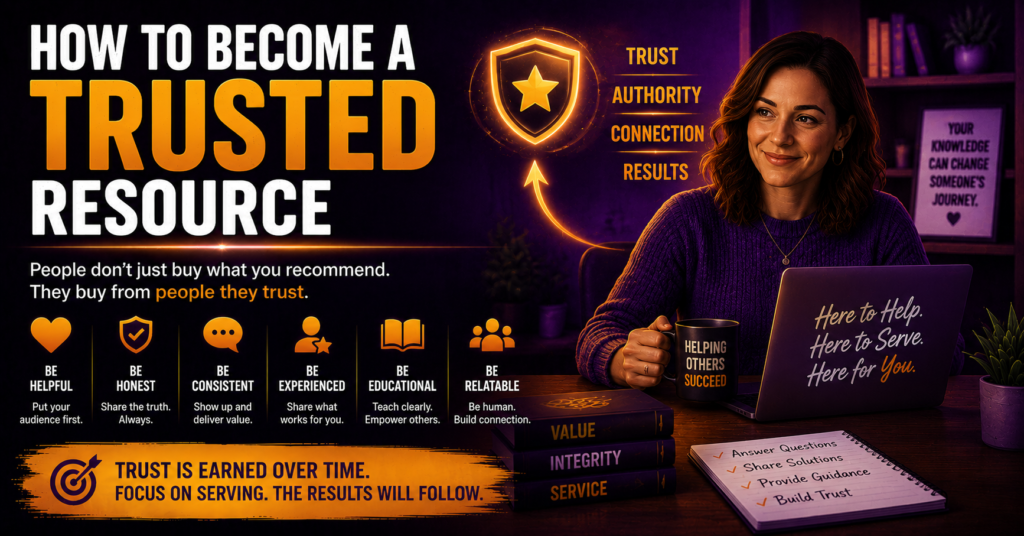
There’s a big difference between getting someone’s attention and earning their trust.
Attention might bring someone to your blog once.
Trust brings them back.
And in affiliate marketing, becoming someone your audience trusts can be far more valuable than constantly trying to find new people to promote to.
The goal isn’t simply to become another person recommending products.
The goal is to become a trusted resource people turn to when they need help making a decision.
Start With Their Problem, Not Your Product
It’s easy to approach affiliate marketing by asking:
“What can I promote today?”
Try turning that question around.
Ask:
“What does my audience need help with today?”
That small shift changes the way you create content.
Instead of starting with an affiliate product and trying to build content around it, you start with a real problem and look for the best way to solve it.
Sometimes that solution will include an affiliate product.
Sometimes it won’t.
And that’s exactly why people begin to trust you.
Answer the Questions Others Skip
Some of your most useful content can come from simple questions.
Think about the things you wondered when you were getting started:
- Is this tool really necessary?
- Is there a cheaper alternative?
- How difficult is this to set up?
- What happens after I sign up?
- Is this appropriate for a beginner?
- What are the downsides?
Those questions may seem basic once you know the answers.
But to someone just starting out, they’re important.
Answering them clearly makes your website useful.
And useful websites get remembered.
Don’t Be Afraid to Say Who Something Isn’t For
A recommendation becomes much more believable when you’re willing to explain its limitations.
If a product is great for beginners but probably too basic for experienced marketers, say so.
If there’s an additional expense people should know about, mention it.
If a free option might be enough for someone who’s just starting, tell them.
You may occasionally lose a commission.
But you’ll gain something much more valuable:
Credibility.
Make Your Experience Useful
You don’t need to know everything to become a valuable resource.
Your own experience can help someone who hasn’t reached the same point yet.
Share things like:
- What you’ve tried
- What worked for you
- What didn’t work
- What you would do differently
- What you wish you’d known earlier
You aren’t claiming to have all the answers.
You’re simply making the journey a little easier for the person coming behind you.
Make It Easy for People to Find Answers
Being helpful isn’t only about what you write.
It’s also about how easy your information is to use.
Organize related posts.
Link to useful resources.
Use clear headings.
Point readers toward the logical next step.
Over time, your blog can become more than a collection of articles.
It can become a resource library your audience knows they can return to.
Recommend Less, Explain More
An affiliate link by itself doesn’t provide much value.
The explanation surrounding it does.
Instead of simply saying:
“I recommend this tool.”
Help your reader understand:
- Why you recommend it
- What problem it solves
- Who would benefit from it
- How you use it
- What they should consider before buying
Your recommendation becomes stronger because you’ve helped the reader make an informed decision.
Let People See Your Standards
You don’t have to recommend every product you encounter.
In fact, you shouldn’t.
When your audience realizes you’re selective, your recommendations begin to carry more weight.
They know you’re not simply promoting something because it pays a commission.
You’re putting your reputation behind it.
That’s a powerful distinction.
Become the Place They Check First
This is where being a trusted resource really pays off.
Eventually, instead of immediately searching the internet for an answer, someone may come to your blog first.
They want to know:
“What does she recommend?”
That’s a very different relationship from someone who happened to click one of your affiliate links.
You’ve moved from being another marketer to becoming part of their decision-making process.
Trust Takes Time
You can’t manufacture this kind of relationship overnight.
It comes from dozens of small experiences.
A useful article.
An honest recommendation.
A helpful email.
A warning that saves someone money.
A simple explanation that finally makes something click.
Each interaction adds another little piece of evidence that says:
“I can trust this person to help me.”
Final Thought
Becoming a trusted resource isn’t about knowing everything.
It’s about becoming consistently useful.
Answer questions.
Share what you know.
Be honest about what you don’t know.
Recommend carefully.
And put your audience’s interests ahead of the commission.
Do that long enough, and people won’t just visit your website looking for information.
They’ll come back because they’re looking for you.