Category: Long Term Growth & Mindset

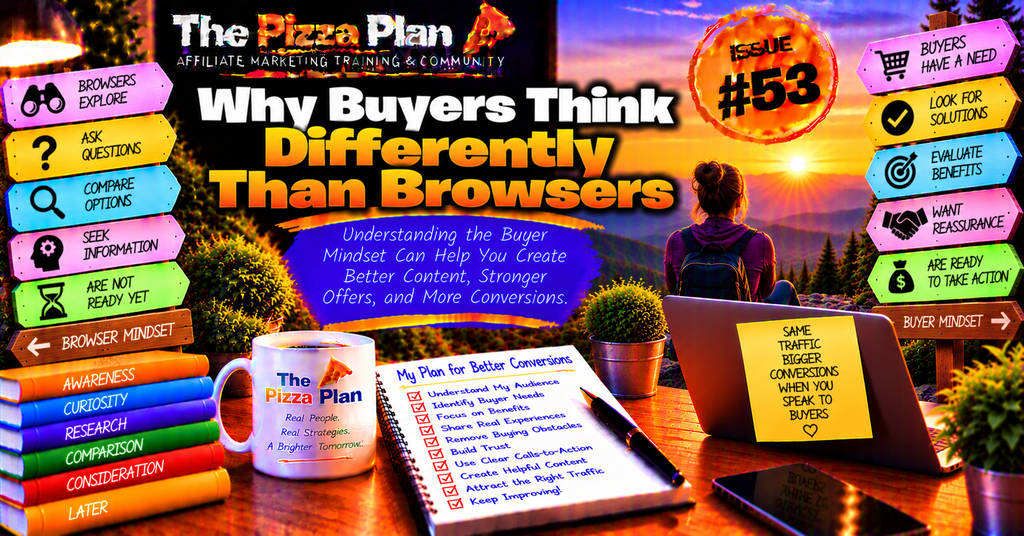
  • Issue #53: Why Buyers Think Differently Than Browsers

    Not everyone who visits your website is ready to buy.

    Some people are simply curious.

    They’re searching for information, comparing options, or trying to understand a problem.

    Others are much closer to making a decision.

    Understanding the difference between browsers and buyers can completely change how you create your affiliate marketing content.


    Browsers Are Looking for Information

    A browser may discover your website because they searched for something like:

    • “How does email marketing work?”
    • “Best free traffic methods”
    • “How to start affiliate marketing”
    • “What is a sales funnel?”

    They’re gathering information.

    They may not have any intention of spending money yet.

    And that’s perfectly okay.

    Your job isn’t to force them into a purchase.

    Your job is to help them move forward.


    Buyers Are Looking for Solutions

    A buyer is usually asking a different set of questions.

    They may be thinking:

    • Will this solve my problem?
    • Is it worth the money?
    • Can I trust this recommendation?
    • How does it compare with other options?
    • What happens if I get stuck?

    They’re no longer just gathering information.

    They’re evaluating a solution.

    That’s a very different mindset.


    Don’t Treat Everyone the Same

    One of the biggest mistakes affiliate marketers make is sending every visitor directly toward a sales pitch.

    A person who just discovered your website may not be ready.

    Instead, create content for different stages of the journey.

    For example:

    Beginner content: Explain the problem and introduce possible solutions.

    Consideration content: Compare approaches, tools, or strategies.

    Decision content: Provide reviews, tutorials, demonstrations, and recommendations.

    This gives your audience room to move naturally toward a decision.


    Helpful Content Builds the Bridge

    Think of your content as a bridge.

    A browser starts on one side.

    A confident buyer reaches the other.

    Your content helps them cross.

    You can do that by:

    • Answering questions
    • Explaining confusing topics
    • Comparing alternatives
    • Sharing personal experiences
    • Demonstrating solutions
    • Addressing common objections

    Every helpful piece of content can move someone one step closer.


    Don’t Pressure the Browser

    If someone isn’t ready to buy, that’s okay.

    Give them something useful instead.

    Invite them to:

    • Read another article
    • Join your email list
    • Download a helpful resource
    • Learn more about the topic

    You don’t have to make the sale today.

    You can build the relationship instead.


    Give Buyers the Confidence They Need

    When someone is ready to buy, your content should make the decision easier.

    Show them:

    • What the product does
    • Who it’s designed for
    • What problem it solves
    • What you like about it
    • What to consider before buying

    Honest information creates confidence.

    And confidence makes decisions easier.


    Your Email List Helps With Both

    Email is especially valuable because subscribers don’t have to buy immediately.

    Someone might join your list today and become a customer months later.

    That’s why relationship building matters.

    Continue providing useful information until the person recognizes a problem, understands the solution, and feels comfortable taking action.


    Think Like Your Reader

    Before creating content, ask:

    “What is this person trying to accomplish right now?”

    If they’re learning, teach them.

    If they’re comparing, help them evaluate.

    If they’re ready to buy, help them make an informed decision.

    When your content matches their mindset, your recommendations feel much more natural.


    Final Thought

    Not every visitor is a buyer.

    And that’s actually good news.

    You don’t need to convince everyone to purchase.

    You need to understand where people are in their journey and give them the information they need at that stage.

    Browsers need answers.

    Buyers need confidence.

    Your job is to provide both—and help people move from one to the other naturally.
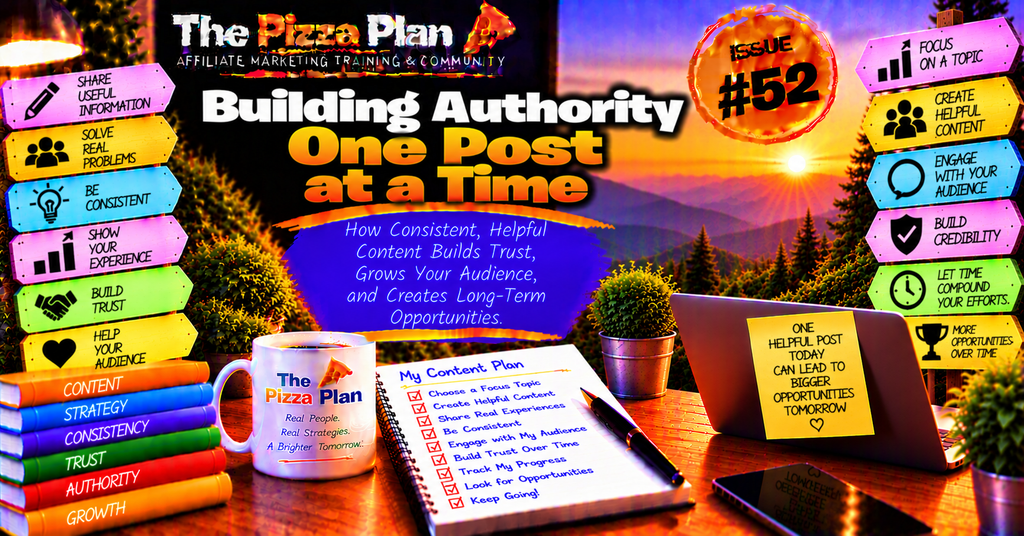
  • Issue #52 Building Authority One Post at a Time

    If you ask ten successful affiliate marketers how they built their business, you’ll probably hear ten different stories.

    But almost all of them have one thing in common:

    They didn’t become an authority overnight.

    They earned it—one piece of content at a time.

    The good news?

    You can do exactly the same.


    Authority Isn’t About Being Famous

    Many people think authority means having thousands of followers or becoming an industry expert.

    It doesn’t.

    Authority simply means people trust your opinion because you’ve consistently provided helpful information.

    You don’t need millions of visitors.

    You just need to become a reliable resource for the people who do visit your website.


    Every Blog Post Is an Opportunity

    Each article you publish answers a question.

    Solves a problem.

    Or helps someone take the next step.

    One post may not change your business overnight.

    But fifty helpful posts?

    Now you’re building something valuable.

    Every article becomes another doorway into your website.


    Consistency Builds Credibility

    Readers notice consistency.

    When they see new articles appearing week after week, they begin to recognize your commitment.

    That consistency sends a powerful message:

    “This person is serious about helping others.”

    Trust grows naturally when people know they can count on you.


    Share What You’re Learning

    One of the biggest myths in affiliate marketing is that you have to know everything before you can teach anything.

    You don’t.

    If you’ve just solved a problem, chances are someone else is searching for the same answer.

    Document your journey.

    Share your experiences.

    Explain what worked—and what didn’t.

    Authenticity is often more valuable than perfection.


    Focus on Helping First

    The fastest way to build authority isn’t by selling.

    It’s by helping.

    Ask yourself before writing each post:

    • What question can I answer?
    • What mistake can I help someone avoid?
    • What lesson have I learned recently?

    Helpful content builds trust.

    Trust leads to readers.

    Readers become subscribers.

    Subscribers become customers.


    Small Improvements Add Up

    Your first blog post probably won’t be your best.

    Neither will your tenth.

    But each article teaches you something:

    • Better writing
    • Better headlines
    • Better formatting
    • Better storytelling
    • Better calls to action

    Improvement compounds over time.


    Build a Content Library

    Imagine someone discovers your website today.

    Instead of finding one article…

    They discover dozens.

    Each one answers another question.

    Each one demonstrates your knowledge.

    That’s how authority grows.

    Not through one amazing post.

    But through an entire library of helpful content.


    Be Patient

    Authority isn’t built in weeks.

    It’s built over months and years.

    Many bloggers quit because they don’t see immediate results.

    The successful ones keep publishing anyway.

    Eventually, people begin recommending their articles.

    Search engines notice.

    Subscribers grow.

    Opportunities appear.


    Final Thought

    You don’t need to become an expert before you start writing.

    You become an expert by continuing to learn, publish, and help others.

    Every post you write is another brick in the foundation of your business.

    Keep showing up.

    Keep serving your audience.

    Keep pressing “Publish.”

    Because one helpful post may seem small today…

    But hundreds of them can build an authority that lasts for years.

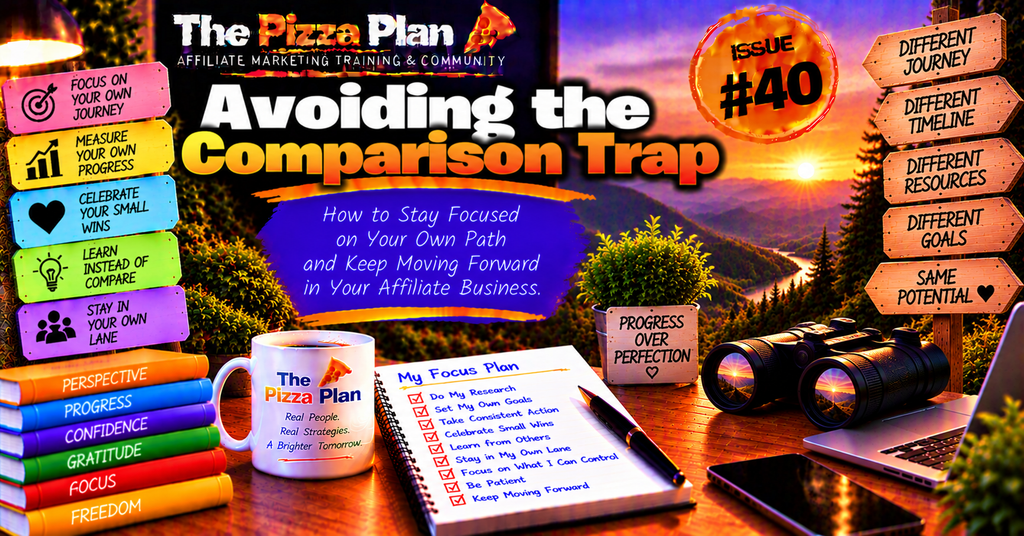
  • Issue #40 Avoiding the Comparison Trap

    It’s never been easier to compare yourself to others.

    Open any platform and you’ll see:

    • Bigger audiences
    • Faster growth
    • Higher earnings
    • Better results

    And without realizing it, you start asking:

    “Why am I not there yet?”

    That’s the comparison trap.


    Why Comparison Feels So Real

    The problem isn’t comparison itself—it’s what you’re comparing.

    You’re seeing:

    • Someone else’s highlights
    • Someone else’s wins
    • Someone else’s results

    But you’re comparing it to:

    • Your current stage
    • Your behind-the-scenes
    • Your learning curve

    That’s not a fair comparison.


    The Hidden Timeline

    Everyone is on a different timeline.

    Some people have:

    • More experience
    • More time invested
    • More failures behind them
    • More systems already built

    What looks like fast success is often built on slow progress you didn’t see.


    What Comparison Actually Does

    When you compare too much, it leads to:

    • Frustration
    • Doubt
    • Overthinking
    • Changing direction too often

    Instead of focusing on your path, you start chasing someone else’s.

    And that usually slows you down.


    Turn Comparison Into Awareness

    Comparison isn’t always bad—if you use it correctly.

    Instead of asking:

    “Why am I behind?”

    Ask:

    “What can I learn from this?”

    Use it as insight, not judgment.


    Focus on Your Own Progress

    The only comparison that matters is:

    You vs. you.

    Are you:

    • Improving your skills?
    • Showing up consistently?
    • Building your system?

    If the answer is yes, you’re moving forward.


    Limit the Noise

    If certain content makes you feel stuck or discouraged:

    • Unfollow
    • Mute
    • Take breaks

    Protecting your focus is part of the process.


    Build Your Own Pace

    You don’t need to:

    • Grow as fast as someone else
    • Use the same strategy
    • Follow the same path

    What matters is building something that works for you.


    Final Thought

    Comparison pulls your attention away from your progress.

    Focus brings it back.

    Stay in your lane.
    Keep building.
    Keep improving.

    Because the only path that matters…

    Is the one you keep moving forward on.

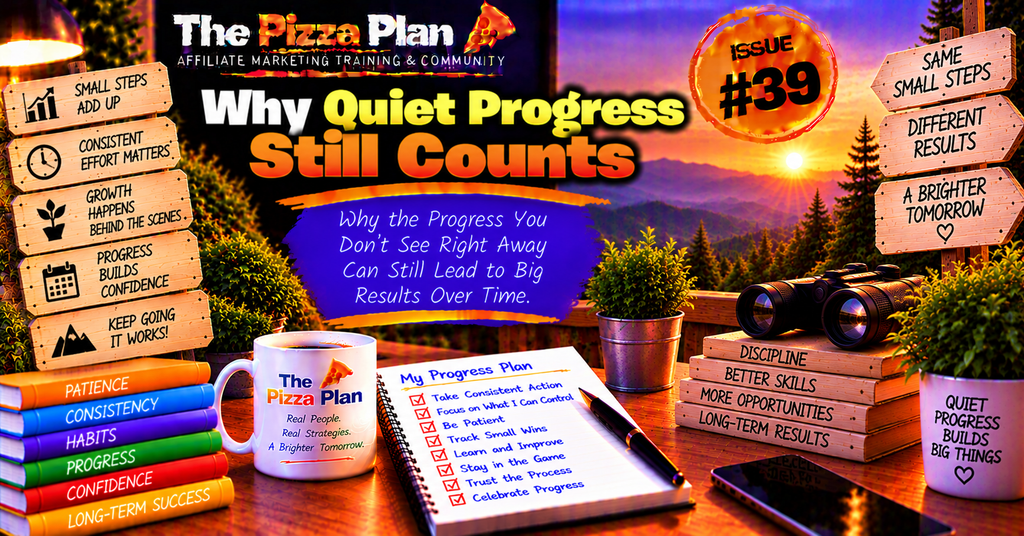
  • Issue #39 Why Quiet Progress Still Counts

    Not all progress is visible.

    Sometimes there are no likes.
    No comments.
    No big wins to point to.

    Just effort.

    And because it’s quiet… it’s easy to think it doesn’t count.

    But it does.


    The Illusion of Visible Success

    Online, it looks like everything happens fast.

    • Big launches
    • Viral posts
    • Overnight results

    But what you don’t see is the work behind it:

    • The early posts no one read
    • The emails no one opened
    • The systems that took time to build

    Most progress happens before anyone notices.


    What Quiet Progress Looks Like

    Quiet progress is:

    • Writing when no one is watching
    • Learning when results are slow
    • Improving without immediate feedback
    • Showing up without recognition

    It’s not exciting.

    But it’s necessary.


    Why It Matters More Than You Think

    Every small action builds something:

    • Skills improve
    • Systems get stronger
    • Confidence grows
    • Clarity increases

    Even if there’s no visible result yet…

    You’re not in the same place you were before.


    The Danger of Ignoring It

    If you only value visible results, you’ll feel stuck.

    And when you feel stuck, you’re more likely to:

    • Quit early
    • Change direction
    • Abandon what’s working

    Not because it failed…

    But because it hasn’t been seen yet.


    Progress Before Results

    Results are delayed.

    Progress happens immediately.

    That means:

    • You can control progress
    • You can measure effort
    • You can build momentum

    Even when results haven’t caught up yet.


    A Better Way to Track Growth

    Instead of asking:

    “What did I get?”

    Ask:

    “What did I build?”

    Track things like:

    • Content created
    • Systems completed
    • Actions taken
    • Skills improved

    These are the real indicators of movement.


    Trust the Process

    Quiet progress feels slow.

    But it’s often the phase right before things start working.

    What looks like nothing… is usually something building.


    Final Thought

    Not all progress needs to be loud to be real.

    Keep showing up.
    Keep building.
    Keep improving.

    Because the work you do quietly today…

    Is what creates visible results later.

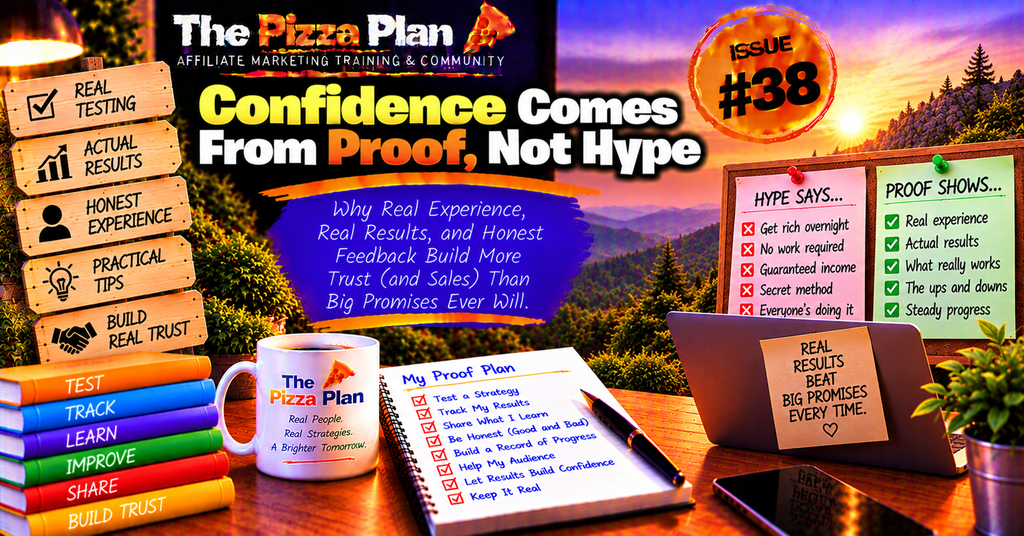
  • Issue #38 Confidence Comes From Proof, Not Hype

    Confidence is something everyone wants.

    More confidence to post.
    More confidence to promote.
    More confidence to share offers.

    But here’s the truth most people overlook:

    Confidence doesn’t come first.

    It comes after proof.


    The Problem With Waiting to Feel Ready

    A lot of people think:

    • “I’ll start when I feel more confident”
    • “I need to know more before I begin”
    • “I don’t want to get it wrong”

    So they wait.

    And while they’re waiting… nothing changes.


    Where Real Confidence Comes From

    Confidence is built through evidence.

    Small, simple proof like:

    • Publishing your first post
    • Getting your first click
    • Sending your first email
    • Completing your first funnel

    Each action gives you feedback.

    That feedback builds belief.


    Why Hype Doesn’t Last

    Motivation can feel powerful in the moment.

    You watch a video.
    You get excited.
    You feel ready to go.

    But hype fades quickly.

    And when it does, you’re left with nothing to stand on.

    That’s why hype alone isn’t enough.


    Proof Builds Stability

    Proof is different.

    It’s grounded in experience.

    When you’ve done something—even once—you know it’s possible.

    That creates:

    • Real confidence
    • Better decisions
    • Less hesitation

    And most importantly… consistency.


    Start Smaller Than You Think

    You don’t need big wins.

    You need repeatable wins.

    Focus on:

    • One post
    • One email
    • One action per day

    Stack those, and confidence builds naturally.


    A Simple Shift

    Instead of asking:

    “How do I feel more confident?”

    Ask:

    “What proof can I create today?”

    That one question leads to action.

    And action leads to belief.


    The Compounding Effect

    Proof stacks over time.

    • One action becomes ten
    • Ten becomes experience
    • Experience becomes confidence

    And suddenly, things that felt hard… feel normal.


    Final Thought

    Confidence isn’t something you wait for.

    It’s something you build.

    Not through hype.
    Not through motivation.

    But through proof—one action at a time.

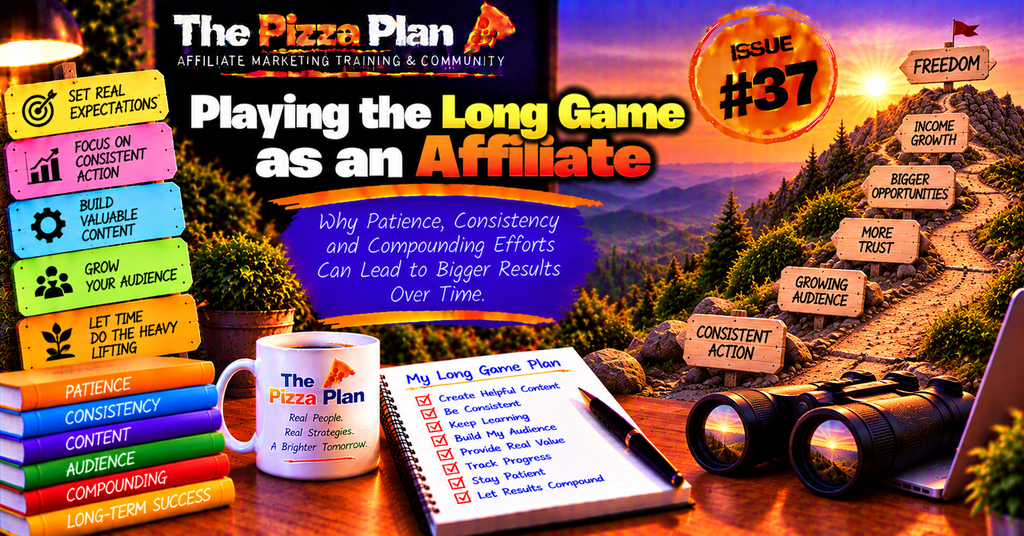
  • Issue #37 Playing the Long Game as an Affiliate

    Affiliate marketing is often sold as a quick win.

    Pick a product.
    Share a link.
    Make money.

    And while that can happen…

    It’s not what builds a real business.

    The people who succeed long-term are the ones who learn to play the long game.


    The Short-Term Trap

    It’s easy to focus on quick results:

    • “Why didn’t this post convert?”
    • “Why didn’t I make money this week?”
    • “Should I switch offers?”

    This mindset leads to constant switching, chasing trends, and starting over.

    And starting over resets your progress.


    What the Long Game Looks Like

    Playing the long game means focusing on:

    • Building trust
    • Creating consistent content
    • Growing an audience
    • Improving your system over time

    Instead of asking “How fast can I make money?” you ask:

    “How can I build something that keeps working?”


    Why Trust Takes Time

    People don’t click, subscribe, or buy instantly.

    They:

    • See your content
    • Get familiar with your message
    • Learn to trust your recommendations

    This doesn’t happen in one post.

    It happens through repeated exposure and consistency.


    Compounding Effort

    The long game works because of compounding.

    • One post becomes ten
    • Ten becomes fifty
    • Fifty becomes traffic
    • Traffic becomes opportunities

    At first, progress feels slow.

    Then it starts to build.


    What Most People Miss

    Most people quit before the compounding happens.

    They:

    • Stop posting
    • Change direction
    • Abandon systems too early

    Not because it didn’t work…

    But because they didn’t give it enough time.


    How to Stay in the Game

    If you want to win long-term:

    • Keep your strategy simple
    • Stay consistent
    • Track progress (not just results)
    • Improve gradually

    You don’t need to move fast.

    You need to keep moving.


    A Different Way to Measure Success

    Instead of focusing only on income, track:

    • Content created
    • Emails sent
    • Systems built
    • Skills improved

    These are the leading indicators of success.

    The results follow later.


    Final Thought

    Affiliate marketing isn’t about quick wins.

    It’s about building something that works over time.

    If you play the short game, you chase results.

    If you play the long game, you build them.

    And the people who build… eventually win.