Category: Money & Expectations

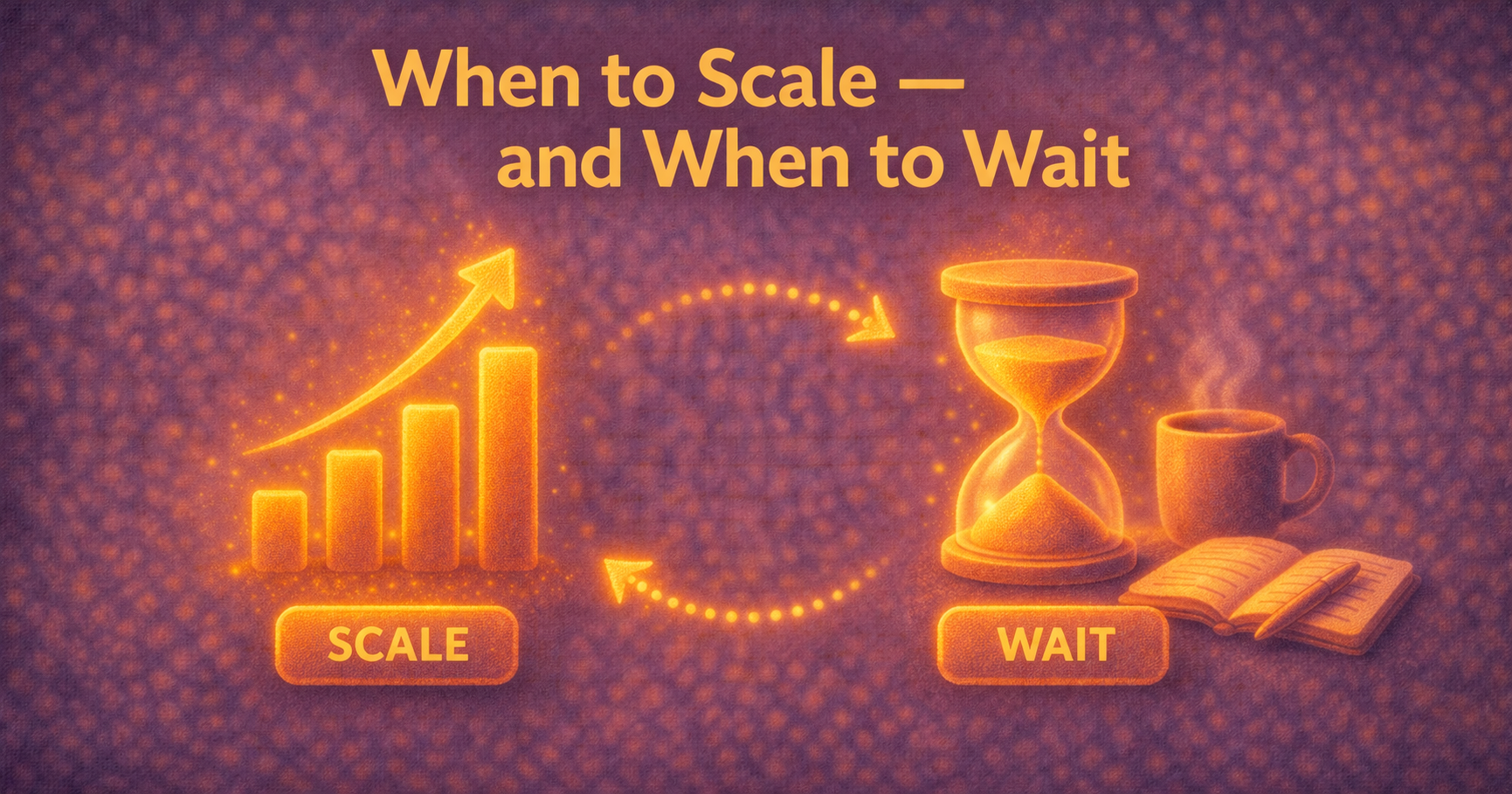
  • Issue #36 When to Scale — and When to Wait

    One of the biggest mistakes in online business is trying to scale too soon.

    More traffic.
    More tools.
    More content.
    More everything.

    It feels like growth.

    But sometimes… it’s just noise.

    Knowing when to scale—and when to wait can save you time, money, and frustration.


    The Temptation to Scale Early

    Once you see a little progress, it’s natural to want more.

    You might think:

    • “If I double this, I’ll get better results”
    • “If I upgrade, I’ll grow faster”
    • “If I do more, I’ll earn more”

    But scaling something that isn’t working consistently just creates bigger problems.


    What Scaling Actually Means

    Scaling isn’t doing more.

    It’s doing more of what already works.

    That means:

    • A proven traffic source
    • A message that gets clicks
    • A funnel that converts
    • A system that’s repeatable

    Without those, scaling is just guessing at a larger level.


    Signs You’re Ready to Scale

    You’re likely ready to scale when:

    • You’re getting consistent traffic
    • You’re seeing regular clicks or leads
    • You understand what’s working
    • You can repeat the process

    At this point, adding more effort or resources can amplify results.


    Signs You Should Wait

    It’s better to hold off when:

    • Results are inconsistent
    • You’re still testing different ideas
    • You don’t know what’s driving results
    • You’re changing direction frequently

    Scaling here won’t fix the problem—it will multiply the confusion.


    Why Waiting Can Be Powerful

    Waiting doesn’t mean doing nothing.

    It means:

    • Refining your message
    • Improving your system
    • Paying attention to results
    • Building clarity

    This creates a stronger foundation.

    And a strong foundation makes scaling much easier later.


    A Smarter Way to Grow

    Think of it like this:

    1. Test — Try ideas and see what works
    2. Refine — Improve what shows promise
    3. Repeat — Confirm consistency
    4. Scale — Increase effort on proven systems

    Skipping steps leads to wasted effort.

    Following the sequence leads to growth.


    The Balance

    Scaling and waiting aren’t opposites.

    They’re both necessary.

    Scale when you have proof.
    Wait when you need clarity.


    Final Thought

    Growth isn’t about doing more—it’s about doing the right things at the right time.

    If you scale too early, you create stress.

    If you wait too long, you slow progress.

    But when you get the timing right…

    Everything starts to move faster—and more smoothly.
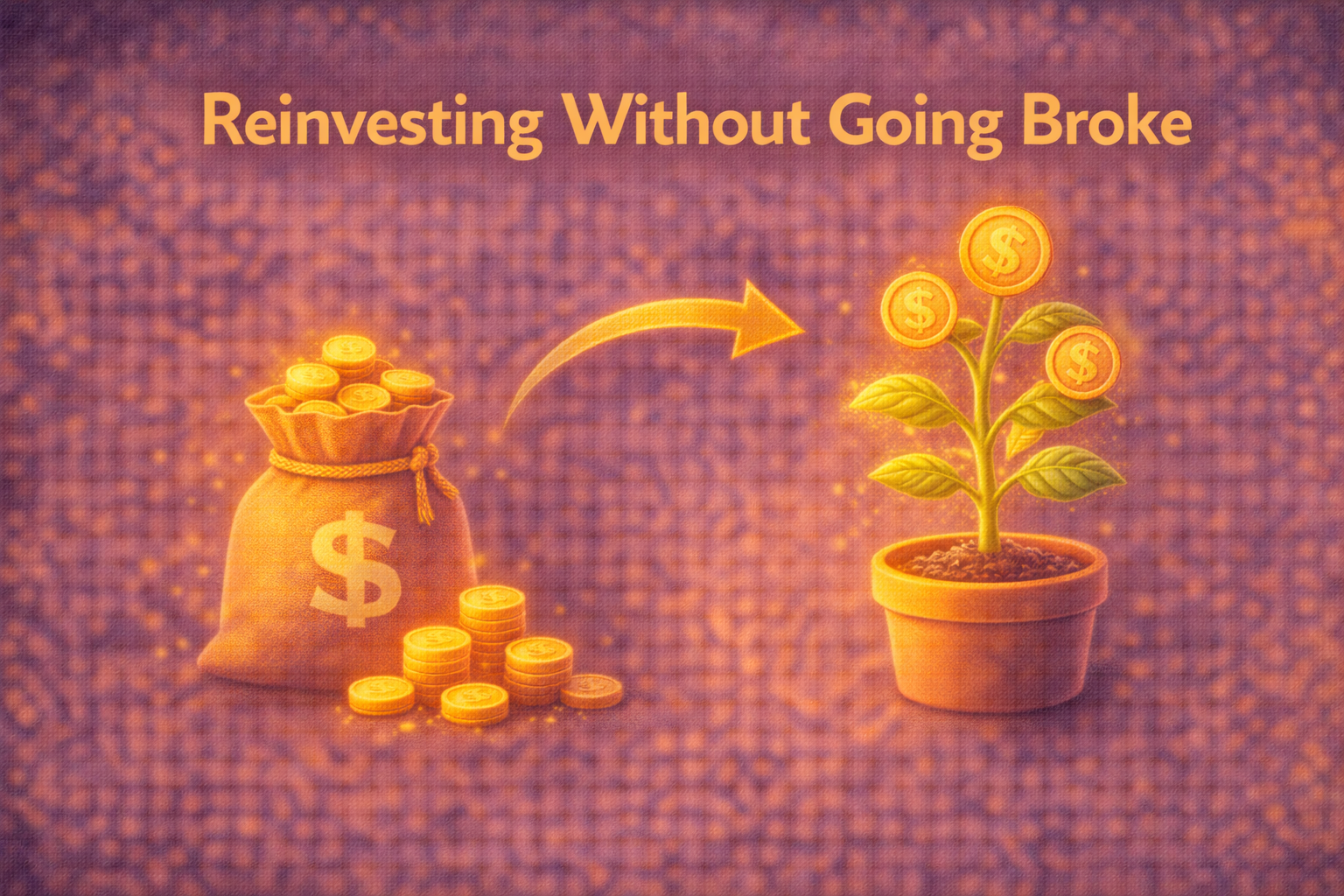
  • Issue #35 Reinvesting Without Going Broke

    Reinvesting is one of the smartest things you can do in your business.

    It helps you grow faster.
    It helps you improve your systems.
    It helps you scale what’s already working.

    But there’s a line many beginners cross…

    They reinvest too much, too soon—and end up broke.


    The Pressure to Reinvest

    You’ll hear advice like:

    • “Put everything back into your business”
    • “You have to spend money to make money”
    • “Upgrade your tools to grow faster”

    And while there’s truth in that…

    It’s easy to misapply.

    Reinvesting should support growth—not create stress.


    The Risk of Over-Reinvesting

    When you reinvest without a plan, you can end up:

    • Paying for tools you don’t fully use
    • Buying courses you don’t implement
    • Upgrading too early
    • Draining your available cash

    This creates pressure.

    And pressure leads to rushed decisions.


    A Better Approach to Reinvesting

    Instead of reinvesting everything, use a simple structure:

    1. Cover Your Basics First

    Make sure your essential tools are handled.

    Keep it simple:

    • One email platform
    • One page builder
    • One traffic method

    You don’t need a stack—you need a system.


    2. Reinvest a Percentage, Not Everything

    A safer approach is:

    • Keep a portion
    • Reinvest a portion

    Even something like:

    • 50% reinvest
    • 50% keep

    This gives you room to grow without putting yourself in a tight spot.


    3. Reinvest Into What’s Working

    Don’t guess.

    Look at your results:

    • What’s bringing clicks?
    • What’s getting engagement?
    • What’s producing leads?

    Put more into those areas.

    Avoid spreading yourself too thin.


    4. Delay “Nice-to-Have” Upgrades

    Some tools are helpful—but not necessary.

    If something doesn’t:

    • Save time
    • Increase revenue
    • Improve your system

    You can wait.


    The Goal Isn’t Speed—It’s Stability

    Fast growth feels exciting.

    But unstable growth doesn’t last.

    Smart reinvesting creates:

    • Consistency
    • Control
    • Confidence

    And those lead to long-term results.


    A Simple Rule to Follow

    If buying something would make you feel stressed…

    It’s probably too early.

    Good investments feel aligned—not forced.


    Final Thought

    Reinvesting is powerful—but only when it’s intentional.

    You don’t need to spend everything to grow.

    You need to spend wisely.

    Build steadily.
    Reinvest strategically.
    And grow without putting yourself under pressure.

  • Issue #34 The Truth About “Passive” Income

    “Make money while you sleep.”

    You’ve probably heard that phrase before.

    It’s one of the biggest promises in online business—and one of the most misunderstood.

    Because while passive income is real

    It’s not what most people think.


    The Myth of Passive Income

    The common belief is:

    • Set something up once
    • Do nothing
    • Money keeps coming in

    No effort. No maintenance. No work.

    But that’s not how it actually works.


    What Passive Income Really Is

    Passive income is better defined as:

    Work done once (or repeatedly) that continues to produce results over time.

    Notice something?

    There’s still work involved.


    The Front-Loaded Effort

    Before anything becomes “passive,” there’s an active phase.

    You have to:

    • Create content
    • Build systems
    • Set up funnels
    • Test what works
    • Drive initial traffic

    This is where most of the effort happens.

    And it’s the part most people underestimate.


    The Maintenance Phase

    Even after things are working, passive income still requires:

    • Updating content
    • Checking links
    • Improving conversions
    • Adapting to changes
    • Creating new supporting content

    It’s not hands-off.

    It’s lighter work—not zero work.


    Where Passive Income Shows Up

    In affiliate marketing, passive income often comes from:

    • Blog posts that keep getting traffic
    • Email sequences that continue converting
    • Videos that generate clicks over time
    • Simple funnels that run daily

    These assets work for you—but only because you built them first.


    Why the Idea Still Matters

    Even though it’s not truly passive, the concept is still powerful.

    Because it shifts your focus from:

    Trading time for money

    To:

    Building assets that keep working

    That’s where leverage comes from.


    A Better Way to Think About It

    Instead of asking:

    “How do I make passive income?”

    Ask:

    “What can I build today that will still work tomorrow?”

    That mindset leads to:

    • Better content
    • Stronger systems
    • More consistent results

    Final Thought

    Passive income isn’t about doing nothing.

    It’s about doing the right work—up front—so it keeps paying you later.

    Build assets.
    Build systems.
    Then let them work for you.

    That’s the real version of passive income.

  • Issue #33 Why Small Wins Matter More Than Big Goals

    Big goals are exciting.

    They give you something to aim for. They make you feel motivated. They create a vision of what’s possible.

    But there’s a problem.

    Big goals don’t build momentum.

    Small wins do.


    The Problem With Big Goals

    Big goals often feel far away.

    “Make $1,000 online.”
    “Grow a list to 10,000 subscribers.”
    “Build a full-time income.”

    These are great targets—but they can also feel overwhelming.

    When progress is slow, it’s easy to feel like nothing is working.

    And that’s when people quit.


    What Small Wins Actually Do

    Small wins change everything.

    They:

    • Build confidence
    • Create momentum
    • Reinforce action
    • Make progress visible

    Instead of waiting for one big result, you start stacking small victories.

    And those add up faster than you think.


    Examples of Small Wins

    In affiliate marketing, small wins look like:

    • Publishing a post
    • Getting your first click
    • Writing your first email
    • Getting one subscriber
    • Finishing a simple funnel

    None of these feel huge on their own.

    But together, they create progress.


    Momentum Is Built, Not Found

    Most people are waiting for motivation.

    But motivation often comes after action.

    Small wins create a loop:

    Action → Result → Confidence → More Action

    That’s how momentum builds.


    Why Small Wins Are More Reliable

    Big goals depend on many things going right.

    Small wins only depend on one thing:

    You showing up.

    That makes them more consistent—and more powerful long-term.


    Shift Your Focus

    Instead of asking:

    “Did I hit my big goal?”

    Ask:

    “Did I make progress today?”

    That one shift reduces pressure and increases consistency.


    Build a Win List

    At the end of each day or week, track your wins:

    • What did you complete?
    • What did you improve?
    • What did you learn?

    This helps you see progress even when results are still growing.


    Final Thought

    Big goals give you direction.

    Small wins get you there.

    If you want to build something that lasts, stop waiting for the big breakthrough…

    And start stacking small victories.