We’ve all been there.
You check your traffic statistics and suddenly notice a big jump.
Maybe one of your blog posts received extra attention. Maybe a traffic exchange delivered a wave of visitors. Or perhaps something you shared on social media got more clicks than usual.
Exciting, right?
Of course it is!
But then you check your statistics the next day.
And everything is back to normal.
That big traffic spike disappeared almost as quickly as it arrived.
It’s easy to feel disappointed when that happens. But here’s something I’ve been learning about building an affiliate marketing business:
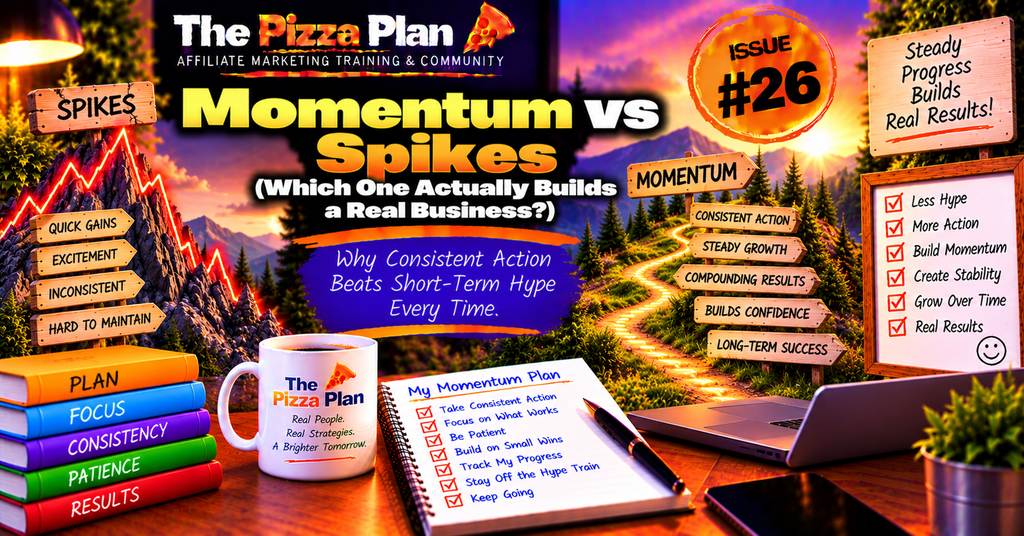
A temporary increase in traffic isn’t nearly as valuable as building momentum that lasts.
Let’s talk about why.
The Problem With Chasing Traffic Spikes
Traffic spikes aren’t necessarily bad.
They can introduce new people to your content, generate subscribers, and sometimes even produce commissions.
The problem starts when we depend on them.
Think about how some affiliate marketers approach traffic.
They spend one day promoting their links everywhere they can.
They get a burst of visitors.
Then they stop promoting because they’re busy working on something else.
A few days later, traffic drops.
So they scramble to find another way to generate visitors.
Sound familiar?
This creates a frustrating cycle:
Promote → Traffic Spike → Traffic Drops → Start Over
You’re constantly working to replace the traffic you just lost.
And that can become exhausting.
What Building Momentum Looks Like
Momentum works a little differently.
Instead of focusing only on how many visitors you can attract today, you start asking:
What can I do today that will make my marketing a little stronger tomorrow?
For example:
- Publishing one helpful blog post every week
- Building an email list that you can continue communicating with
- Sharing useful content consistently
- Improving an existing landing page
- Creating Pinterest pins that point to evergreen articles
- Tracking which traffic sources produce engaged visitors
None of these activities guarantees immediate results.
And that’s an important point.
You might not see a dramatic difference after one week.
But over time, these activities can work together.
Your blog grows into a collection of helpful resources.
Your email list gives you a way to reconnect with interested visitors.
Your tracking data helps you make better decisions.
And your marketing becomes less dependent on what happens during any single day.
That’s the kind of momentum worth building.
Not All Traffic Is Equal
Here’s another thing to remember.
A thousand visitors who have no interest in what you’re offering may be worth less to your business than fifty visitors who genuinely need your help.
Imagine two situations.
Scenario A: The Traffic Spike
You receive 1,000 visitors from a traffic promotion.
Most leave within seconds.
A few click your links, but nobody joins your email list.
The next day, that traffic disappears.
Scenario B: Steady Momentum
You receive just 50 visitors from a helpful blog post.
Five subscribe to your email list.
A few return later to read another article.
Some eventually explore a product you’ve recommended.
Which situation would you rather build on?
The second one gives you opportunities to develop relationships and learn what your audience wants.
Of course, those subscribers aren’t guaranteed to become customers.
But you’ve created a way to continue the conversation.
And that’s something a traffic spike alone doesn’t necessarily provide.
Turn Temporary Traffic Into Something Lasting
Here’s where things get interesting.
You don’t have to choose between traffic spikes and momentum.
You can actually use one to help create the other.
Let’s say you’re using safelists, traffic exchanges, or another low-cost traffic source.
Instead of sending every visitor directly to an affiliate offer, consider directing interested visitors to a simple lead capture page that offers something useful.
That could be:
- A beginner’s guide
- A helpful checklist
- A short email course
- A free ebook
- A resource that addresses a specific problem
When someone decides to subscribe, you’ve created an opportunity to help them beyond that first visit.
Now your traffic campaign isn’t just about generating clicks.
It’s also about building an audience you can serve over time.
Just remember that different traffic sources attract different levels of interest. Test your results rather than assuming every source will produce quality subscribers.
Three Simple Ways to Build Momentum on a Budget
You don’t need expensive tools or a complicated marketing system.
In fact, keeping things simple can make consistency much easier.
1. Focus on One Traffic Strategy You Can Maintain
It’s tempting to try every traffic method you hear about.
But constantly switching strategies can make it difficult to learn what actually works.
Choose one primary traffic method you can reasonably maintain.
Maybe that’s blogging.
Maybe it’s Pinterest.
Maybe it’s a combination of email marketing and low-cost advertising.
Give yourself enough time to collect meaningful information before deciding whether to continue, improve, or change direction.
You can experiment with other traffic sources without abandoning your main strategy every week.
2. Create Content That Keeps Helping People
A social media post might disappear from someone’s feed within hours.
But a useful blog article can remain available for months or years.
That doesn’t mean every article will attract search traffic.
It means you’re creating something that has the potential to keep providing value after you publish it.
For example, a beginner-friendly article explaining how to track affiliate links could remain useful long after its original publication date.
You can also share that same article through Pinterest, email, or other appropriate platforms.
One useful piece of content can support multiple marketing activities.
That’s a much better use of your time than constantly starting from scratch.
3. Track Progress Beyond Visitor Counts
Traffic statistics are useful, but they’re only part of the story.
You should also pay attention to things like:
- How many visitors click your important links
- How many people subscribe to your email list
- Which articles attract engaged readers
- Which emails generate interest
- Which traffic sources produce meaningful actions
- Whether your marketing costs are justified by the results
You don’t need complicated reporting software to begin.
A simple spreadsheet can help you identify patterns.
The goal isn’t to obsess over every number.
It’s to understand whether your efforts are moving your business in the right direction.
A Small Example of Momentum in Action
Let’s imagine you decide to publish one useful blog article every week.
During the first month, you publish four articles.
Traffic is modest.
You share the articles with your email subscribers and create a few Pinterest pins.
Nothing dramatic happens.
In the second month, you publish four more articles.
You begin linking related articles together, giving readers an easy way to explore additional topics.
You also notice that one article generates more email sign-ups than the others.
So you spend a little time improving its call to action.
By the third month, you’ve created twelve useful articles.
Some may attract very few visitors.
Others may begin bringing in consistent clicks.
You now have more content to share, more information about your audience, and a growing collection of resources.
Are you guaranteed to make sales?
No.
But you’re building something you can evaluate, improve, and potentially benefit from over time.
That’s very different from repeating the same one-day traffic promotion without learning anything from the results.
Don’t Confuse Slow Progress With No Progress
This might be the hardest part of building momentum.
Sometimes you’re doing the right activities, but the results aren’t showing up as quickly as you’d hoped.
That doesn’t mean you should blindly continue something that isn’t working.
It means you need to separate slow but measurable progress from simply repeating ineffective activities.
Ask yourself:
- Am I learning more about what my audience needs?
- Is my content becoming more helpful?
- Are my tracking results showing any improvements?
- Am I building assets I can continue using?
- Is there something specific I should change based on the evidence?
Momentum isn’t about doing the same thing forever.
It’s about making consistent efforts, learning from the results, and improving as you go.
This Week’s Action Step
Here’s a simple challenge.
Choose one activity that can help your affiliate business grow over time.
It might be writing a blog post, improving a lead capture page, creating a Pinterest pin, or sending a helpful email to your subscribers.
Then ask yourself:
How can I make this activity part of a routine I can realistically maintain?
Start small.
You don’t need to spend hours every day.
Even a few focused minutes can help you build a habit that supports your bigger goals.
Track what happens.
Make adjustments.
And keep improving.
Final Thoughts
Traffic spikes can be exciting.
There’s nothing wrong with celebrating a successful promotion or a sudden increase in visitors.
But don’t let those temporary numbers become your only definition of progress.
A sustainable affiliate marketing business needs more than occasional bursts of attention.
It needs useful content, relevant traffic, trustworthy recommendations, and a way to build relationships with interested people.
Those things take time.
And that’s okay.
You don’t need every day to be a record-breaking day. You need enough consistent, useful actions to move your business forward.
Keep building.
Keep learning.
And remember that long-term success is usually the result of many small improvements working together.