Imagine writing a blog post today that still brings visitors to your website two or three years from now.
Better yet, imagine that same post continuing to introduce people to your email list, recommend useful products, and generate affiliate commissions long after you’ve moved on to creating something else.
That’s the real potential of good content.
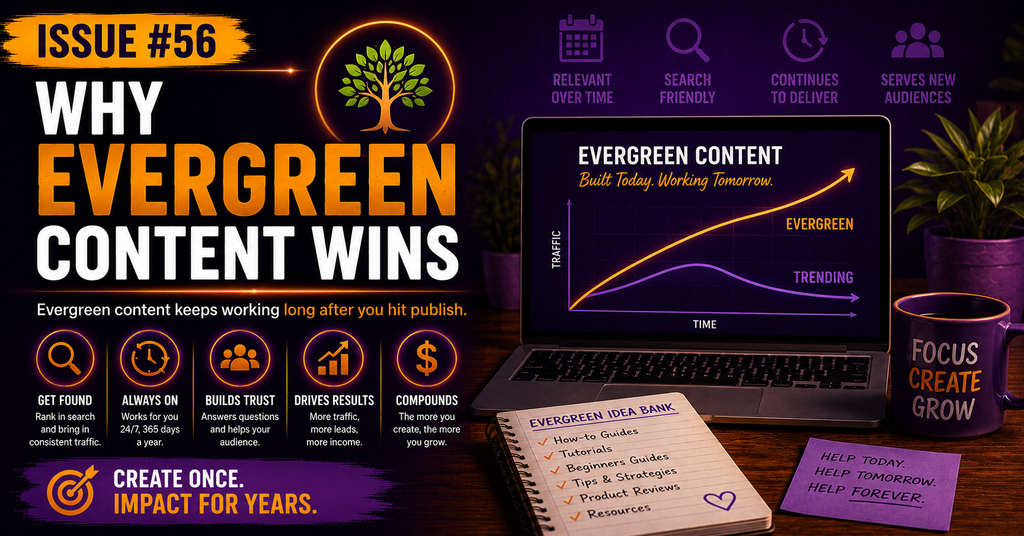
In the last issue, we talked about why evergreen content wins.
Today, let’s take that idea one step further.
How do you create content that doesn’t just remain relevant—but can actually continue helping your business make sales for years?
Start With a Problem That Isn’t Going Away
Long-lasting content usually begins with a long-lasting problem.
Think about the challenges your audience faces today that they’ll probably still face several years from now.
For new affiliate marketers, those might include:
- Finding affordable ways to generate traffic
- Building an email list
- Choosing which tools are actually necessary
- Creating a simple sales funnel
- Finding worthwhile affiliate offers
- Writing content that gets clicks
- Staying consistent without spending all day online
Tools and platforms may change.
But the underlying problems often don’t.
Create content around those problems, and you’ve already given your article a longer potential lifespan.
Don’t Just Attract Traffic — Help Someone Make a Decision
Traffic alone doesn’t make content profitable.
The right content helps readers move forward.
Suppose someone searches for information about choosing an autoresponder.
You could simply explain what an autoresponder is.
That’s useful.
But you could go further by helping the reader understand:
- Why they might need one
- Which features matter most
- Which features a beginner probably doesn’t need
- What free and paid options look like
- What mistakes to avoid
- What you personally recommend and why
Now the article isn’t simply providing information.
It’s helping someone make a decision.
And decision-making content can naturally lead to affiliate sales without turning the entire article into a sales pitch.
Create the Best Answer You Can
If you want an article to keep working for years, don’t create it just to meet a publishing deadline.
Make it genuinely useful.
Ask yourself:
If someone only read this one article about the topic, would they leave with a clear answer?
That might mean including:
- Step-by-step instructions
- Examples
- Screenshots
- Comparisons
- Common mistakes
- Frequently asked questions
- Links to additional resources
You don’t necessarily need to write 5,000 words.
You simply need to answer the question thoroughly enough that the reader doesn’t feel like you wasted their time.
Match the Offer to the Content
This is where affiliate marketing becomes much more natural.
Instead of writing an article and then wondering where you can squeeze in an affiliate link, start with the reader’s problem.
Then recommend a product only when it genuinely helps solve that problem.
For example:
An article about starting an email list could naturally introduce an email marketing tool.
A post about building a WordPress website could naturally recommend web hosting.
An article about generating traffic could point readers toward a traffic resource you actually use.
The offer becomes part of the solution rather than an interruption.
That’s a much stronger foundation for long-term sales.
Give Readers a Clear Next Step
Even excellent content can fail to produce results if readers don’t know what to do next.
Don’t assume they’ll figure it out.
Give them a logical next step.
That might be:
- Read another related article
- Join your email list
- Download a free resource
- Try a recommended tool
- Visit a product review
- Start a free membership
- Learn more about an affiliate offer
Your call to action doesn’t always have to be:
BUY NOW.
Often, the better question is:
“What’s the most helpful next step for this reader?”
Guide them there.
Build Trust Before Asking for the Sale
Someone discovering your blog for the first time may not immediately buy something you recommend.
That’s normal.
Your content can still be doing its job.
A reader might:
- Discover one of your articles through search.
- Read another post.
- Join your email list.
- Receive several helpful emails.
- Return to your blog.
- Eventually purchase something you recommend.
The original article may have started a relationship that produces a sale weeks or months later.
That’s why useful content and email marketing work so well together.
Include Your Own Perspective
There are thousands of articles online explaining almost any topic you can imagine.
So why should someone read yours?
Your experience is part of the answer.
Tell readers:
- What you’ve tried
- What you use
- What worked for you
- What didn’t
- What surprised you
- What you’d do differently
That personal perspective is something a generic article can’t easily duplicate.
And it gives readers another reason to trust your recommendations.
Keep Your Affiliate Links Relevant
More affiliate links don’t automatically mean more sales.
Sometimes they create the opposite result.
If an article recommends six different tools for the same problem, the reader may leave wondering which one you actually prefer.
When possible, make your recommendations clear.
Explain why you chose something.
Mention alternatives when they’re genuinely useful.
But don’t turn every paragraph into another promotion.
The content should still be valuable even if the reader never clicks an affiliate link.
That’s what makes the recommendation believable.
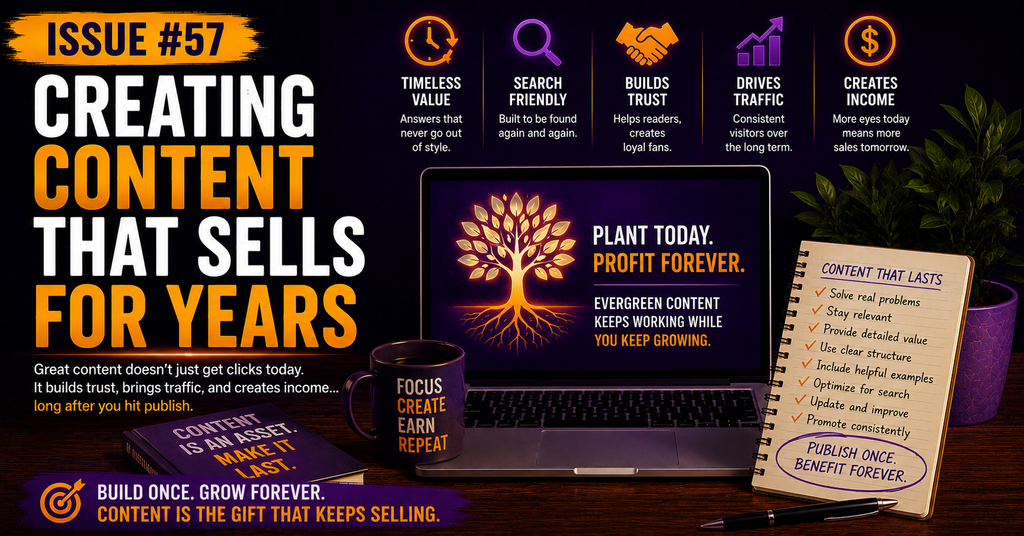
Update Your Winners
Content that sells for years usually isn’t completely hands-off.
Your best-performing posts deserve occasional attention.
Every few months, check them.
Look for:
- Broken links
- Outdated screenshots
- Products that have changed
- Pricing information that needs updating
- New questions you could answer
- Better internal links
- Calls to action that could be improved
You don’t necessarily need to rewrite the entire article.
Small improvements can extend its useful life considerably.
Turn One Successful Post Into a Content Cluster
When one article begins attracting visitors or generating clicks, don’t immediately move on to an unrelated topic.
Build around it.
Suppose an article about email list building performs well.
You might create additional posts about:
- Choosing an autoresponder
- Writing your first follow-up sequence
- Creating a lead magnet
- Getting subscribers
- Improving email open rates
- What to send your list
Then link those articles together.
Instead of one isolated post, you’ve created a collection of resources around a problem your audience clearly cares about.
That can strengthen your authority while creating multiple paths toward your offers.
Think of Content as an Asset
It’s easy to think of blogging as something you have to keep doing every week.
And yes, consistency matters.
But there’s another way to look at it.
Every quality article you publish becomes another asset in your business.
A social media post may disappear from someone’s feed within hours.
A useful blog article can potentially be discovered again and again.
That’s why the effort you put into creating strong evergreen content can pay you back long after the original work is finished.
You Don’t Need Hundreds of Posts to Start
It’s tempting to believe you need an enormous website before content marketing can work.
You don’t.
Start with a smaller collection of genuinely useful articles.
Ten excellent posts solving important problems can be more valuable than 100 rushed articles created simply to fill a publishing calendar.
Then keep adding to the collection.
One useful article this week.
Another next week.
Over time, those individual posts begin working together.
Final Thought
Creating content that sells for years isn’t about finding some magical headline or stuffing affiliate links into every paragraph.
It’s about creating something worth finding.
Solve a real problem.
Give a complete answer.
Share your experience.
Recommend something useful when it fits.
Give the reader a clear next step.
Then keep the article updated so it continues earning its place on your website.
Do that consistently, and your blog becomes more than a place where you publish new posts.
It becomes a collection of assets that can attract visitors, build trust, grow your audience, and generate affiliate income for years to come.
Create once. Keep improving. Let your content keep working.