Tag: productivity

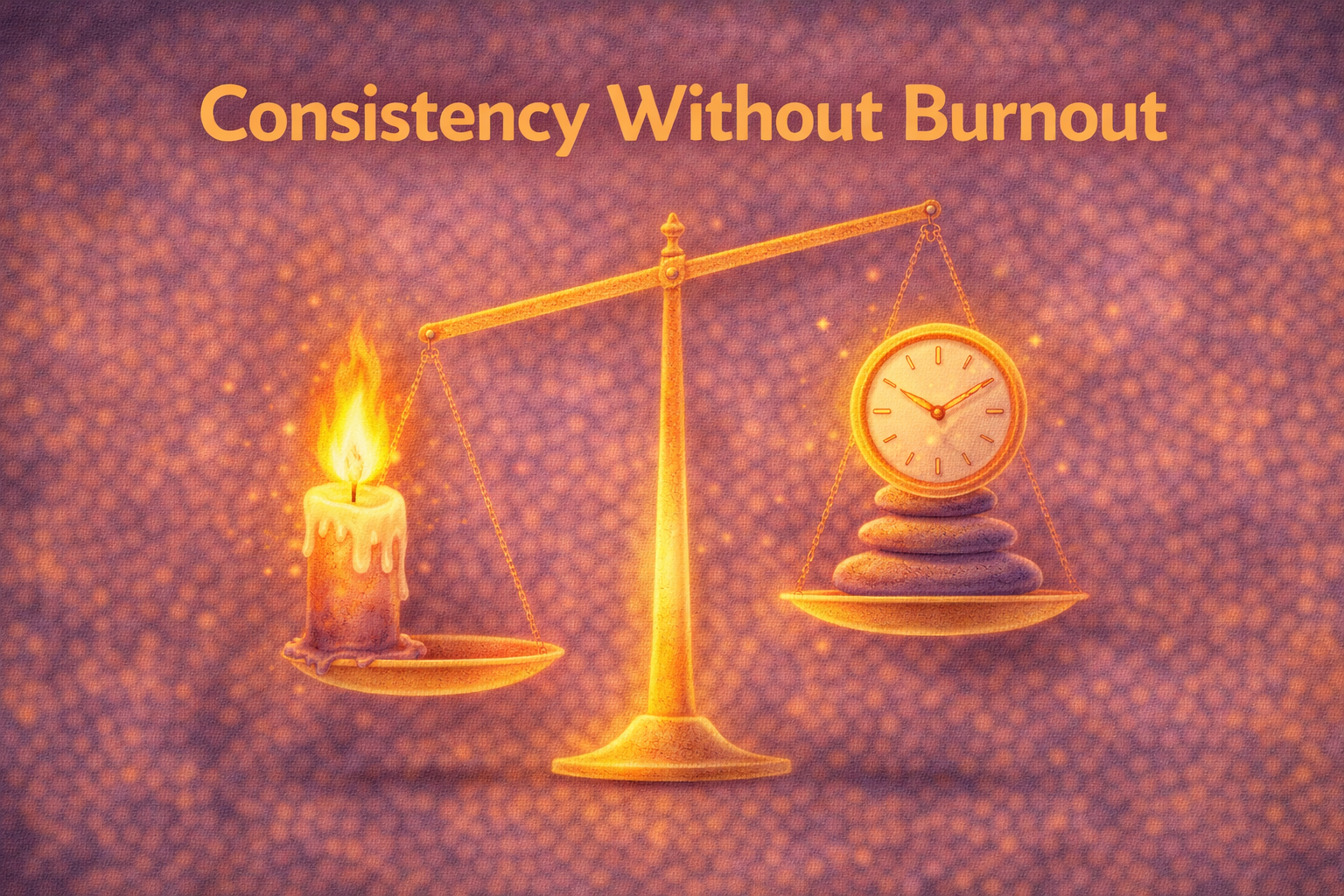
  • Issue #31 Consistency Without Burnout

    Consistency is one of the most common pieces of advice in online business.

    “Post every day.”
    “Send emails regularly.”
    “Show up no matter what.”

    And while consistency does matter…

    There’s a problem.

    Many people try to be consistent in a way that leads straight to burnout.


    The Wrong Way to Be Consistent

    Burnout usually comes from unrealistic expectations.

    Trying to:

    • Do too much too fast
    • Be on every platform
    • Create perfect content every time
    • Maintain a pace you can’t sustain

    This kind of consistency doesn’t last.

    It turns into stress, frustration, and eventually… stopping altogether.


    What Real Consistency Looks Like

    Consistency isn’t about doing more.

    It’s about doing what you can sustain.

    That might look like:

    • 3 posts per week instead of 7
    • 1 email per week instead of daily
    • 30 minutes of focused work per day

    The key is simple:

    Can you keep doing this next week? Next month?

    If not, it’s not sustainable.


    Why Slower Often Wins

    A slower pace that you can maintain will always outperform a fast pace that burns you out.

    Because consistency compounds.

    • One post becomes ten
    • Ten becomes fifty
    • Fifty becomes momentum

    But only if you keep going.


    Build Around Your Real Life

    Your business should fit your life—not fight it.

    Consider:

    • Your schedule
    • Your energy levels
    • Your responsibilities

    Then build a system around that.

    Not someone else’s routine.


    Make It Easier to Show Up

    Consistency becomes easier when you remove friction.

    Try:

    • Creating content in batches
    • Keeping ideas simple
    • Reusing and repurposing content
    • Lowering the pressure for perfection

    The easier it is to start, the more likely you are to continue.


    A Better Definition of Consistency

    Consistency doesn’t mean:

    “Doing everything, all the time.”

    It means:

    Showing up regularly in a way you can sustain.


    Final Thought

    Burnout stops progress.

    Sustainable consistency builds it.

    If you want long-term results, don’t aim for intensity.

    Aim for rhythm.

    Because the people who succeed aren’t the ones who go the hardest…

    They’re the ones who keep going.
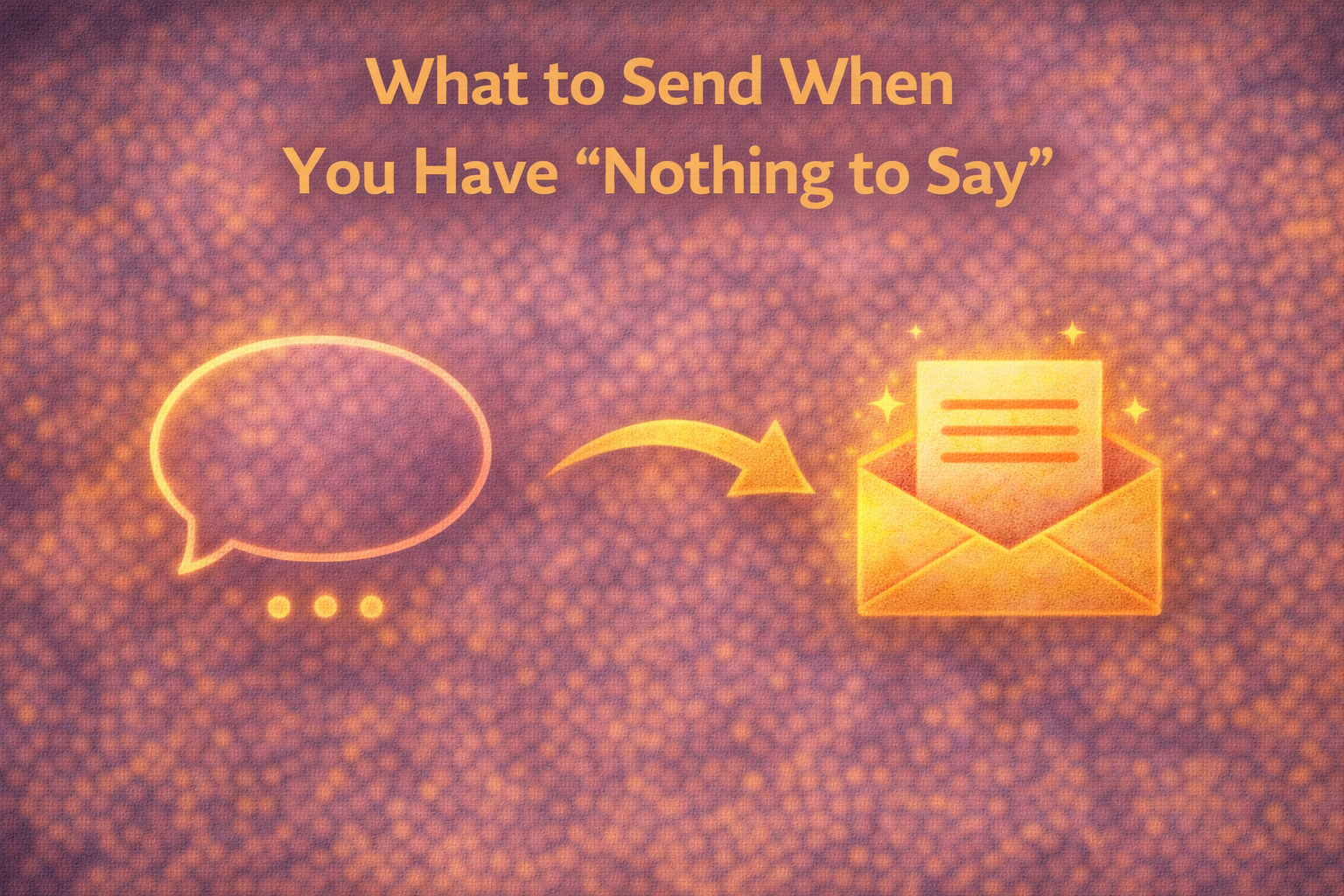
  • Issue #30 What to Send When You Have “Nothing to Say”

    Every email marketer hits this moment.

    You sit down to write…
    And nothing comes to mind.

    No big idea.
    No breakthrough insight.
    No exciting update.

    So you don’t send anything.

    And that’s where most people go wrong.

    Because the truth is—you don’t need something “big” to say.

    You just need something useful, relatable, or real.


    The Myth of Needing Something New

    A lot of people believe every email has to be:

    • Original
    • Deep
    • Insightful
    • Perfectly written

    But your audience isn’t expecting perfection.

    They’re just looking for something that helps, reminds, or connects.


    Simple Things You Can Send Anytime

    When you feel stuck, start here:

    1. A Quick Reminder

    Most people don’t need new information—they need reminders.

    Example:

    • “Consistency beats intensity.”
    • “Done is better than perfect.”
    • “Focus on one thing today.”

    Simple ideas, repeated at the right time, are powerful.


    2. A Lesson You Recently Learned

    Share something small:

    • A mistake you made
    • Something that didn’t work
    • Something that surprised you

    It doesn’t have to be groundbreaking—just honest.


    3. Answer a Basic Question

    Think about:

    • What beginners struggle with
    • Questions you’ve seen repeatedly
    • Confusion you’ve had yourself

    If you’ve thought it, others have too.


    4. Share What You’re Working On

    People like seeing progress.

    You can talk about:

    • A post you’re writing
    • A funnel you’re building
    • Something you’re testing

    This builds connection and transparency.


    5. Revisit an Old Idea

    Not everyone saw your last email.

    And even if they did, repetition helps.

    You can:

    • Expand on a previous topic
    • Explain it differently
    • Add a new angle

    The Real Goal of Your Emails

    Your job isn’t to impress.

    It’s to:

    • Stay consistent
    • Stay visible
    • Stay connected

    Silence breaks momentum.

    Simple emails maintain it.


    A Helpful Shift in Thinking

    Instead of asking:

    “What should I say?”

    Ask:

    “What would help someone today?”

    That one shift makes writing easier—and more effective.


    Final Thought

    You don’t need something brilliant.

    You just need to show up.

    Because the people who grow their lists and build trust aren’t the ones who send perfect emails…

    They’re the ones who send emails consistently.

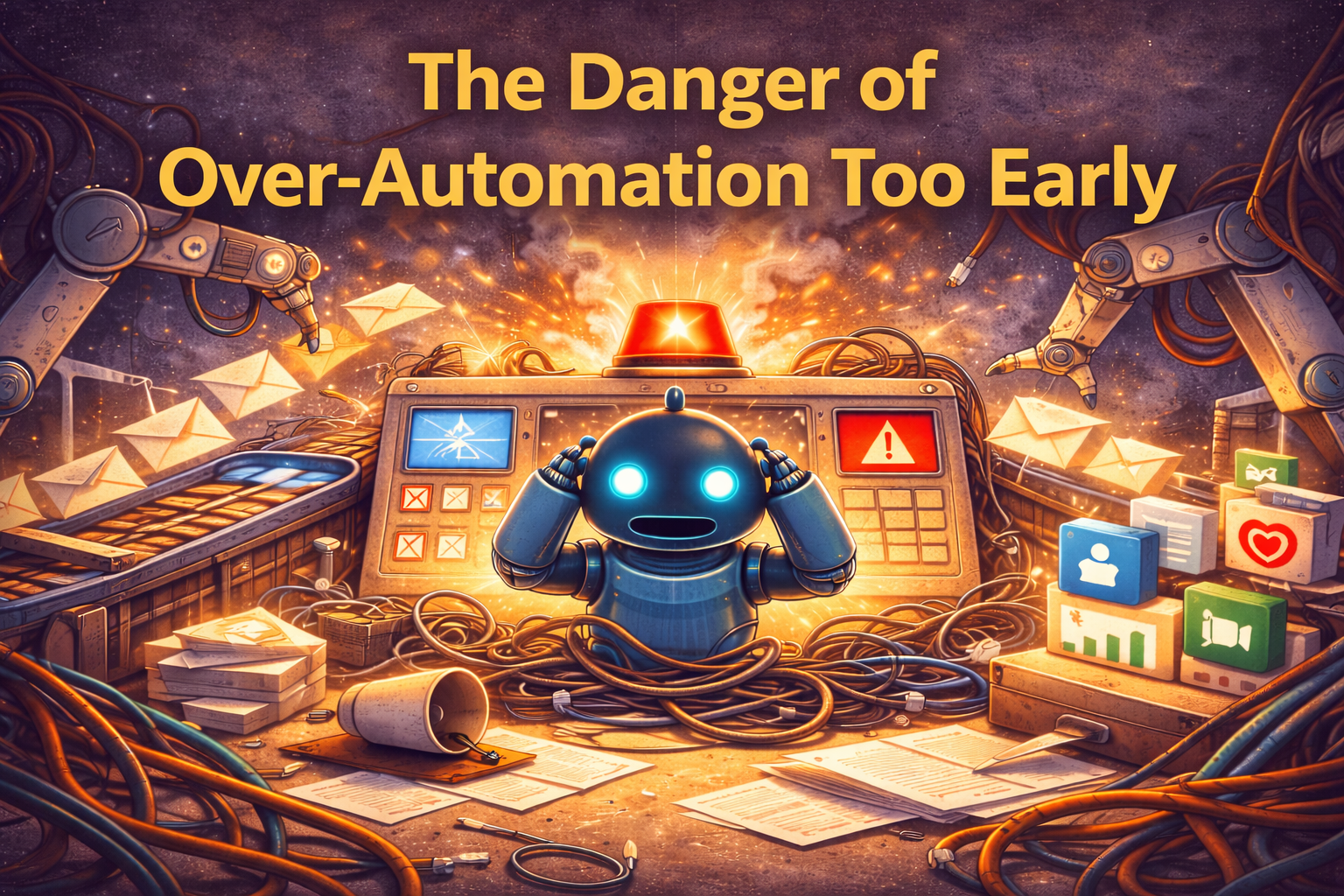
  • Issue #24: The Danger of Over-Automation Too Early

    Automation is powerful. It saves time, reduces manual effort, and allows you to scale faster than ever before.

    But there’s a hidden trap many founders, marketers, and creators fall into:

    They automate before they understand what actually works.

    And that mistake can quietly stall growth, burn cash, and disconnect you from your customers.

    Let’s talk about why over-automation too early is dangerous — and how to avoid it.

    The Seduction of Automation

    Today, you can automate:

    Email sequences

    Lead nurturing

    Social media posting

    Customer onboarding

    Sales follow-ups

    Content distribution

    Support responses

    With a few clicks, your business can look “fully built.”

    But looking automated and being effective are two very different things.

    Automation multiplies systems. If the system is flawed, automation multiplies the flaws.

    Why Early Automation Backfires

    1. You Haven’t Validated the Process Yet

    Before you automate, you need proof:

    Which messaging converts?

    Which offer resonates?

    Where do customers get confused?

    What objections come up repeatedly?

    If you automate too soon, you lock in guesses instead of insights.

    Manual work forces you to pay attention. Automation removes that feedback loop.

    1. You Lose Customer Intimacy

    In the early stages, direct interaction is gold.

    When you manually:

    Respond to emails

    Run sales calls

    Handle onboarding

    Follow up personally

    You gather language, objections, patterns, and emotional triggers.

    Automating too early cuts off that learning channel — and that knowledge is often what creates real growth later.

    1. You Add Complexity Before Revenue

    Automation tools come with:

    Monthly costs

    Integration headaches

    Setup time

    Maintenance

    Hidden edge cases

    If revenue isn’t consistent yet, you’re layering complexity on top of uncertainty.

    That’s not scaling. That’s building infrastructure for traffic that doesn’t exist yet.

    1. You Optimize Before You Prove Demand

    Many founders build:

    10-email nurture sequences

    Multi-branch funnels

    Complex CRM workflows

    …before they’ve even confirmed people want the core offer.

    Automation should amplify something that’s already working — not compensate for something that isn’t.

    When Automation Does Make Sense

    Automation becomes powerful when:

    You’ve manually validated the funnel

    You understand objections and buyer psychology

    Revenue is consistent

    The process is repeatable

    Bottlenecks are clearly identified

    At that point, automation becomes leverage — not distraction.

    The Right Order of Operations

    Here’s a safer progression:

    Manual First Do it yourself. Talk to customers. Test messaging. Refine.

    Document What Works Identify patterns and repeatable processes.

    Simplify the System Remove unnecessary steps.

    Then Automate Only automate what is proven and stable.

    Automation should feel like removing friction — not adding moving parts.

    A Simple Rule to Remember

    If you haven’t:

    Closed 20–50 sales manually

    Personally handled objections

    Seen the funnel convert consistently

    It’s probably too early to automate heavily.

    Manual effort builds clarity. Clarity builds conversion. Conversion earns the right to automate.

    Final Thought

    Automation is a multiplier.

    If your foundation is strong, it accelerates growth. If your foundation is weak, it accelerates failure.

    Build understanding first. Automate second.

    That order alone can save you months of frustration.

  • Issue #23 Free Tools That Actually Pull Their Weight

    Issue #23 Free Tools That Actually Pull Their Weight

    Free tools get a bad reputation.

    Some are limited. Some are clunky. Some are just stepping stones to paid upgrades.

    But here’s the truth:

    Some free tools are powerful enough to build real momentum — if you use them correctly.

    You don’t need a massive tech stack to get started. You need tools that actually pull their weight.


    What Makes a Free Tool Worth Using?

    Not all free tools are equal.

    The ones that pull their weight usually do at least one of these:

    • Solve a real problem (not just a minor inconvenience)
    • Save time
    • Replace manual effort
    • Help you validate before investing
    • Scale with you — at least for a while

    If it doesn’t help you move forward, it’s just digital clutter.


    Free Tools That Deliver Real Value

    Here are categories where free tools can genuinely support growth:

    1. Content Creation

    Free writing tools, basic design platforms, and simple video editors can be more than enough to publish consistently.

    At the early stage, consistency beats polish.


    2. Email Marketing (Starter Plans)

    Many email platforms offer free tiers that allow you to:

    • Build a small list
    • Create automated welcome sequences
    • Send broadcasts
    • Track opens and clicks

    You don’t need advanced segmentation on day one. You need subscribers.


    3. Landing Page Builders

    Some platforms allow limited free pages.

    That’s all you need to test:

    • An idea
    • A lead magnet
    • An offer

    Validation comes before upgrades.


    4. Analytics & Tracking

    Free analytics tools can show you:

    • Where traffic is coming from
    • Which pages are working
    • What needs improvement

    Data beats guessing — even basic data.


    When Free Is Enough

    Free tools are enough when:

    • You’re still validating your niche
    • You’re learning the fundamentals
    • Your traffic is low
    • You don’t have consistent revenue yet

    At this stage, your focus should be: Skill building and system building — not subscriptions.


    When Free Stops Pulling Its Weight

    Free tools stop working when:

    • Limitations slow you down
    • Branding looks unprofessional
    • Automation is restricted
    • Deliverability becomes an issue
    • You’re leaving money on the table

    That’s when upgrading becomes strategic — not emotional.


    The Real Advantage

    Free tools force you to:

    • Get resourceful
    • Focus on fundamentals
    • Build lean systems
    • Avoid shiny object syndrome

    Constraints create clarity.

    And clarity builds momentum.


    Final Thought

    You don’t need expensive tools to start.

    You need discipline. You need consistency. You need systems.

    Use free tools to build traction.

    Then let revenue fund the upgrades.

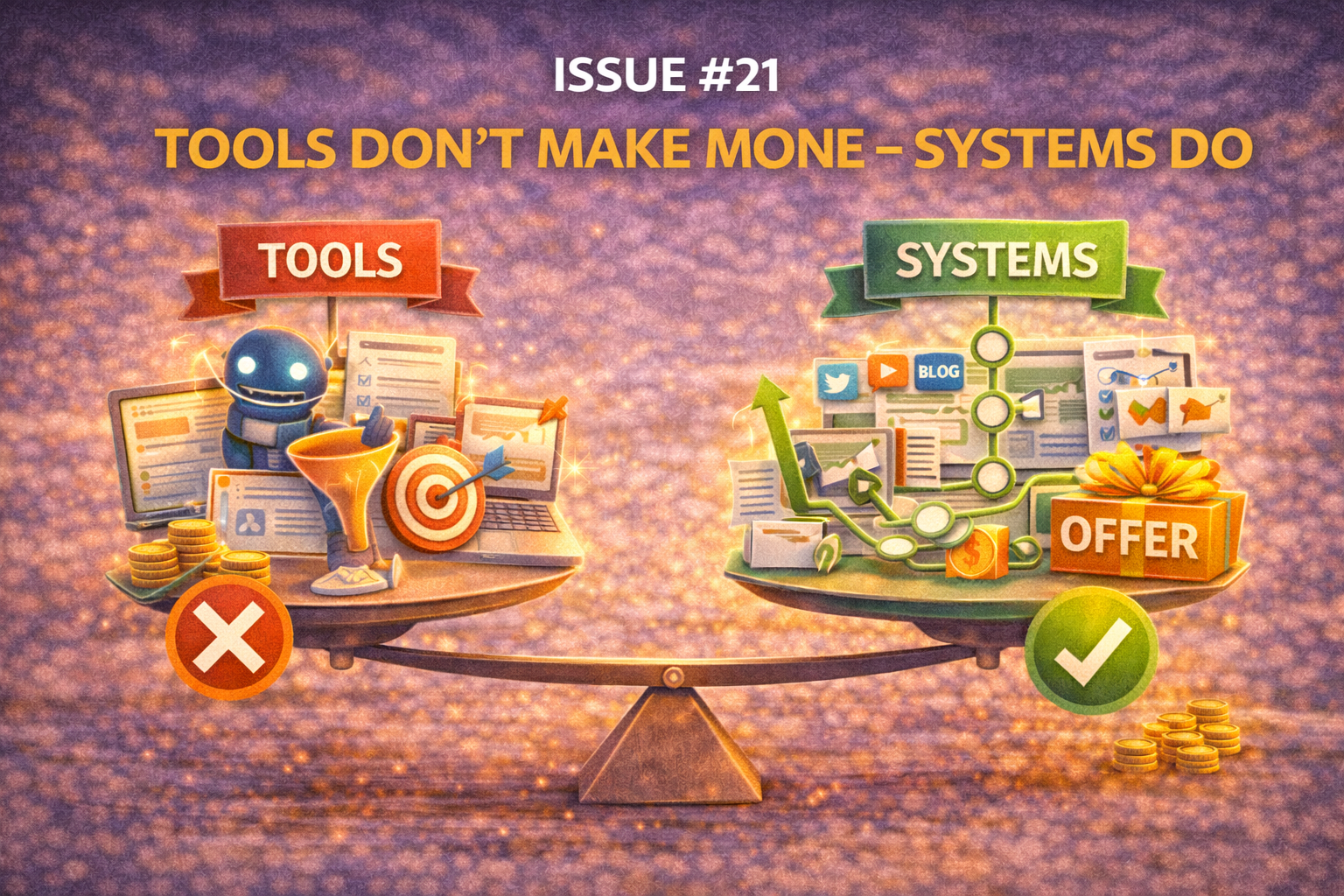
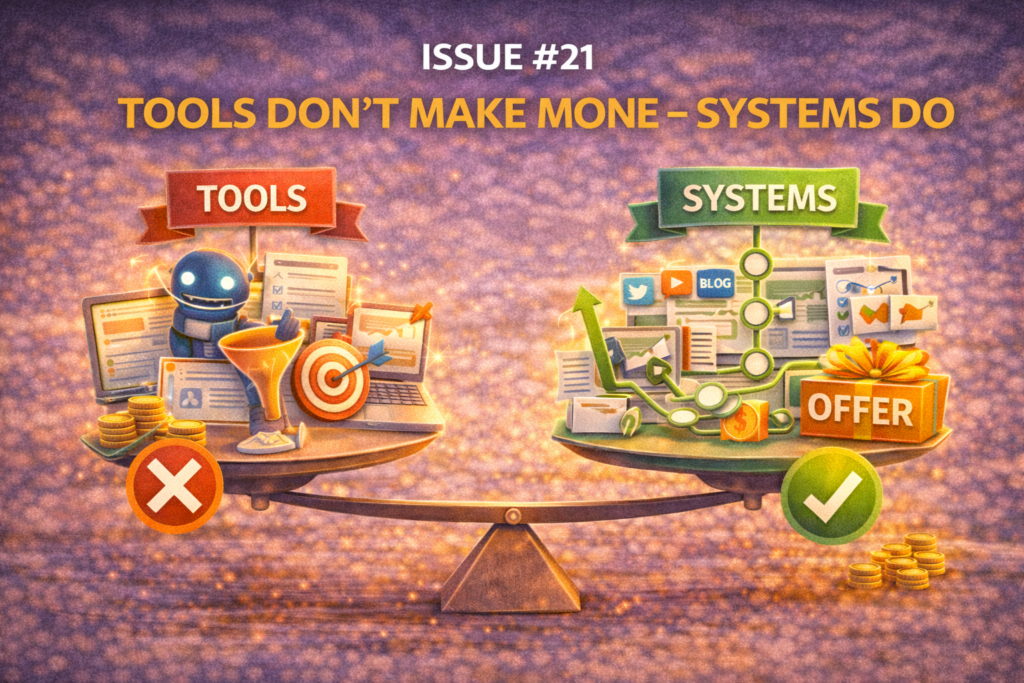
  • Issue #21: Tools Don’t Make Money — Systems Do

    Issue #21: Tools Don’t Make Money — Systems Do

    It’s tempting to believe the next tool will fix everything.

    A better funnel builder. A smarter email platform. A new AI writing app. A different course dashboard.

    But here’s the truth most beginners learn the hard way.

    Tools don’t make money.

    Systems do.


    The Tool Trap

    Buying tools feels productive.

    You’re setting things up. Exploring features. Watching tutorials. Organizing dashboards.

    But activity isn’t the same as revenue.

    A tool is just a container.

    Without a system behind it, it’s expensive shelf décor.


    What a Tool Actually Does

    A tool helps you:

    • Send emails
    • Build pages
    • Track clicks
    • Design graphics
    • Automate tasks

    But it does not:

    • Create strategy
    • Generate consistent traffic
    • Write persuasive messaging
    • Build trust
    • Fix unclear offers

    That part is on you.


    What a System Looks Like

    A simple affiliate marketing system might look like this:

    1. Traffic source (YouTube, blog, Pinterest, etc.)
    2. Lead capture page
    3. Email follow-up sequence
    4. Clear offer
    5. Consistent content publishing schedule

    Notice something?

    None of that depends on a specific tool.

    The tool supports the system. The system drives the revenue.


    Why Systems Win Long-Term

    When you focus on systems:

    • You stop jumping platforms
    • You stop chasing shiny features
    • You improve conversion points
    • You measure what matters
    • You build consistency

    Systems create predictability.

    Predictability creates income.


    The Real Question to Ask

    Instead of asking:

    “Which tool should I buy?”

    Ask:

    “What system am I building?”

    And then:

    “Is this tool supporting that system — or distracting me from it?”

    That one shift can save you months of wasted time and money.


    Final Thought

    The most successful marketers don’t have the most tools.

    They have the clearest systems.

    Build the machine. Then plug tools into it.

    Not the other way around.

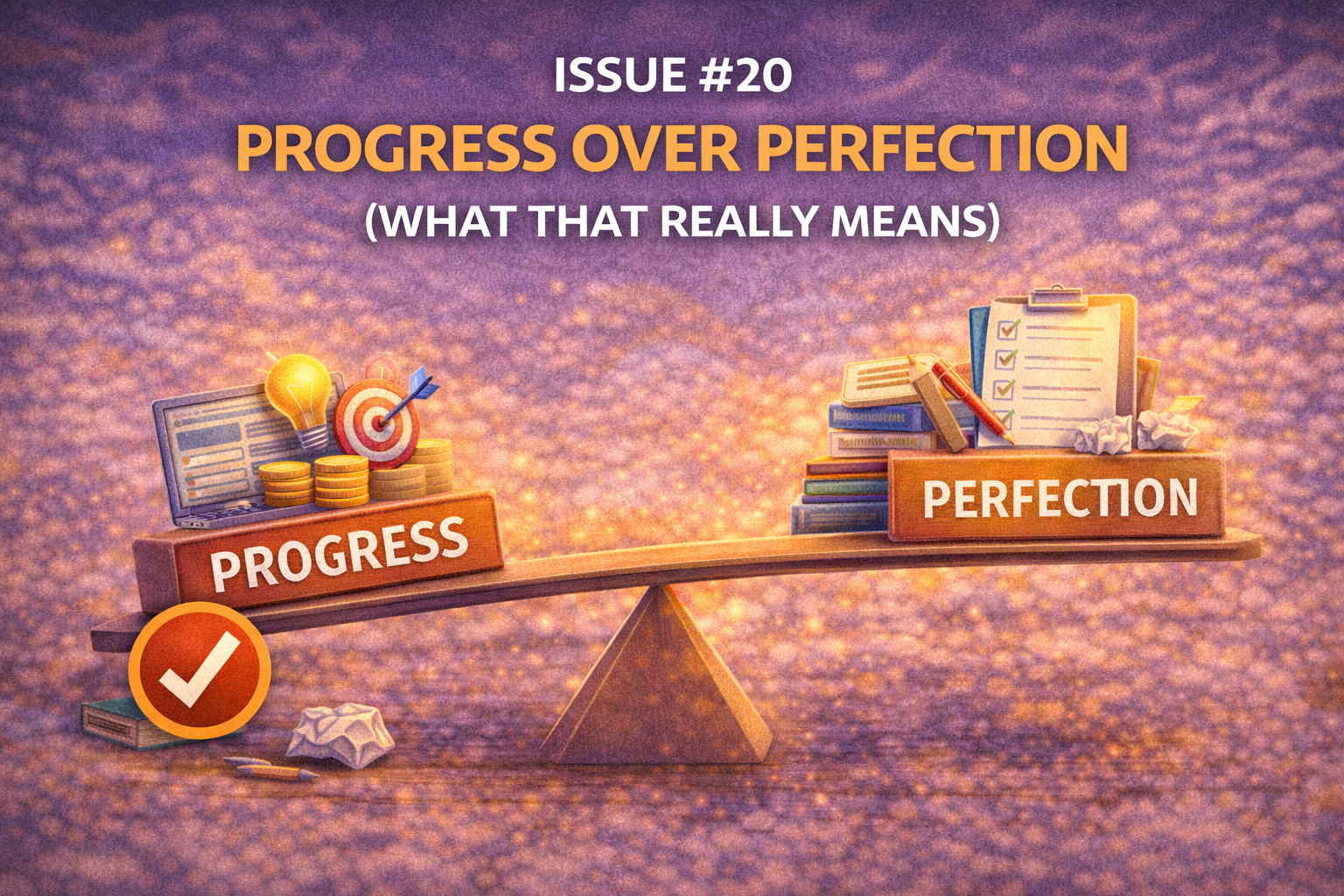
  • Issue #20: Progress Over Perfection (What That Really Means)

    Issue #20: Progress Over Perfection (What That Really Means)

    “Progress over perfection.”

    You’ve heard it before.

    It’s quoted in productivity books. Posted on Instagram. Repeated in marketing communities.

    But what does it actually mean when you’re building an online business?

    Because let’s be honest — most people say they believe in progress over perfection…

    …and then spend three hours rewriting a headline.


    Perfection Feels Responsible

    Perfection disguises itself as professionalism.

    You tell yourself:

    • “I just want it to be high quality.”
    • “I don’t want to look inexperienced.”
    • “I need to make sure it’s right.”

    Those aren’t bad intentions.

    But perfection often becomes a delay tactic dressed up as standards.


    Progress Is Messy (And That’s the Point)

    Progress looks like:

    • Publishing before you feel 100% ready
    • Sending the email even if it’s not brilliant
    • Launching with version 1.0
    • Learning from real feedback instead of imaginary criticism

    Progress means movement.

    Perfection means hesitation.

    And momentum only exists when something is moving.


    What Progress Over Perfection Actually Means

    It does not mean:

    • Being sloppy
    • Ignoring improvement
    • Avoiding growth

    It means:

    You improve through action — not before it.

    The first blog post won’t be your best. The first funnel won’t convert at 40%. The first video won’t look polished.

    But the tenth? The fiftieth? The hundredth?

    Those exist only because you started.


    Why Perfection Slows Your Business Down

    Perfection creates:

    • Slower output
    • Less data
    • Fewer learning cycles
    • Delayed momentum

    Progress creates:

    • Consistency
    • Confidence
    • Compounding growth
    • Real-world feedback

    One builds anxiety. The other builds experience.


    A Better Standard to Follow

    Instead of asking:

    “Is this perfect?”

    Ask:

    “Is this useful?” “Is this clear?” “Is this ready to help someone?”

    If yes — publish it.

    Refine later. Optimize later. Upgrade later.

    But move now.


    Final Thought

    Perfection is about protecting your ego.

    Progress is about building your business.

    Choose progress.

    Every time.

    Because momentum beats mastery — especially in the beginning.

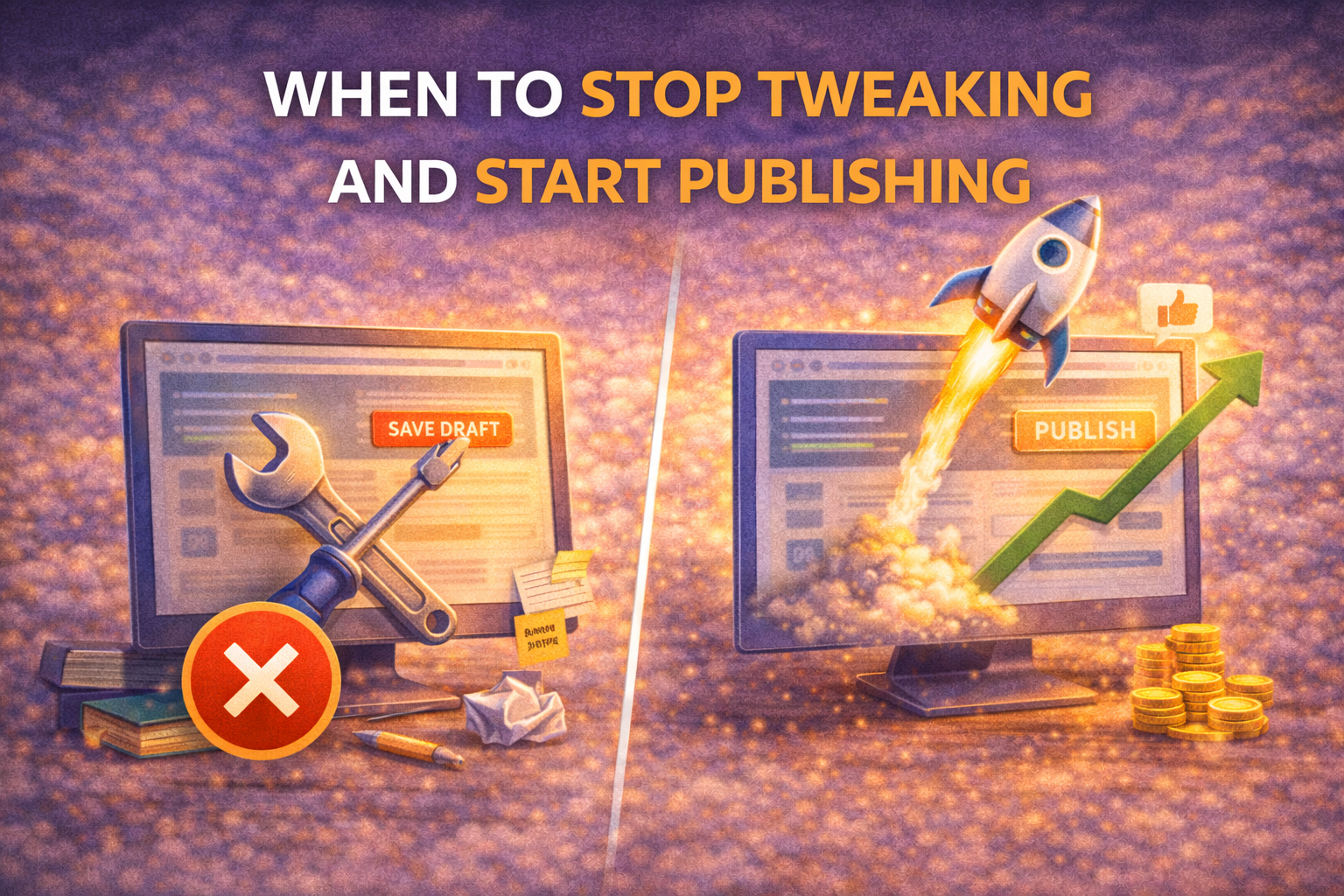
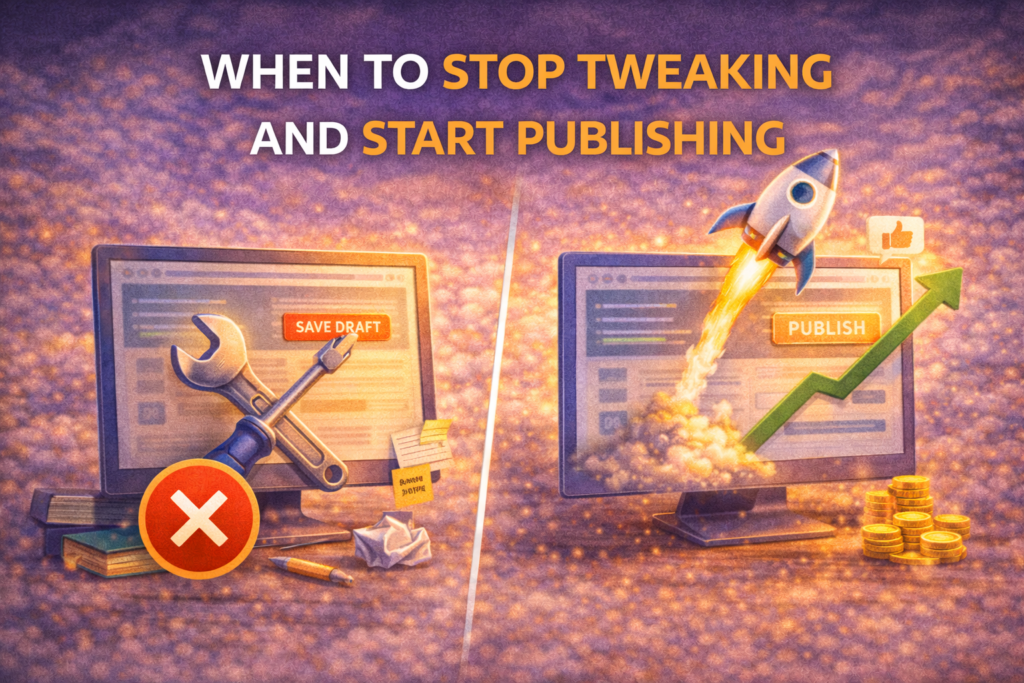
  • Issue #19 When to Stop Tweaking and Start Publishing

    Issue #19 When to Stop Tweaking and Start Publishing

    If you’ve ever delayed publishing because something didn’t feel quite ready, this post is for you.

    Many affiliate marketers don’t struggle with ideas—they struggle with over-tweaking. Headlines get rewritten. Pages get adjusted. Emails get saved as drafts.

    And nothing goes live.

    At some point, tweaking stops helping—and starts holding you back.


    The Comfort Trap of Tweaking

    Tweaking feels productive.

    You’re:

    • Adjusting headlines
    • Testing layouts
    • Refining copy
    • Reworking funnels

    But often, tweaking is just a way to avoid the discomfort of putting your work out there.

    Publishing feels risky. Tweaking feels safe.


    Why Publishing Matters More Than Perfection

    You don’t get feedback from drafts. You don’t get data from unfinished pages. You don’t build momentum from things no one sees.

    Real progress only happens after you publish.

    Traffic, clicks, opt-ins, and sales all require one thing first: Visibility.


    Signs You’re Over-Tweaking

    You might be stuck tweaking if:

    • You’ve rewritten the same page multiple times
    • You keep “just fixing one more thing”
    • You’re waiting for confidence instead of action
    • You’ve consumed more advice than you’ve applied

    Perfection isn’t the goal. Progress is.


    What to Check Before You Publish

    Before hitting publish, ask yourself:

    • Is this clear?
    • Does it solve one problem?
    • Is there a next step for the reader?

    If the answer is yes—you’re ready.

    Everything else can be improved after it’s live.


    Publishing Creates Momentum

    Once something is live, you can:

    • Track results
    • Make informed improvements
    • Learn what actually works
    • Build confidence through action

    Most successful marketers didn’t start with perfect systems. They started by shipping consistently.


    Final Thought

    Tweaking has a place—but it shouldn’t replace action.

    If you’ve been sitting on a post, a page, or an idea: Publish it. Let it breathe. Improve it later.

    Momentum doesn’t come from polishing. It comes from showing up.


    Done beats perfect. Every time.