Tag: timemanagement

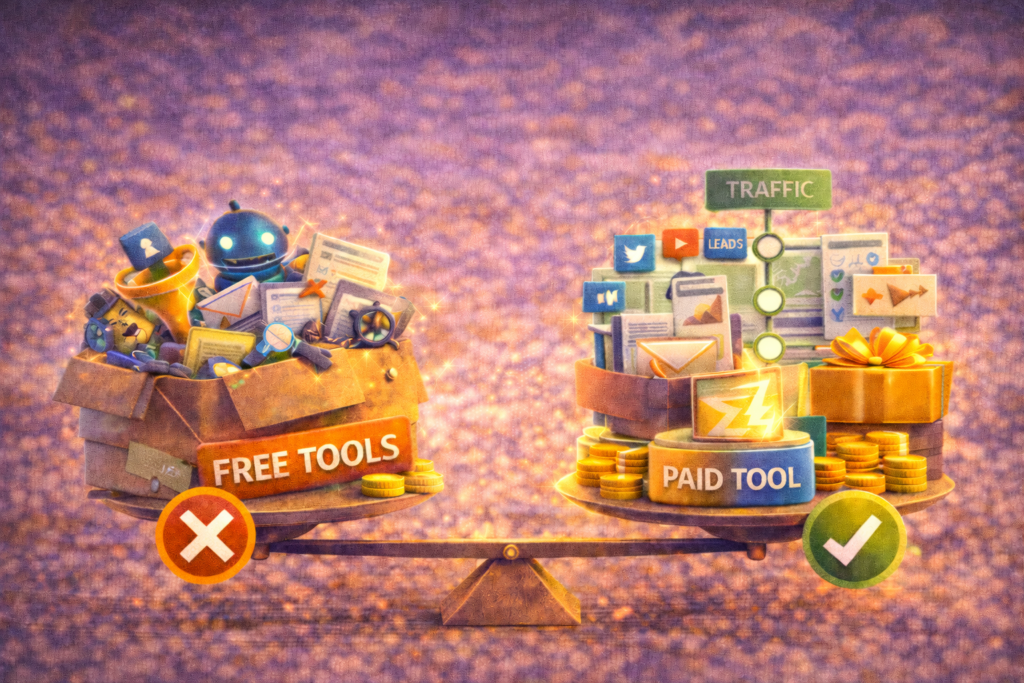
  • Issue #23 Free Tools That Actually Pull Their Weight

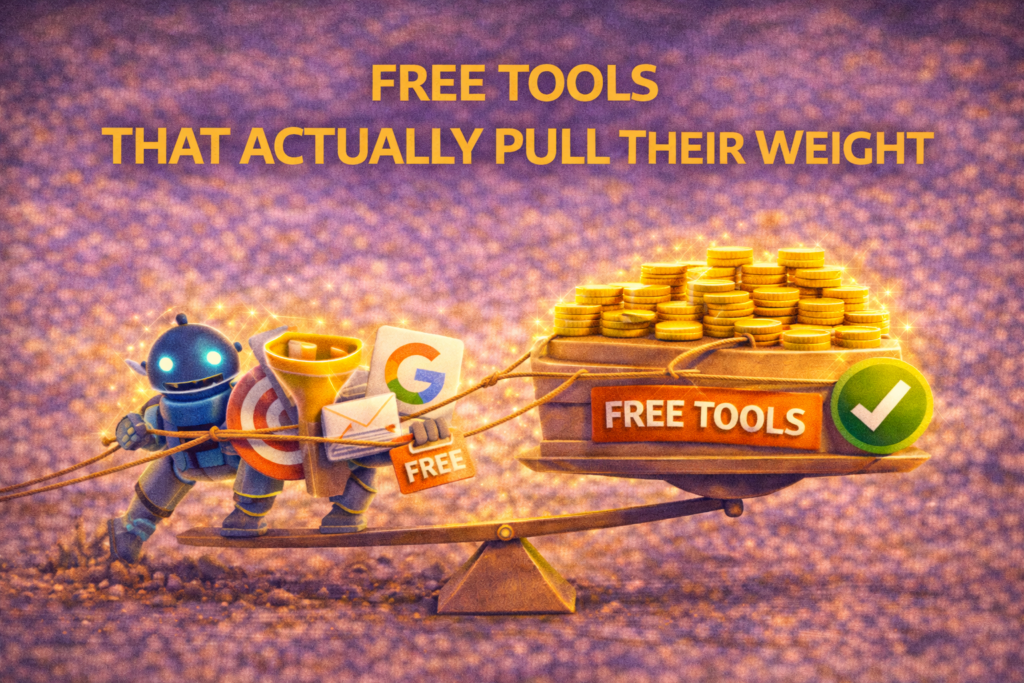
    Issue #23 Free Tools That Actually Pull Their Weight

    Free tools get a bad reputation.

    Some are limited. Some are clunky. Some are just stepping stones to paid upgrades.

    But here’s the truth:

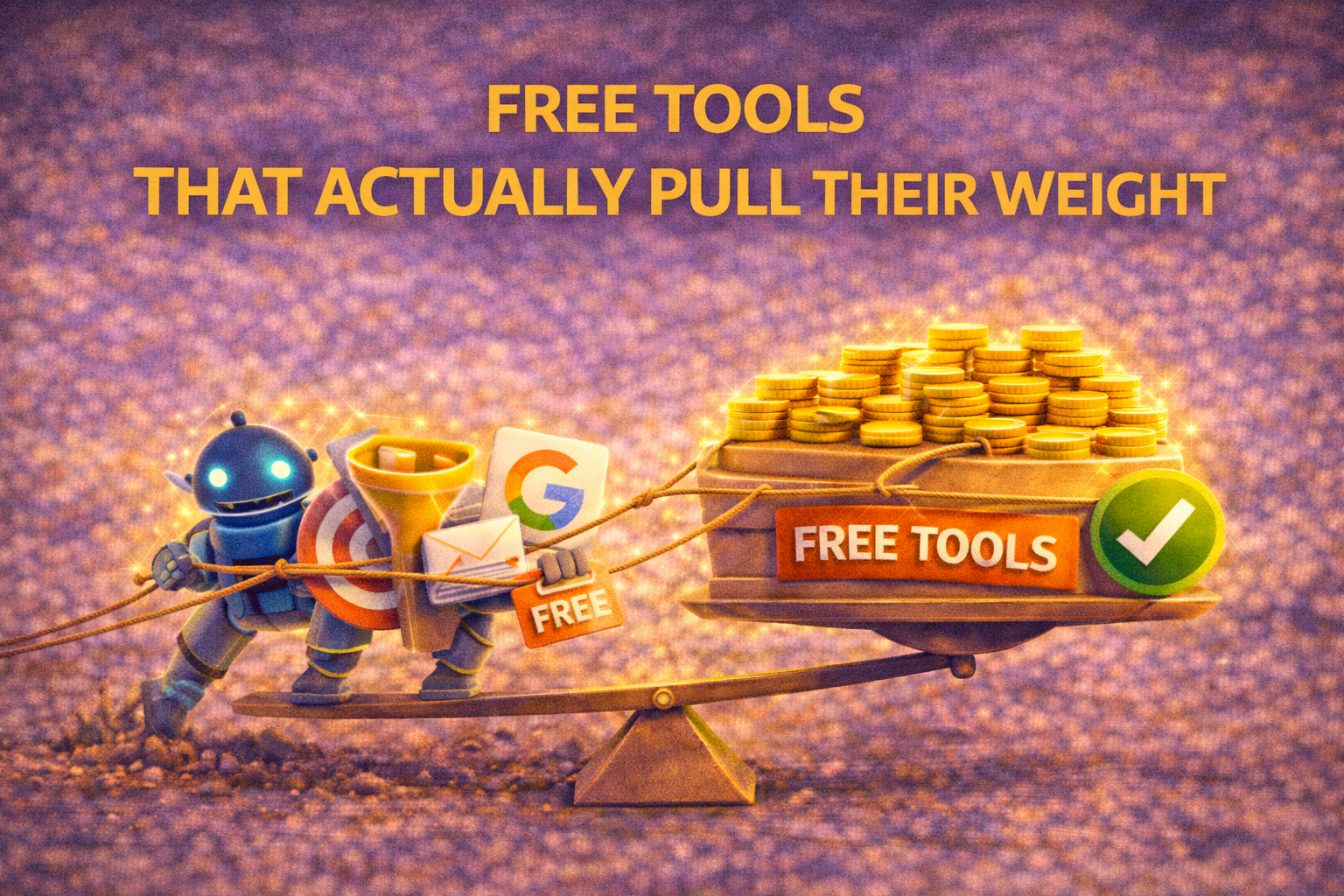
    Some free tools are powerful enough to build real momentum — if you use them correctly.

    You don’t need a massive tech stack to get started. You need tools that actually pull their weight.


    What Makes a Free Tool Worth Using?

    Not all free tools are equal.

    The ones that pull their weight usually do at least one of these:

    • Solve a real problem (not just a minor inconvenience)
    • Save time
    • Replace manual effort
    • Help you validate before investing
    • Scale with you — at least for a while

    If it doesn’t help you move forward, it’s just digital clutter.


    Free Tools That Deliver Real Value

    Here are categories where free tools can genuinely support growth:

    1. Content Creation

    Free writing tools, basic design platforms, and simple video editors can be more than enough to publish consistently.

    At the early stage, consistency beats polish.


    2. Email Marketing (Starter Plans)

    Many email platforms offer free tiers that allow you to:

    • Build a small list
    • Create automated welcome sequences
    • Send broadcasts
    • Track opens and clicks

    You don’t need advanced segmentation on day one. You need subscribers.


    3. Landing Page Builders

    Some platforms allow limited free pages.

    That’s all you need to test:

    • An idea
    • A lead magnet
    • An offer

    Validation comes before upgrades.


    4. Analytics & Tracking

    Free analytics tools can show you:

    • Where traffic is coming from
    • Which pages are working
    • What needs improvement

    Data beats guessing — even basic data.


    When Free Is Enough

    Free tools are enough when:

    • You’re still validating your niche
    • You’re learning the fundamentals
    • Your traffic is low
    • You don’t have consistent revenue yet

    At this stage, your focus should be: Skill building and system building — not subscriptions.


    When Free Stops Pulling Its Weight

    Free tools stop working when:

    • Limitations slow you down
    • Branding looks unprofessional
    • Automation is restricted
    • Deliverability becomes an issue
    • You’re leaving money on the table

    That’s when upgrading becomes strategic — not emotional.


    The Real Advantage

    Free tools force you to:

    • Get resourceful
    • Focus on fundamentals
    • Build lean systems
    • Avoid shiny object syndrome

    Constraints create clarity.

    And clarity builds momentum.


    Final Thought

    You don’t need expensive tools to start.

    You need discipline. You need consistency. You need systems.

    Use free tools to build traction.

    Then let revenue fund the upgrades.
  • Issue #22 When a Tool is Worth Paying For

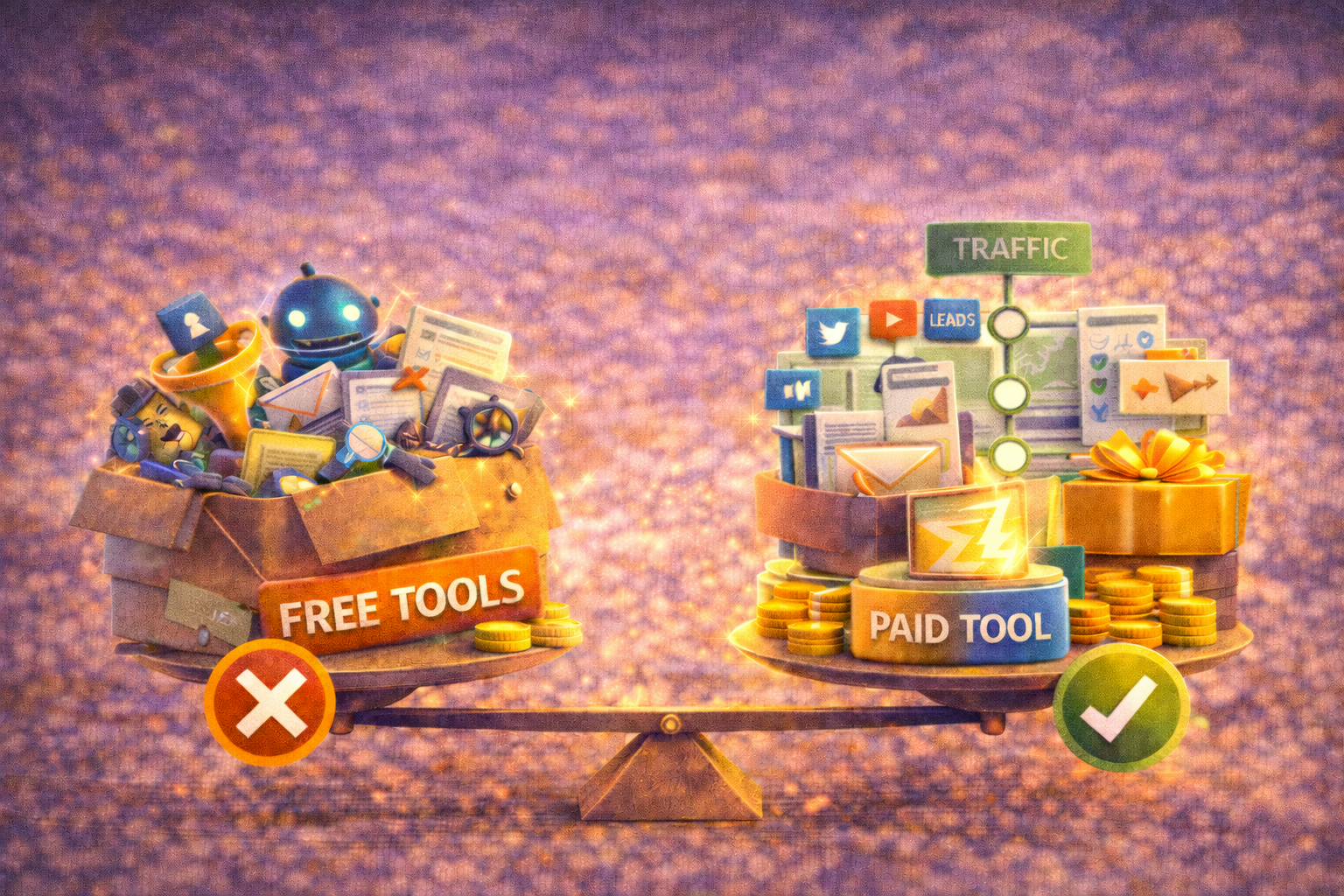
    Issue #22 When a Tool is Worth Paying For

    Affiliate marketers love tools.

    Email platforms. Landing page builders. Keyword research tools. AI writers. Automation software.

    The question isn’t whether tools are useful.

    The real question is:

    When is a tool actually worth paying for?

    Because not every tool deserves your money.


    The Hard Truth About Tools

    Tools don’t make money.

    They make tasks easier.

    And there’s a big difference.

    A tool only becomes valuable when it supports a system that already works—or helps you build one faster.

    If you don’t have traffic, a more expensive funnel builder won’t fix that. If you don’t have an offer, better automation won’t save you.

    Tools amplify what already exists.


    A Tool Is Worth Paying For When…

    1. It Saves Significant Time

    Time is your most limited resource.

    If a $30/month tool saves you 10 hours per month, that’s probably worth it.

    Speed compounds.


    2. It Replaces Manual Work

    If you’re copy-pasting emails, tracking leads in spreadsheets, or manually delivering content, automation can free you up to focus on growth.

    Less busy work. More leverage.


    3. It Increases Revenue Directly

    Some tools clearly impact revenue:

    • Better email deliverability
    • Improved page speed
    • Higher conversion tracking accuracy

    If it helps you earn more than it costs, it’s an investment—not an expense.


    4. You’ve Outgrown the Free Version

    Free tools are great for starting.

    But once limitations slow you down, upgrading makes sense.

    Don’t upgrade because you’re bored. Upgrade because you’re constrained.


    When a Tool Is NOT Worth Paying For

    • When you’re procrastinating with “optimization”
    • When you don’t have traffic yet
    • When you haven’t validated your offer
    • When you’re chasing features instead of results

    More features don’t equal more income.

    Better systems do.


    The Simple Test

    Before paying for a tool, ask:

    1. What specific problem does this solve?
    2. What happens if I don’t buy it?
    3. Will this help me move faster or earn more?

    If you can’t answer clearly, wait.

    Clarity first. Subscription second.


    Final Thought

    Tools are powerful.

    But only inside a working system.

    Build the system. Prove the process. Then upgrade what truly helps you scale.

  • Issue #19 When to Stop Tweaking and Start Publishing

    Issue #19 When to Stop Tweaking and Start Publishing

    If you’ve ever delayed publishing because something didn’t feel quite ready, this post is for you.

    Many affiliate marketers don’t struggle with ideas—they struggle with over-tweaking. Headlines get rewritten. Pages get adjusted. Emails get saved as drafts.

    And nothing goes live.

    At some point, tweaking stops helping—and starts holding you back.


    The Comfort Trap of Tweaking

    Tweaking feels productive.

    You’re:

    • Adjusting headlines
    • Testing layouts
    • Refining copy
    • Reworking funnels

    But often, tweaking is just a way to avoid the discomfort of putting your work out there.

    Publishing feels risky. Tweaking feels safe.


    Why Publishing Matters More Than Perfection

    You don’t get feedback from drafts. You don’t get data from unfinished pages. You don’t build momentum from things no one sees.

    Real progress only happens after you publish.

    Traffic, clicks, opt-ins, and sales all require one thing first: Visibility.


    Signs You’re Over-Tweaking

    You might be stuck tweaking if:

    • You’ve rewritten the same page multiple times
    • You keep “just fixing one more thing”
    • You’re waiting for confidence instead of action
    • You’ve consumed more advice than you’ve applied

    Perfection isn’t the goal. Progress is.


    What to Check Before You Publish

    Before hitting publish, ask yourself:

    • Is this clear?
    • Does it solve one problem?
    • Is there a next step for the reader?

    If the answer is yes—you’re ready.

    Everything else can be improved after it’s live.


    Publishing Creates Momentum

    Once something is live, you can:

    • Track results
    • Make informed improvements
    • Learn what actually works
    • Build confidence through action

    Most successful marketers didn’t start with perfect systems. They started by shipping consistently.


    Final Thought

    Tweaking has a place—but it shouldn’t replace action.

    If you’ve been sitting on a post, a page, or an idea: Publish it. Let it breathe. Improve it later.

    Momentum doesn’t come from polishing. It comes from showing up.


    Done beats perfect. Every time.

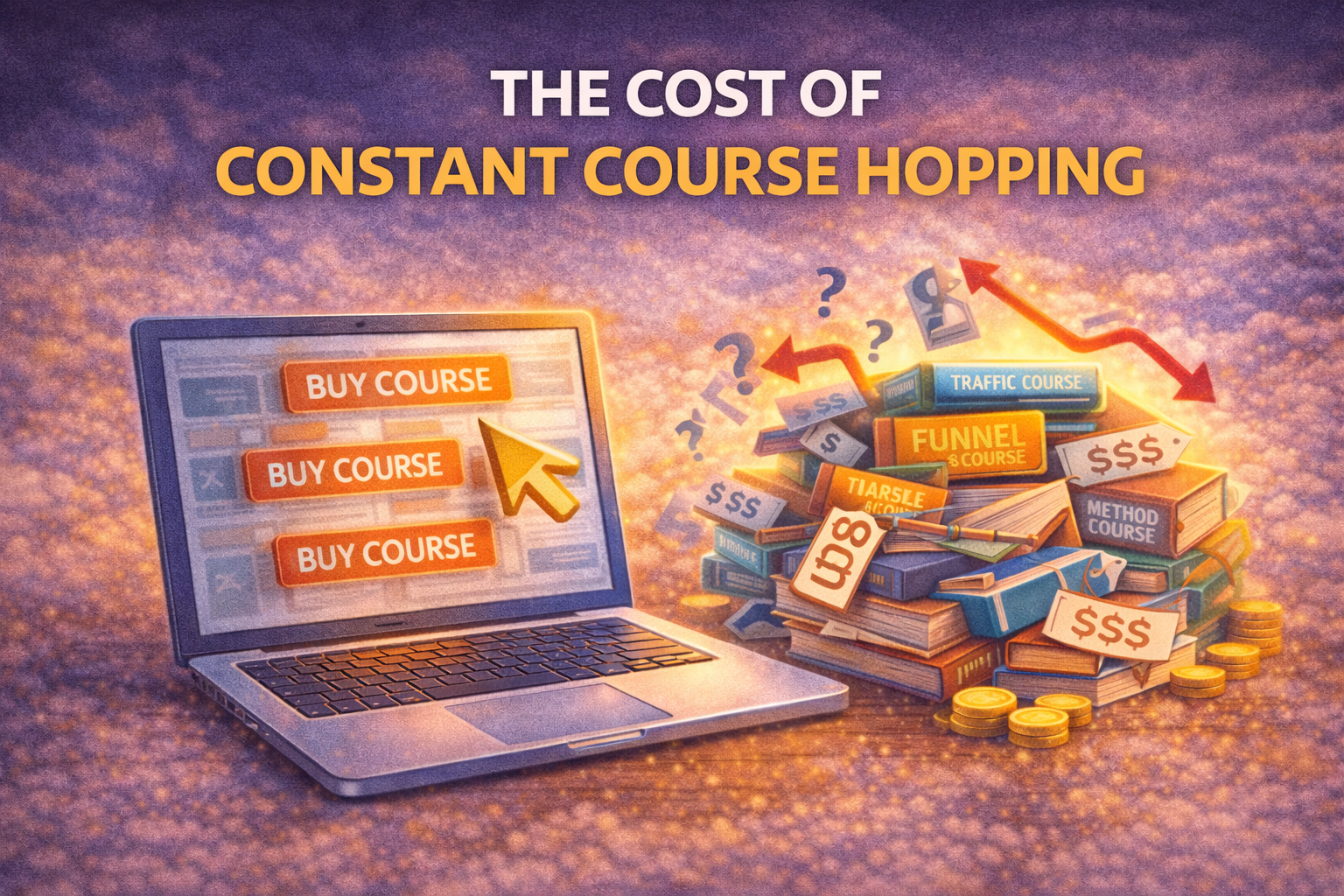
  • Issue #18 The Cost of Constant Course Hopping

    Issue #18 The Cost of Constant Course Hopping

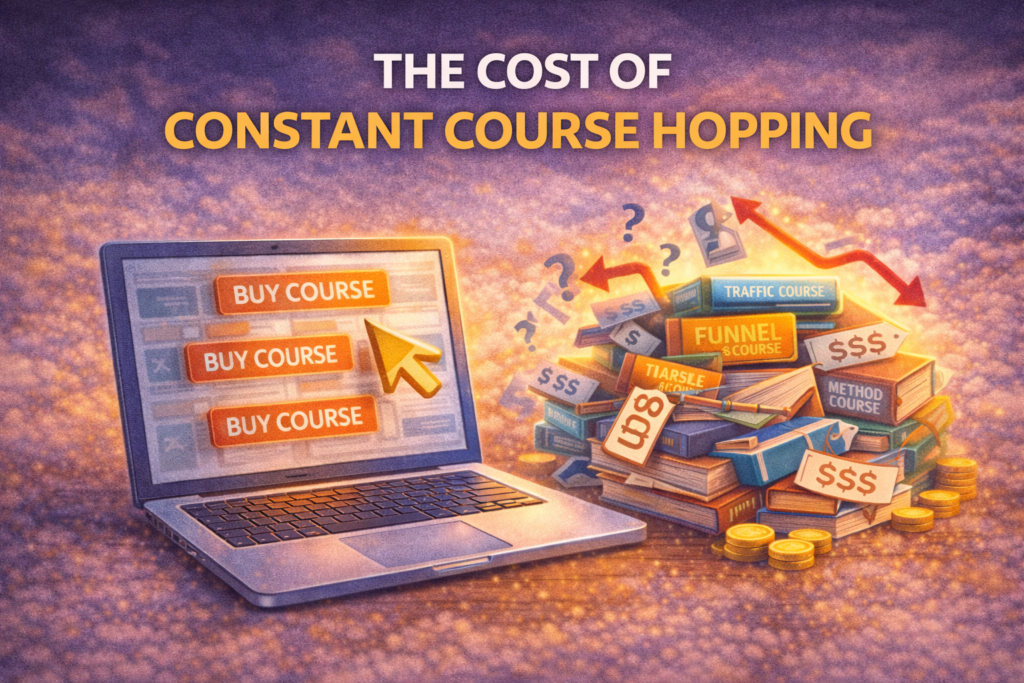
    Have you ever bought a course, felt excited for a few days… then jumped to another one before finishing the first?

    You’re not alone.

    Course hopping is incredibly common in online business—especially for affiliate marketers trying to “figure it all out.” But while it feels productive, it often creates the opposite result.

    Let’s talk about the real cost of constantly switching strategies.


    What Course Hopping Looks Like

    Course hopping doesn’t always feel like a problem. It often looks like:

    • Buying the “next best” traffic course
    • Switching funnels every few weeks
    • Chasing new methods instead of finishing one
    • Consuming training without implementation

    On the surface, it feels like learning. Underneath, it’s avoidance.


    The Hidden Costs No One Talks About

    The price isn’t just financial.

    1. Lost Momentum

    Every time you switch, you reset your progress. Systems need time to work.

    2. Shattered Focus

    Your attention gets split across strategies, tools, and platforms.

    3. Delayed Results

    Results come from execution, not information.

    4. Confidence Erosion

    Constantly restarting trains your brain to expect failure instead of follow-through.


    Why We Do It Anyway

    Course hopping usually comes from:

    • Fear of choosing the “wrong” path
    • Impatience for results
    • Shiny-object syndrome
    • Lack of a simple execution plan

    When things feel unclear, buying another course feels like progress—even when it isn’t.


    What Actually Moves the Needle

    Most successful marketers didn’t:

    • Take 20 courses at once
    • Switch strategies every month
    • Constantly rebuild their funnels

    They picked:

    • One traffic method
    • One simple funnel
    • One offer

    Then they stayed consistent long enough to let it work.


    A Better Way to Learn

    Instead of asking:

    “What course should I buy next?”

    Try asking:

    • What am I avoiding implementing?
    • What part of my current system is unfinished?
    • What can I improve instead of replace?

    Learning should support execution—not replace it.


    Final Thought

    The real cost of course hopping isn’t money.

    It’s:

    • Lost time
    • Lost focus
    • Lost belief in yourself

    Depth beats novelty. Execution beats consumption. Consistency beats everything.

    Stick with one path long enough to give it a fair shot.


    Progress doesn’t come from knowing more—it comes from doing more of the right things, consistently.

  • Issue #17 Building Your Business in 30-Minute Blocks

    Issue #17 Building Your Business in 30-Minute Blocks

    If you feel like you never have enough time to work on your business, you’re not alone.

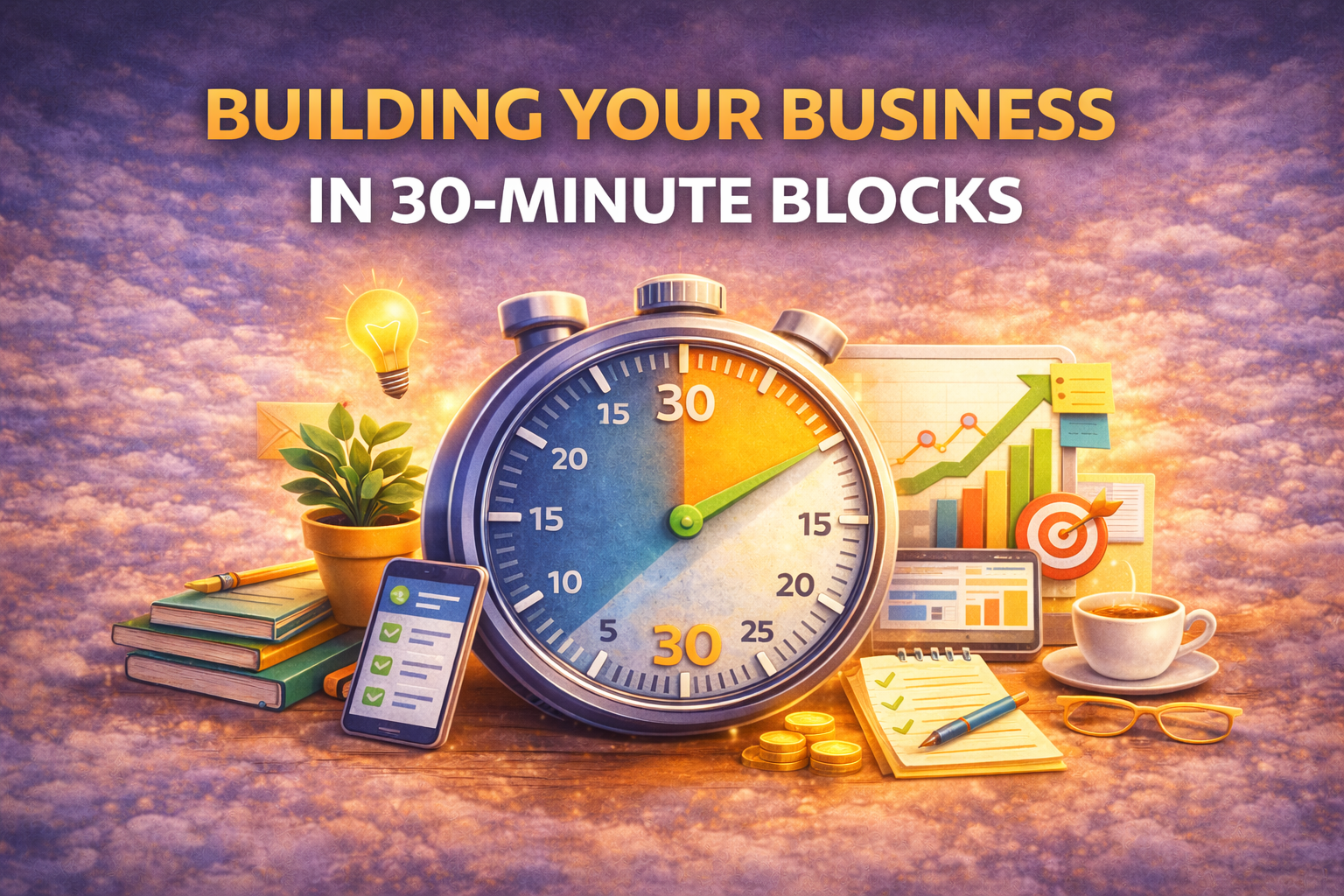
    Most people assume success requires long workdays, endless hustle, or waiting for a “perfect free afternoon.” In reality, steady progress often comes from something much simpler:

    Focused 30-minute work blocks.

    This approach works especially well if you’re building your business alongside a job, family, or other responsibilities.


    Why 30-Minute Blocks Actually Work

    Long work sessions sound productive—but they often lead to distraction, burnout, and unfinished projects.

    Short, focused blocks help you:

    • Eliminate overwhelm
    • Stay focused on one clear task
    • Avoid procrastination
    • Build momentum through consistency
    • Make progress even on busy days

    Consistency beats intensity every time.


    The Hidden Advantage of Limited Time

    When time is limited, you’re forced to prioritize.

    A 30-minute block removes the temptation to:

    • Jump between tools
    • Multitask
    • Overthink decisions
    • Start tasks you don’t finish

    Instead, you focus on one meaningful action that moves your business forward.


    What to Work on in a 30-Minute Block

    Each block should have one clear outcome, not a long to-do list.

    Here are high-impact options:

    Traffic & Visibility

    • Write a short blog post or outline
    • Schedule 3–5 social media posts
    • Engage with targeted content in your niche

    Funnels & Systems

    • Improve one headline
    • Review your opt-in page
    • Test a call-to-action
    • Clean up one email in your sequence

    Learning & Skill-Building

    • Watch one focused training
    • Take notes and apply one idea immediately
    • Study a successful funnel or page

    Review & Optimization

    • Check clicks or opt-ins
    • Identify one weak point
    • Make one improvement

    How to Structure a 30-Minute Work Block

    Use this simple structure:

    Minutes 1–5
    Decide exactly what you’ll complete.

    Minutes 6–25
    Work on only that task—no distractions.

    Minutes 26–30
    Finish, save, publish, or schedule the result.

    Done is better than perfect.


    Why This Builds Confidence Faster

    Small wins add up.

    When you:

    • Complete tasks regularly
    • See progress daily
    • Stop feeling “behind”

    You build confidence—and confidence fuels momentum.

    This method turns business-building into a habit instead of a struggle.


    Final Thought

    You don’t need more time. You need focused time.

    Thirty intentional minutes a day can:

    • Grow traffic
    • Improve systems
    • Build skills
    • Create real momentum

    If you can commit to one focused 30-minute block today, you’re already moving forward.


    Next step: Choose one task that brings someone closer to discovering your offer—and work on it for 30 minutes.