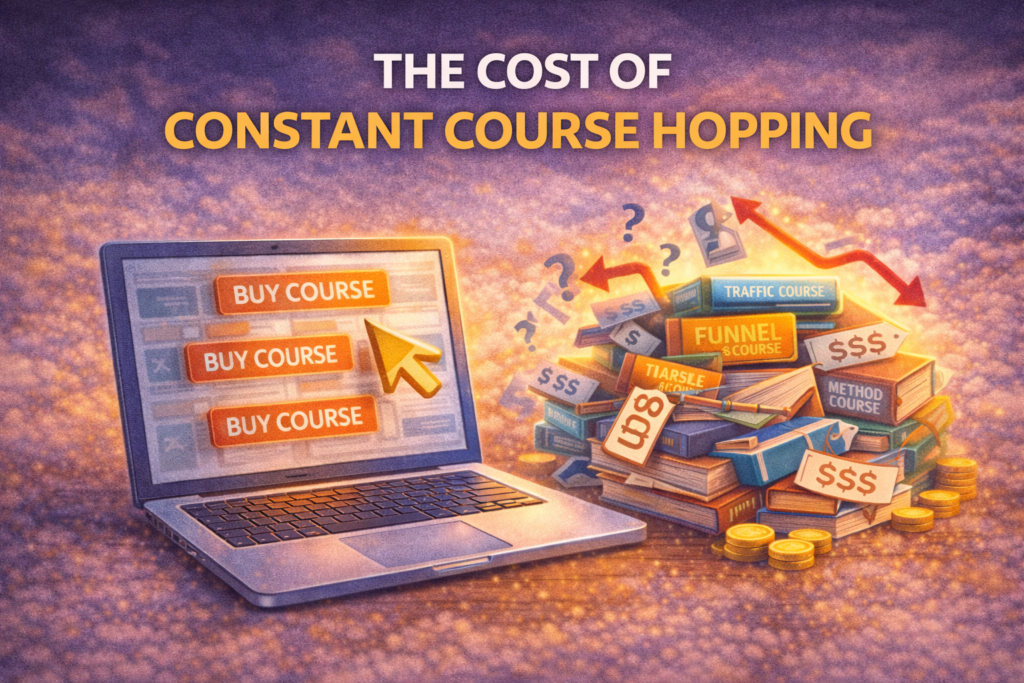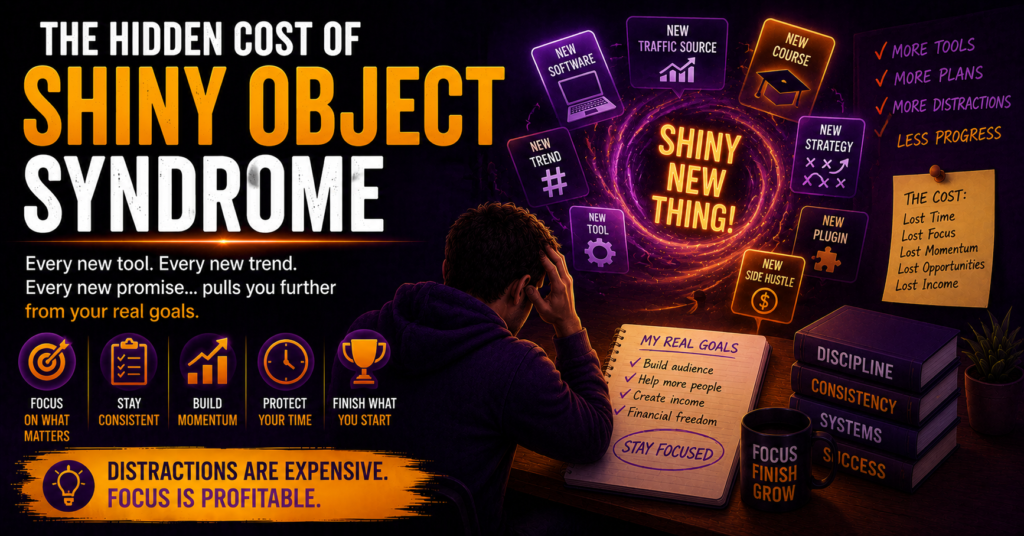
There is always something new in affiliate marketing.
A new traffic source.
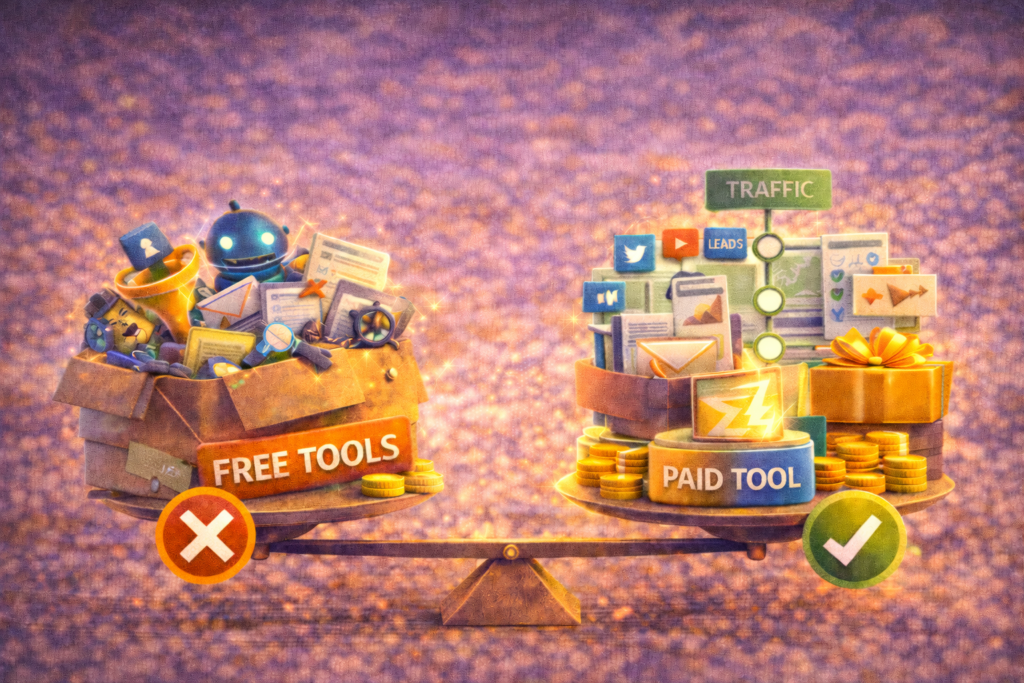
A new piece of software.
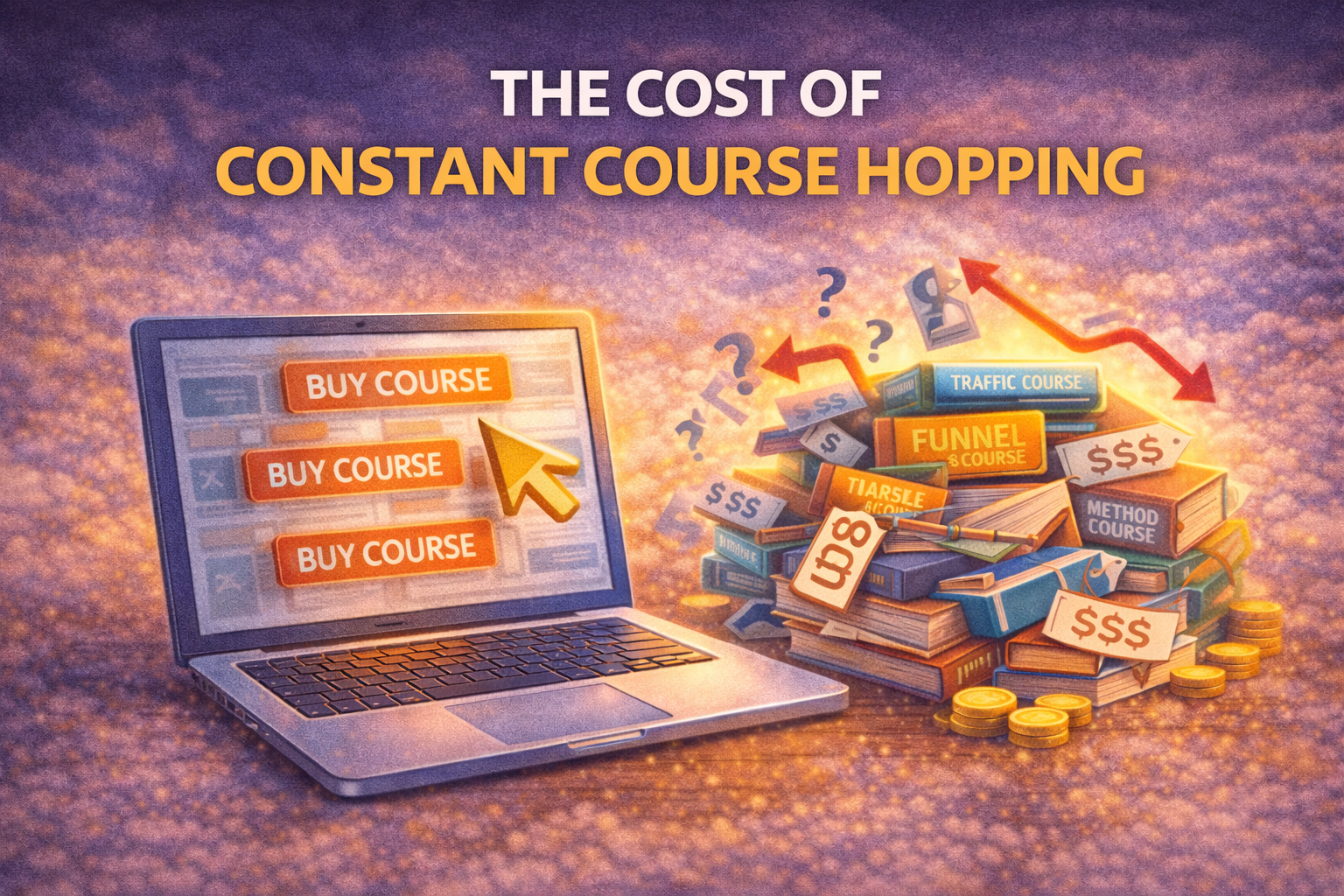
A new course.
A new AI tool.
A new strategy that someone claims is the thing that will finally change everything.
And sometimes, that new thing really is useful.
The problem begins when we’re constantly abandoning what we’re already building to chase whatever looks exciting today.
That’s shiny object syndrome—and it can cost you far more than the price of another tool or course.
The Real Cost Isn’t the Purchase Price
When we think about the cost of chasing something new, we usually think about money.
Maybe it’s a $27 course.
A $49 monthly subscription.
Or another piece of software we aren’t entirely sure we need.
But money isn’t necessarily the biggest expense.
Every time you change direction, you also spend:
- Time learning something new
- Energy setting it up
- Attention figuring out how it works
- Momentum you had already built elsewhere
Those costs are harder to see.
But they add up quickly.
Starting Over Feels Like Progress
There’s something exciting about starting something new.
You watch the training.
Create the account.
Set everything up.
Make plans.
For a while, it feels like you’re accomplishing a lot.
But there’s an important question to ask:
Did you actually move your business forward—or did you simply give yourself something new to work on?
Activity and progress aren’t always the same thing.
The Boring Stage Is Often Where Results Begin
Most strategies are exciting in the beginning.
Then comes the less exciting part.
Doing them again.
And again.
And again.
Publishing another article.
Sending another email.
Testing another headline.
Following up with subscribers.
Improving a page that already exists.
This is usually the point when the next shiny object starts looking especially attractive.
But it’s also often the point when your existing strategy is finally beginning to gain momentum.
Every New Direction Resets the Clock
Imagine planting a seed.
You water it for two weeks, but nothing appears.
So you dig it up and plant something else.
Two weeks later, you do it again.
You could spend months planting seeds without ever growing anything.
Affiliate marketing can work the same way.
SEO takes time.
Email lists take time.
Blogs take time.
Trust takes time.
If you’re constantly starting over, you never give any one strategy enough time to mature.
New Doesn’t Automatically Mean Better
Marketing thrives on novelty.
Words like these naturally grab our attention:
- New
- Revolutionary
- Secret
- Breakthrough
- Automated
- Effortless
That doesn’t mean every new product is bad.
It simply means newness isn’t a reason to buy something or change your strategy.
Before jumping into something new, ask:
What specific problem will this solve in the business I’m already building?
If you don’t have a clear answer, you probably don’t need it yet.
Create a “Not Now” List
You don’t have to ignore every interesting idea you discover.
Instead, create a simple Not Now List.
When you find a tool, strategy, or opportunity that looks interesting, write it down rather than immediately pursuing it.
Then return to what you were doing.
Review the list once a month.
You’ll probably discover that some of the things that seemed urgent a few weeks earlier aren’t nearly as important anymore.
And the ideas that still make sense can be evaluated more carefully.
Finish Before You Add
One of the simplest rules you can create for yourself is:
Finish what you’re building before adding something new.
Finish the email sequence.
Finish the landing page.
Publish the blog post.
Complete the training you’re already taking.
Give the traffic strategy enough time to collect meaningful data.
Completion creates assets.
Constantly starting creates unfinished projects.
Protect Your Momentum
Momentum is one of the most valuable things you can build in an online business.
Once you have a routine for writing, emailing, generating traffic, or creating content, those activities become easier.
You don’t have to rethink everything each week.
You simply continue.
Every unnecessary change forces you to make more decisions and learn another process.
Sometimes the smartest business decision isn’t adding something.
It’s protecting what is already working.
Give Your Strategy Time to Work
This doesn’t mean you should stubbornly stick with something forever.
Sometimes strategies don’t work.
Sometimes tools become outdated.
Sometimes changing direction is absolutely the right decision.
But make that decision based on evidence, not excitement.
Give your strategy enough time to produce useful information.
Then evaluate it.
Keep what works.
Improve what needs improvement.
Replace what genuinely isn’t working.
That’s very different from chasing the newest opportunity every week.
Final Thought
Shiny object syndrome doesn’t usually destroy an affiliate business all at once.
It does it quietly.
A little wasted money here.
A few lost hours there.
Another unfinished project.
Another strategy abandoned before it had a chance to work.
Eventually, months have passed—and you’ve been busy the entire time without building much momentum.
You don’t need every new tool.
You don’t need every new strategy.
And you definitely don’t need every new opportunity.
Sometimes the most profitable thing you can do is much simpler:
Choose a direction, stay focused, and finish what you started.