Tag: traffic

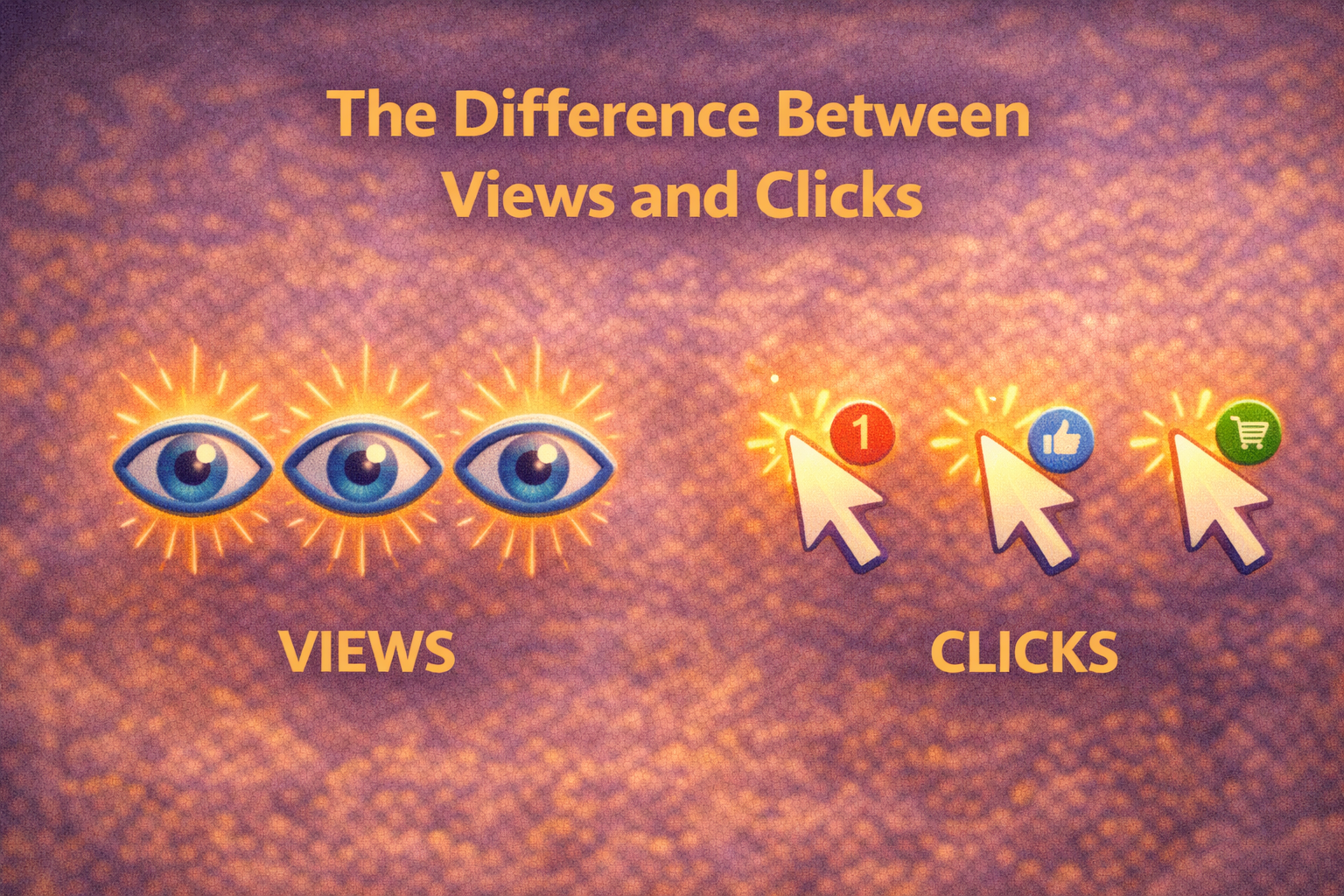
  • Issue #27 The Difference Between Views and Clicks

    If you spend time promoting content online, you’ll often see two numbers show up in your statistics:

    Views and clicks.

    At first glance they may seem similar, but they represent two very different things. Understanding the difference can help you make better decisions about your content, traffic strategies, and promotions.


    What a View Actually Means

    A view simply means someone saw your content.

    This could be:

    • A blog post appearing in a feed
    • A social media post showing up in someone’s timeline
    • A video thumbnail appearing in search results
    • An ad being displayed on a website

    Views are about visibility. They tell you how often your content is being shown to people.

    But visibility alone doesn’t mean engagement.

    Someone can see your content without taking any action.


    What a Click Means

    A click happens when someone takes action.

    They decide to:

    • Open your blog post
    • Visit your website
    • Follow a link
    • Learn more about what you’re offering

    Clicks represent interest.

    When someone clicks, they are moving from passive viewing to active curiosity.

    That small action is often the first real step toward building traffic, subscribers, or customers.


    Why the Difference Matters

    A piece of content can receive thousands of views but very few clicks.

    When that happens, it usually means something is missing.

    Common reasons include:

    • Weak headlines
    • Unclear messaging
    • Low curiosity
    • Poor visual presentation

    On the other hand, a smaller number of views with a high number of clicks often means your message is connecting with the right audience.


    Improving Your Click Rate

    If your views are high but clicks are low, focus on improving what people see before they click.

    That includes:

    • Strong headlines
    • Clear benefit statements
    • Eye-catching images
    • Curiosity-driven descriptions

    These elements act like invitations. Their job is to encourage someone to take the next step.


    Focus on the Right Metric

    Views help you measure reach.

    Clicks help you measure interest.

    Both matter, but clicks usually tell you more about whether your content is actually working.


    Final Thought

    Getting your content seen is important.

    But the real goal is getting someone curious enough to click.

    Because once someone clicks, the real conversation begins.
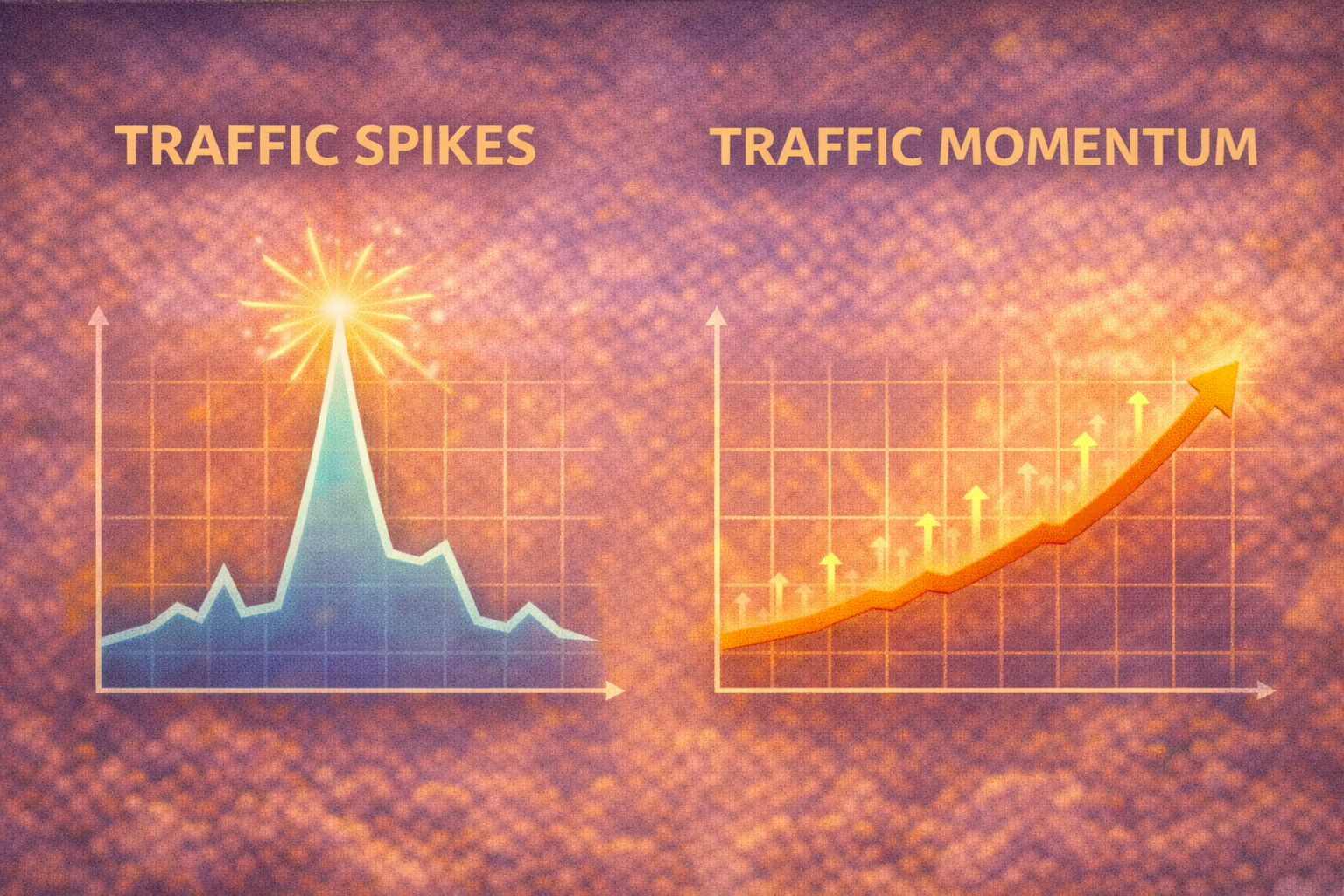
  • Issue #26 Traffic Momentum vs Traffic Spikes

    If you’ve spent time promoting affiliate offers or content online, you’ve probably seen this happen:

    A post suddenly gets attention. Clicks jump. Traffic spikes.

    And then… it disappears.

    This is one of the biggest misunderstandings beginners have about traffic. They chase spikes, when what they really need is momentum.

    Understanding the difference can completely change how you approach growing your online business.


    What a Traffic Spike Looks Like

    A traffic spike is a sudden burst of visitors that doesn’t last long.

    It might come from:

    • A viral social media post
    • A popular forum comment
    • A trending topic
    • A shoutout from someone with a large audience

    Spikes can feel exciting because numbers jump quickly. But the problem is simple:

    Spikes fade just as quickly as they arrive.

    Once the attention moves on, the traffic usually drops right back to where it started.


    What Traffic Momentum Looks Like

    Momentum is slower—but far more powerful.

    Instead of one big burst, traffic grows through consistent small actions over time.

    Momentum might come from:

    • Publishing regular blog posts
    • Commenting on videos in your niche
    • Sharing helpful content in communities
    • Sending consistent emails to your list

    Each piece may only bring a small number of visitors.

    But together, they create something much more valuable: steady growth.


    Why Momentum Wins

    Momentum compounds.

    One article leads to another. One link leads to another. One reader shares your content.

    Over time you start to notice something important:

    Traffic no longer depends on one post, one platform, or one lucky moment.

    Instead, you have multiple sources working together.

    And that creates stability.


    Spikes Still Have Value

    This doesn’t mean spikes are bad.

    In fact, spikes can help you:

    • Discover which content resonates
    • Reach new audiences quickly
    • Accelerate growth when momentum already exists

    The key is understanding that spikes should support momentum—not replace it.


    The Real Goal

    Successful solopreneurs rarely rely on one viral moment.

    They focus on building systems that create traffic every day, even when they’re not actively promoting.

    That happens through:

    • Consistent publishing
    • Strategic commenting
    • Email list building
    • Helpful content

    None of these create massive spikes overnight.

    But together they create something far more powerful:

    Traffic that keeps coming back.


    Final Thought

    Spikes can feel exciting. Momentum builds businesses.

    If you’re choosing between chasing the next viral moment or consistently creating helpful content…

    Choose momentum.

    Your future traffic will thank you.


    Matching Featured Image (1200 × 628)

    I’ve created a visual illustrating a sharp spike graph vs a steadily rising momentum graph, which reinforces the concept in the post.

    Download and upload to WordPress:

    Download Image: Traffic Momentum vs Traffic Spikes

    If you’d like, I can also help you build the next posts in this series, such as:

    • #27 — The First 100 Visitors Are the Hardest
    • #28 — Why Most Traffic Advice Is Overcomplicated
    • #29 — The Simple Habit That Builds Traffic Daily

    They would continue this short, practical solopreneur strategy series you’re building.

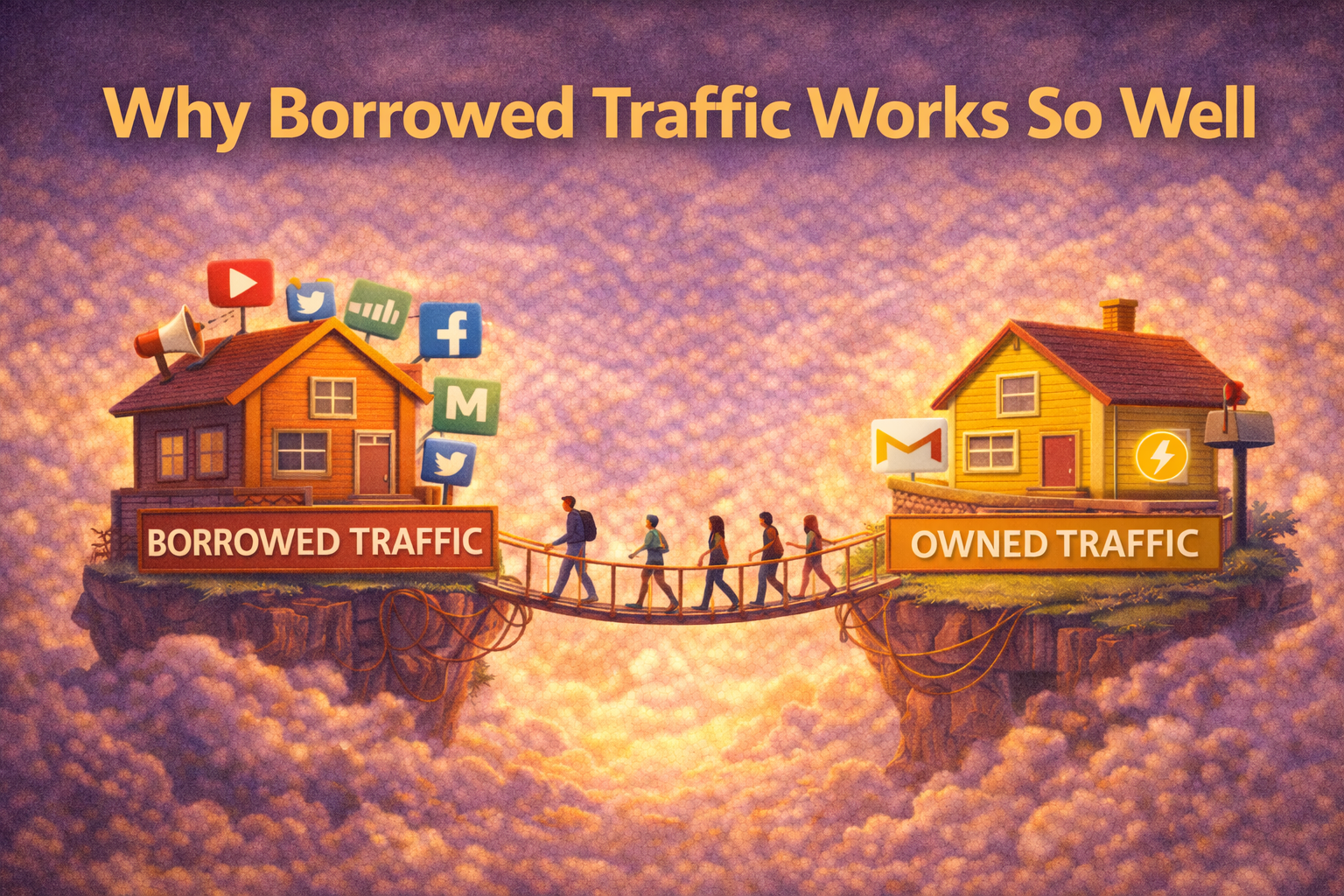
  • Issue #25: Why Borrowed Traffic Is Still Valuable

    There’s a popular piece of advice in online business:

    “Don’t build on rented land.”

    The logic makes sense. Platforms can change algorithms. Accounts can get restricted. Reach can disappear overnight.

    But here’s the truth most people miss:

    Borrowed traffic is still incredibly valuable — if you use it correctly.

    The problem isn’t borrowed traffic. The problem is depending on it without a strategy.

    Let’s break this down.


    What Is Borrowed Traffic?

    Borrowed traffic is any audience you don’t own.

    Examples include:

    • Social media platforms
    • YouTube
    • Medium
    • Marketplace platforms
    • Podcast platforms
    • Paid ads
    • Affiliate traffic

    You don’t control the platform. You don’t control the algorithm. You don’t own the audience.

    But you do get access to attention.

    And attention is the starting point of every sale.


    Why Borrowed Traffic Works So Well

    1. It Has Built-In Distribution

    Platforms already have users.

    You don’t need to build infrastructure from scratch. You’re tapping into existing demand, search behavior, and discovery engines.

    That dramatically lowers the barrier to entry.


    2. It Accelerates Validation

    If you’re testing:

    • A new offer
    • A new hook
    • A new content angle
    • A new niche

    Borrowed traffic gives fast feedback.

    You can see what resonates before committing to long-term infrastructure like SEO-heavy blog strategies or complex funnels.


    3. It Builds Authority Faster

    Early on, momentum matters more than control.

    A growing audience on a major platform creates:

    • Social proof
    • Credibility
    • Inbound opportunities
    • Brand awareness

    Even if you don’t “own” the platform, you own the positioning you build on it.


    The Real Mistake: Staying Borrowed Forever

    Borrowed traffic becomes dangerous when:

    • You never collect emails
    • You never move people to owned assets
    • You rely entirely on algorithm reach
    • You have no relationship outside the platform

    Borrowed traffic should feed owned assets.

    Not replace them.


    The Smart Strategy

    Here’s the balanced approach:

    1. Use Borrowed Traffic for Discovery Let platforms help people find you.

    2. Convert to Owned Assets Capture emails. Build a newsletter. Create a community.

    3. Deepen the Relationship Long-form content, direct communication, consistent value.

    4. Diversify Traffic Sources Never rely on just one platform.

    Borrowed traffic is the top of the funnel. Owned traffic is the long-term asset.

    Both matter.


    Why Beginners Shouldn’t Ignore Borrowed Traffic

    Trying to build purely on owned channels from day one can be painfully slow.

    No one reads a brand-new blog with no traffic. No one joins a newsletter they’ve never heard of.

    Borrowed traffic solves that visibility problem.

    It gives you leverage before you have reach.


    Final Thought

    Borrowed traffic isn’t the enemy.

    Dependency is.

    Use platforms to grow. Use owned assets to sustain. Use both to build stability.

    The goal isn’t to avoid rented land. The goal is to build a house you can eventually move people into.

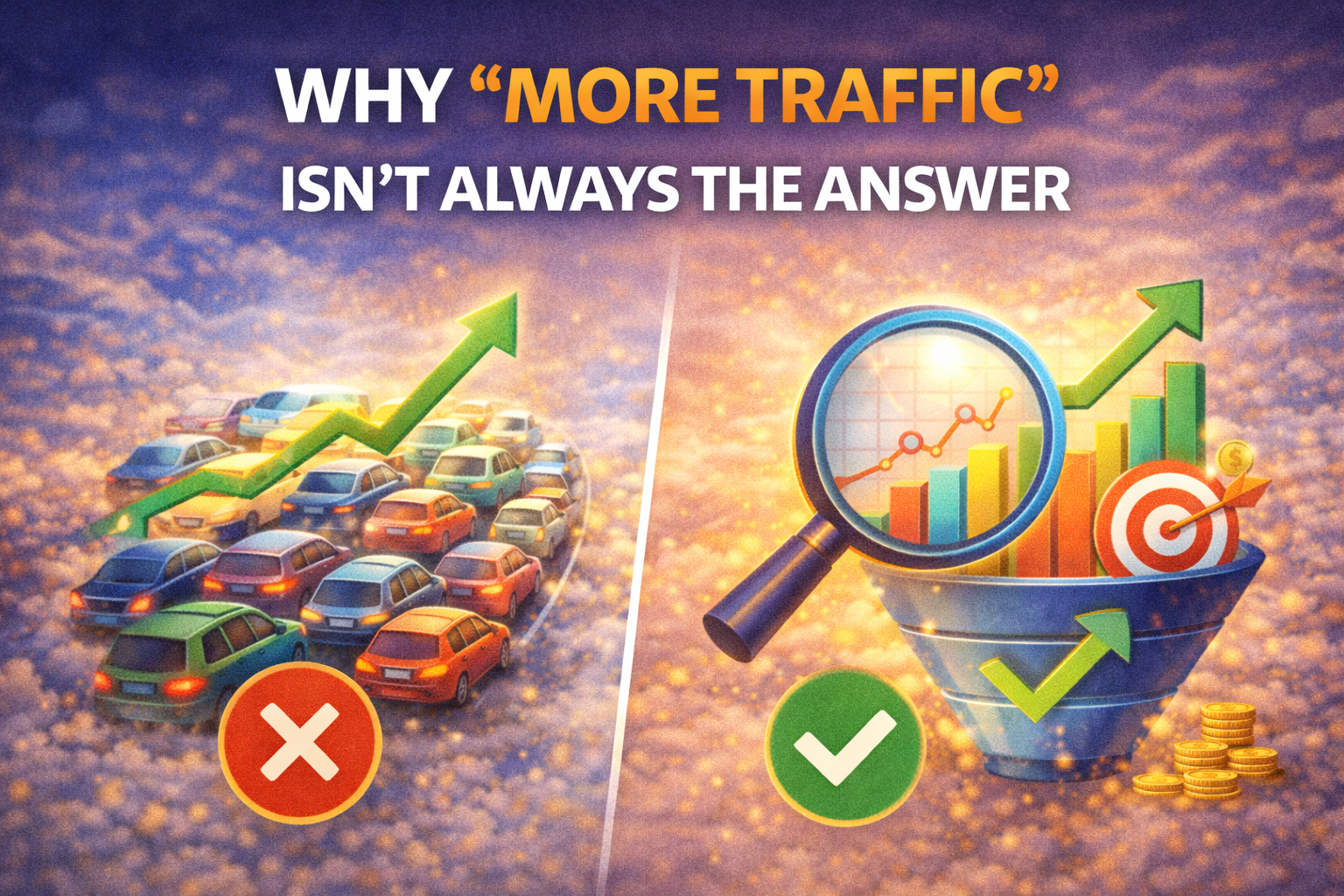
  • Issue #16 Why “More Traffic” Isn’t Always the Answer

    Issue #16 Why “More Traffic” Isn’t Always the Answer

    When something isn’t working in affiliate marketing, the default reaction is usually the same:

    “I just need more traffic.”

    But more traffic doesn’t fix a broken system. In many cases, it actually hides the real problem.


    The Traffic Trap

    Early on, it’s easy to believe that volume solves everything.

    More visitors means more clicks.
    More clicks means more sales.

    Except that’s not how it usually plays out.

    If your message isn’t clear, your offer isn’t aligned, or your next step isn’t obvious, adding more traffic just sends more people away faster.


    Why Traffic Isn’t the First Problem

    Most of the time, the real issue lives before traffic:

    • The page doesn’t clearly explain the benefit
    • The offer doesn’t match the promise
    • The next step isn’t obvious
    • There’s no trust built yet

    Traffic amplifies whatever already exists. If the foundation is weak, traffic magnifies the weakness.


    What to Fix Before Chasing More Visitors

    Before worrying about traffic numbers, focus on these basics:


    1. Message Clarity

    Can someone answer this in five seconds:

    “What is this for, and why should I care?”

    If not, traffic won’t save it.


    2. One Clear Action

    Every page should answer one question:

    “What do you want me to do next?”

    Too many options lead to no action.


    3. Alignment Between Content and Offer

    If your content talks about one problem but your link solves a different one, conversions suffer.

    Traffic expects continuity.


    4. Trust Signals

    People don’t click because you asked. They click because they feel safe doing so.

    That comes from:

    • Consistency
    • Transparency
    • Relevance

    When More Traffic Does Help

    Traffic becomes powerful after the basics are working.

    You’ll know you’re ready when:

    • People are clicking consistently
    • Some visitors opt in
    • Engagement is slowly increasing
    • You can predict what happens next

    At that point, traffic fuels growth instead of frustration.


    A Better Question to Ask

    Instead of:

    “How do I get more traffic?”

    Ask:

    “What happens to people after they arrive?”

    Fix that first.


    Final Thought

    Traffic is a multiplier — not a solution.

    Build something worth multiplying, and even small traffic numbers can produce meaningful results.

    Clarity converts.

  • Issue #11 — Why Most Traffic Plans Fail Before They Start

    Issue #11 — Why Most Traffic Plans Fail Before They Start

    Hey there!

    Most affiliate marketers don’t fail because traffic doesn’t work.

    They fail because they try to do too much, too fast, with no clear system behind it.

    If your traffic efforts feel scattered or inconsistent, this might be why.


    The Real Problem With Most Traffic Plans

    When I first started, my “strategy” looked like this:

    • SEO one week
    • Social posting the next
    • A paid ad experiment right after that

    Nothing had time to work.

    Every time I switched tactics, I reset my momentum — and my confidence.

    What finally changed things wasn’t a new tool or platform.

    It was focus.


    The Lesson That Changed Everything

    Traffic started making sense when I stopped chasing everything and committed to one traffic source at a time.

    Instead of asking:

    “Why isn’t this working yet?”

    I started asking:

    “What can I improve this week?”

    That’s when clicks became predictable — even on a small budget.


    Tip of the Week: The Single-Source Rule

    For your first 30 days, simplify everything:

    1. Choose one traffic method
    2. Send traffic to one main page
    3. Track one metric (clicks, not sales)
    4. Improve one element per week

    Traffic grows when focus replaces chaos.


    Your Action Step Today

    Look at your current setup.

    If it includes:

    • Multiple traffic sources
    • Several different links
    • Too many stats to track

    Strip it down.

    Simple systems scale better — especially when time and money are limited.