It’s easy to get caught up in numbers when you’re building an affiliate marketing business.
More subscribers.
More followers.
More pageviews.
More people on your email list.
And naturally, bigger numbers feel like progress.
But there’s another number that doesn’t always get as much attention:
How many of those people actually care about what you’re sharing?
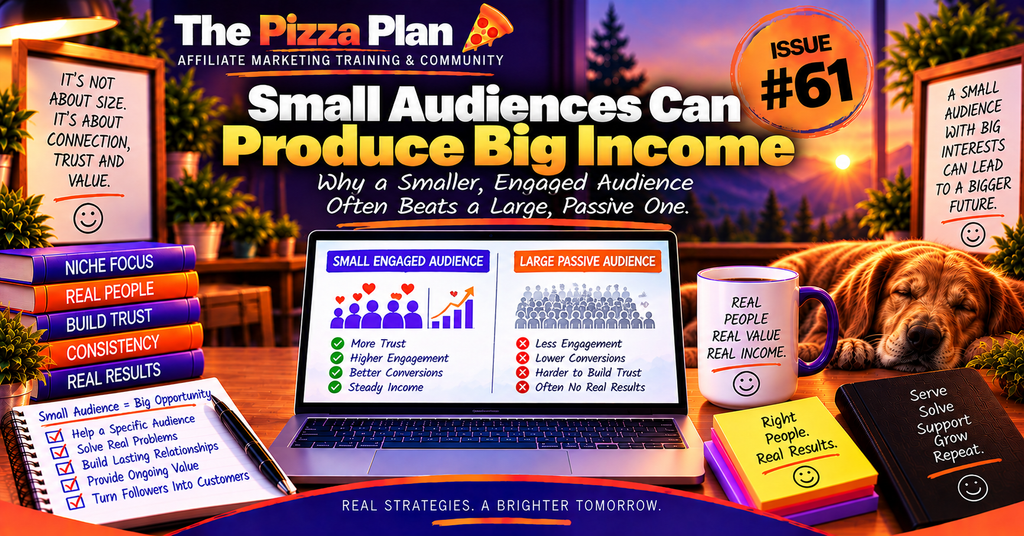
A smaller audience that reads your emails, clicks your links, comes back to your blog, and trusts your recommendations can be far more useful to your business than a much larger audience that barely notices you’re there.
That doesn’t mean having a large audience is bad.
It means size alone doesn’t tell you very much.
1,000 Subscribers Doesn’t Always Mean 1,000 People Are Listening
Imagine two affiliate marketers.
One has an email list of 10,000 subscribers.
The other has a list of 500.
At first glance, the marketer with 10,000 subscribers appears to have the stronger business.
But what if most of those 10,000 people rarely open an email?
What if they joined years ago and have forgotten why they’re on the list?
What if they aren’t particularly interested in what that marketer talks about anymore?
Meanwhile, the marketer with 500 subscribers regularly hears from readers. People open the emails, visit the blog, click through to recommended resources, and pay attention when something new is shared.
Suddenly, those audience numbers don’t tell the whole story.
The question isn’t simply:
“How big is my audience?”
A better question is:
“How connected am I to the audience I already have?”
Attention Is More Valuable Than a Vanity Number
A big follower count looks nice.
So does a large email list.
But neither one automatically creates a relationship.
For affiliate marketers, attention matters because we’re often asking people to do something after consuming our content.
Maybe we want them to:
- Read another article.
- Download a resource.
- Join our email list.
- Check out a tool we’re using or recommending.
- Learn more about a product.
- Eventually make a purchase.
Those actions require more than simply getting someone onto a subscriber list or social media account.
They require attention and relevance.
If 5,000 people scroll past everything you publish, that number isn’t doing much for you.
If 300 people regularly pay attention because your content consistently helps them, you’ve got something you can build on.
Engagement Usually Starts With Relevance
One reason smaller audiences can be valuable is that it’s often easier to understand who you’re actually talking to.
That’s something we’ve been working toward throughout the Affiliate Success Journal.
We’re not trying to talk to every person interested in making money online.
That’s far too broad.
Instead, we’re talking primarily to affiliate marketers who are still building their businesses—people who want practical strategies without unnecessarily complicated systems or huge budgets.
That gives us something important:
Focus.
When you understand the person you’re trying to help, you can create content around the problems they’re actually facing.
Instead of:
“Here’s another affiliate marketing tip.”
You can address something much more specific:
“You’re getting clicks but no sign-ups. Here’s what I would look at next.”
That feels different to the reader.
It feels relevant.
And relevance gives people a reason to keep paying attention.
This Is Where Trust Starts to Compound
We’ve talked quite a bit in this Journal about building trust.
Trust rarely comes from one fantastic blog post or one brilliant email.
It usually develops through a series of smaller experiences.
Someone finds an article that helps them.
Then they read another.
Later, they see an email from you and recognize your name.
They click.
You help them solve another small problem.
Eventually, you recommend a tool or resource.
Now they aren’t receiving that recommendation from a complete stranger.
They’re receiving it from someone who has already helped them several times.
That’s the Know → Like → Trust process happening naturally.
And you don’t need tens of thousands of people for that process to begin.
You need the right people paying attention.
Don’t Confuse Quiet With Uninterested
There’s another side to this that’s especially important when your audience is still small.
Not everyone who appreciates your content will interact with it publicly.
They may never leave a comment.
They may never reply to an email.
They may never like or share your posts.
They’re simply reading.
I think this is easy to forget when so many platforms train us to measure engagement through visible reactions.
A quiet reader can still be an interested reader.
That’s why you don’t want to judge your audience using only one measurement.
Look at the bigger picture.
Are people opening your emails?
Are they clicking?
Are some articles getting more attention than others?
Are subscribers staying on your list?
Are people returning to your site?
Are they eventually taking the next step you offered?
Those signals can tell you far more than a follower count by itself.
Don’t Use This as an Excuse to Stop Growing
There’s a trap on the other side of this idea too.
It’s tempting to hear “small audiences can be valuable” and conclude:
Great. I don’t need to grow my audience.
That’s not what I’m suggesting.
Audience growth still matters.
New people discovering your content creates new opportunities to help people, grow your list, introduce your resources, and eventually generate revenue.
The goal isn’t:
Small audience = good. Large audience = bad.
The goal is:
Build an engaged audience while you grow.
I’d rather see you add 100 people who genuinely fit your audience than chase 1,000 random subscribers simply because the bigger number looks better on a spreadsheet.
Growth matters.
But relevant growth matters more.
Take Care of the People Already in the Room
When we’re trying to grow an online business, it’s easy to spend all our time looking for the next person.
The next visitor.
The next subscriber.
The next follower.
The next lead.
Sometimes it’s worth turning around and looking at the people who are already there.
What could you create that would help them?
What question haven’t you answered yet?
What problem keeps coming up?
What could make their next step easier?
That’s where a small audience can actually become an advantage.
You have an opportunity to learn what your readers need while your business is still manageable enough to pay close attention.
Use it.
Your Small Audience Is Giving You Data
Remember that engagement isn’t only about feeling good because someone clicked a link.
It’s also information.
If one topic consistently attracts more attention, that’s telling you something.
If people click one type of resource but ignore another, that’s telling you something.
If certain emails get more replies, that’s telling you something.
You don’t need to overreact to every click or draw big conclusions from tiny amounts of data.
But over time, patterns begin to appear.
Those patterns can help you decide:
- What content to create next.
- Which problems deserve deeper coverage.
- Which resources your audience finds useful.
- Which offers are worth continuing to promote.
- Where your business may need improvement.
Your audience isn’t just a number you’re trying to increase.
They’re helping you learn how to build a better business.
Start With the Audience You Have
If your audience feels small right now, don’t treat that as evidence that you’re failing.
Treat it as your starting point.
Help the people who are already paying attention.
Write useful content for them.
Send emails worth opening.
Recommend resources because they’re genuinely relevant—not simply because there’s a commission attached.
Watch what people respond to.
Learn.
Improve.
And continue bringing new people into the business while you do it.
You don’t need an enormous audience before you can start building relationships.
You build the relationships while you’re building the audience.
And if you do that well, you’re not simply collecting subscribers.
You’re building something much more valuable:
An audience that actually wants to hear from you.
This Week’s Takeaway
Don’t measure the health of your audience by size alone.
Look at attention, relevance, engagement, and trust.
Then ask yourself:
Am I spending as much time helping the audience I already have as I am trying to find the next one?
If the answer is no, that’s a pretty good place to start this week.
Category: Email & Audience Building, Pizza Plan, Pizza Plan Newsletter
Tags: affiliatemarketing, blog, newsletter, pizzaplan
Leave a Reply