Tag: consistency

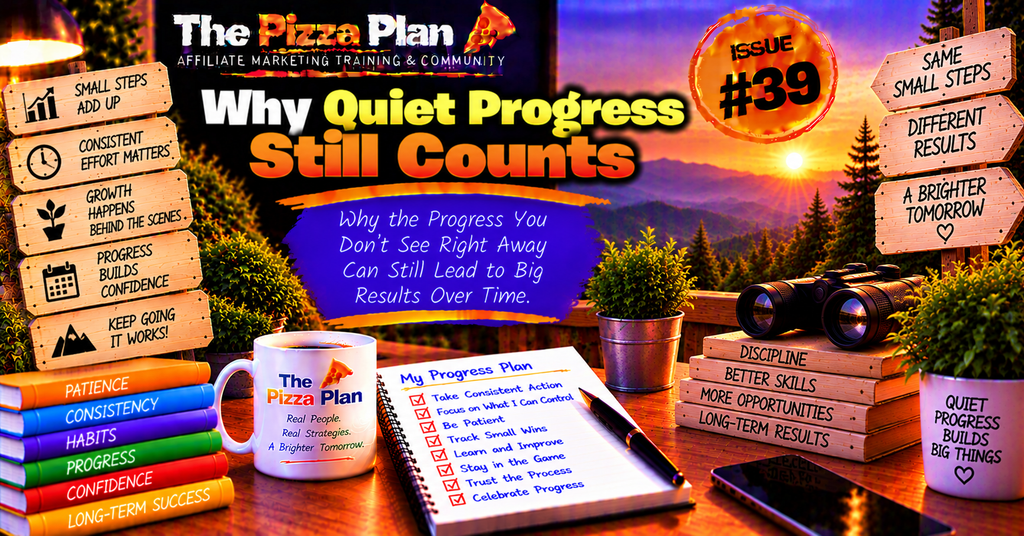
  • Issue #39 Why Quiet Progress Still Counts

    Not all progress is visible.

    Sometimes there are no likes.
    No comments.
    No big wins to point to.

    Just effort.

    And because it’s quiet… it’s easy to think it doesn’t count.

    But it does.


    The Illusion of Visible Success

    Online, it looks like everything happens fast.

    • Big launches
    • Viral posts
    • Overnight results

    But what you don’t see is the work behind it:

    • The early posts no one read
    • The emails no one opened
    • The systems that took time to build

    Most progress happens before anyone notices.


    What Quiet Progress Looks Like

    Quiet progress is:

    • Writing when no one is watching
    • Learning when results are slow
    • Improving without immediate feedback
    • Showing up without recognition

    It’s not exciting.

    But it’s necessary.


    Why It Matters More Than You Think

    Every small action builds something:

    • Skills improve
    • Systems get stronger
    • Confidence grows
    • Clarity increases

    Even if there’s no visible result yet…

    You’re not in the same place you were before.


    The Danger of Ignoring It

    If you only value visible results, you’ll feel stuck.

    And when you feel stuck, you’re more likely to:

    • Quit early
    • Change direction
    • Abandon what’s working

    Not because it failed…

    But because it hasn’t been seen yet.


    Progress Before Results

    Results are delayed.

    Progress happens immediately.

    That means:

    • You can control progress
    • You can measure effort
    • You can build momentum

    Even when results haven’t caught up yet.


    A Better Way to Track Growth

    Instead of asking:

    “What did I get?”

    Ask:

    “What did I build?”

    Track things like:

    • Content created
    • Systems completed
    • Actions taken
    • Skills improved

    These are the real indicators of movement.


    Trust the Process

    Quiet progress feels slow.

    But it’s often the phase right before things start working.

    What looks like nothing… is usually something building.


    Final Thought

    Not all progress needs to be loud to be real.

    Keep showing up.
    Keep building.
    Keep improving.

    Because the work you do quietly today…

    Is what creates visible results later.

  • Issue #38 Confidence Comes From Proof, Not Hype

    Confidence is something everyone wants.

    More confidence to post.
    More confidence to promote.
    More confidence to share offers.

    But here’s the truth most people overlook:

    Confidence doesn’t come first.

    It comes after proof.


    The Problem With Waiting to Feel Ready

    A lot of people think:

    • “I’ll start when I feel more confident”
    • “I need to know more before I begin”
    • “I don’t want to get it wrong”

    So they wait.

    And while they’re waiting… nothing changes.


    Where Real Confidence Comes From

    Confidence is built through evidence.

    Small, simple proof like:

    • Publishing your first post
    • Getting your first click
    • Sending your first email
    • Completing your first funnel

    Each action gives you feedback.

    That feedback builds belief.


    Why Hype Doesn’t Last

    Motivation can feel powerful in the moment.

    You watch a video.
    You get excited.
    You feel ready to go.

    But hype fades quickly.

    And when it does, you’re left with nothing to stand on.

    That’s why hype alone isn’t enough.


    Proof Builds Stability

    Proof is different.

    It’s grounded in experience.

    When you’ve done something—even once—you know it’s possible.

    That creates:

    • Real confidence
    • Better decisions
    • Less hesitation

    And most importantly… consistency.


    Start Smaller Than You Think

    You don’t need big wins.

    You need repeatable wins.

    Focus on:

    • One post
    • One email
    • One action per day

    Stack those, and confidence builds naturally.


    A Simple Shift

    Instead of asking:

    “How do I feel more confident?”

    Ask:

    “What proof can I create today?”

    That one question leads to action.

    And action leads to belief.


    The Compounding Effect

    Proof stacks over time.

    • One action becomes ten
    • Ten becomes experience
    • Experience becomes confidence

    And suddenly, things that felt hard… feel normal.


    Final Thought

    Confidence isn’t something you wait for.

    It’s something you build.

    Not through hype.
    Not through motivation.

    But through proof—one action at a time.

  • Issue #37 Playing the Long Game as an Affiliate

    Affiliate marketing is often sold as a quick win.

    Pick a product.
    Share a link.
    Make money.

    And while that can happen…

    It’s not what builds a real business.

    The people who succeed long-term are the ones who learn to play the long game.


    The Short-Term Trap

    It’s easy to focus on quick results:

    • “Why didn’t this post convert?”
    • “Why didn’t I make money this week?”
    • “Should I switch offers?”

    This mindset leads to constant switching, chasing trends, and starting over.

    And starting over resets your progress.


    What the Long Game Looks Like

    Playing the long game means focusing on:

    • Building trust
    • Creating consistent content
    • Growing an audience
    • Improving your system over time

    Instead of asking “How fast can I make money?” you ask:

    “How can I build something that keeps working?”


    Why Trust Takes Time

    People don’t click, subscribe, or buy instantly.

    They:

    • See your content
    • Get familiar with your message
    • Learn to trust your recommendations

    This doesn’t happen in one post.

    It happens through repeated exposure and consistency.


    Compounding Effort

    The long game works because of compounding.

    • One post becomes ten
    • Ten becomes fifty
    • Fifty becomes traffic
    • Traffic becomes opportunities

    At first, progress feels slow.

    Then it starts to build.


    What Most People Miss

    Most people quit before the compounding happens.

    They:

    • Stop posting
    • Change direction
    • Abandon systems too early

    Not because it didn’t work…

    But because they didn’t give it enough time.


    How to Stay in the Game

    If you want to win long-term:

    • Keep your strategy simple
    • Stay consistent
    • Track progress (not just results)
    • Improve gradually

    You don’t need to move fast.

    You need to keep moving.


    A Different Way to Measure Success

    Instead of focusing only on income, track:

    • Content created
    • Emails sent
    • Systems built
    • Skills improved

    These are the leading indicators of success.

    The results follow later.


    Final Thought

    Affiliate marketing isn’t about quick wins.

    It’s about building something that works over time.

    If you play the short game, you chase results.

    If you play the long game, you build them.

    And the people who build… eventually win.

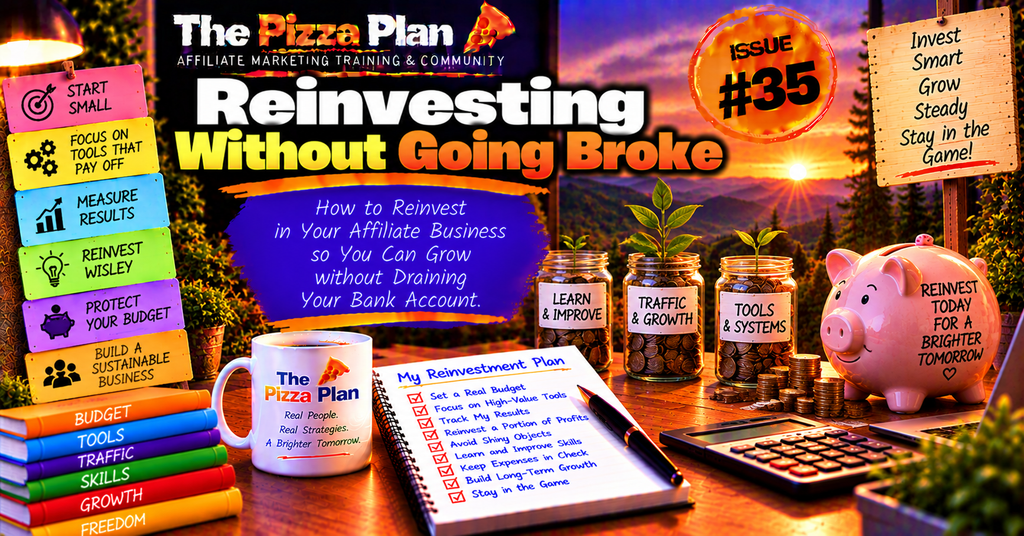
  • Issue #35 Reinvesting Without Going Broke

    Reinvesting is one of the smartest things you can do in your business.

    It helps you grow faster.
    It helps you improve your systems.
    It helps you scale what’s already working.

    But there’s a line many beginners cross…

    They reinvest too much, too soon—and end up broke.


    The Pressure to Reinvest

    You’ll hear advice like:

    • “Put everything back into your business”
    • “You have to spend money to make money”
    • “Upgrade your tools to grow faster”

    And while there’s truth in that…

    It’s easy to misapply.

    Reinvesting should support growth—not create stress.


    The Risk of Over-Reinvesting

    When you reinvest without a plan, you can end up:

    • Paying for tools you don’t fully use
    • Buying courses you don’t implement
    • Upgrading too early
    • Draining your available cash

    This creates pressure.

    And pressure leads to rushed decisions.


    A Better Approach to Reinvesting

    Instead of reinvesting everything, use a simple structure:

    1. Cover Your Basics First

    Make sure your essential tools are handled.

    Keep it simple:

    • One email platform
    • One page builder
    • One traffic method

    You don’t need a stack—you need a system.


    2. Reinvest a Percentage, Not Everything

    A safer approach is:

    • Keep a portion
    • Reinvest a portion

    Even something like:

    • 50% reinvest
    • 50% keep

    This gives you room to grow without putting yourself in a tight spot.


    3. Reinvest Into What’s Working

    Don’t guess.

    Look at your results:

    • What’s bringing clicks?
    • What’s getting engagement?
    • What’s producing leads?

    Put more into those areas.

    Avoid spreading yourself too thin.


    4. Delay “Nice-to-Have” Upgrades

    Some tools are helpful—but not necessary.

    If something doesn’t:

    • Save time
    • Increase revenue
    • Improve your system

    You can wait.


    The Goal Isn’t Speed—It’s Stability

    Fast growth feels exciting.

    But unstable growth doesn’t last.

    Smart reinvesting creates:

    • Consistency
    • Control
    • Confidence

    And those lead to long-term results.


    A Simple Rule to Follow

    If buying something would make you feel stressed…

    It’s probably too early.

    Good investments feel aligned—not forced.


    Final Thought

    Reinvesting is powerful—but only when it’s intentional.

    You don’t need to spend everything to grow.

    You need to spend wisely.

    Build steadily.
    Reinvest strategically.
    And grow without putting yourself under pressure.

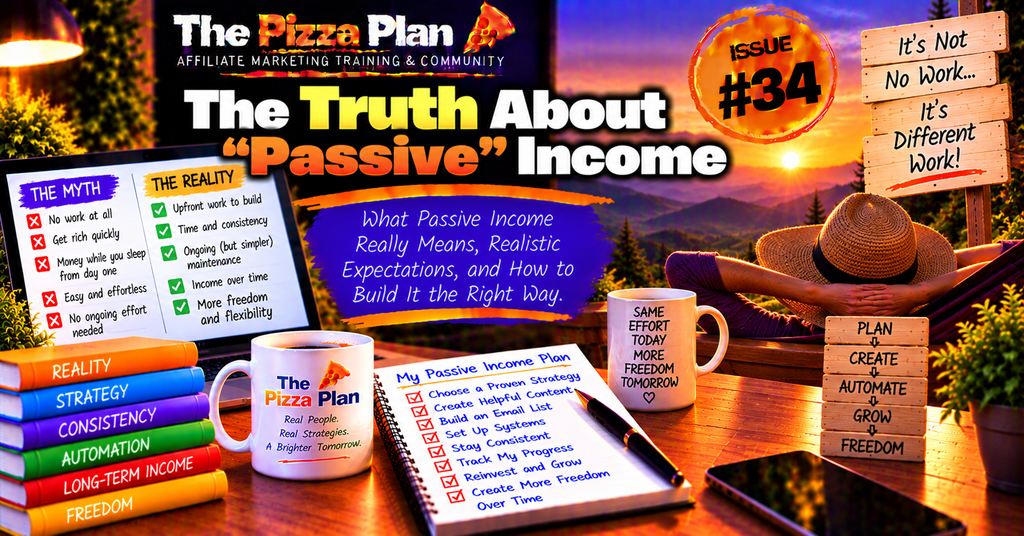
  • Issue #34 The Truth About “Passive” Income

    “Make money while you sleep.”

    You’ve probably heard that phrase before.

    It’s one of the biggest promises in online business—and one of the most misunderstood.

    Because while passive income is real…

    It’s not what most people think.


    The Myth of Passive Income

    The common belief is:

    • Set something up once
    • Do nothing
    • Money keeps coming in

    No effort. No maintenance. No work.

    But that’s not how it actually works.


    What Passive Income Really Is

    Passive income is better defined as:

    Work done once (or repeatedly) that continues to produce results over time.

    Notice something?

    There’s still work involved.


    The Front-Loaded Effort

    Before anything becomes “passive,” there’s an active phase.

    You have to:

    • Create content
    • Build systems
    • Set up funnels
    • Test what works
    • Drive initial traffic

    This is where most of the effort happens.

    And it’s the part most people underestimate.


    The Maintenance Phase

    Even after things are working, passive income still requires:

    • Updating content
    • Checking links
    • Improving conversions
    • Adapting to changes
    • Creating new supporting content

    It’s not hands-off.

    It’s lighter work—not zero work.


    Where Passive Income Shows Up

    In affiliate marketing, passive income often comes from:

    • Blog posts that keep getting traffic
    • Email sequences that continue converting
    • Videos that generate clicks over time
    • Simple funnels that run daily

    These assets work for you—but only because you built them first.


    Why the Idea Still Matters

    Even though it’s not truly passive, the concept is still powerful.

    Because it shifts your focus from:

    Trading time for money

    To:

    Building assets that keep working

    That’s where leverage comes from.


    A Better Way to Think About It

    Instead of asking:

    “How do I make passive income?”

    Ask:

    “What can I build today that will still work tomorrow?”

    That mindset leads to:

    • Better content
    • Stronger systems
    • More consistent results

    Final Thought

    Passive income isn’t about doing nothing.

    It’s about doing the right work—up front—so it keeps paying you later.

    Build assets.
    Build systems.
    Then let them work for you.

    That’s the real version of passive income.

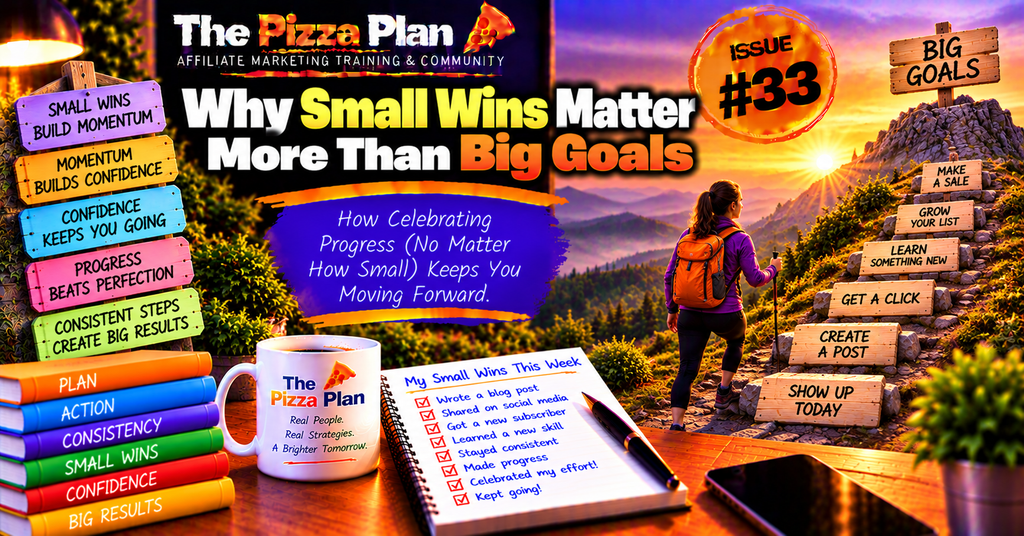
  • Issue #33 Why Small Wins Matter More Than Big Goals

    Big goals are exciting.

    They give you something to aim for. They make you feel motivated. They create a vision of what’s possible.

    But there’s a problem.

    Big goals don’t build momentum.

    Small wins do.


    The Problem With Big Goals

    Big goals often feel far away.

    “Make $1,000 online.”
    “Grow a list to 10,000 subscribers.”
    “Build a full-time income.”

    These are great targets—but they can also feel overwhelming.

    When progress is slow, it’s easy to feel like nothing is working.

    And that’s when people quit.


    What Small Wins Actually Do

    Small wins change everything.

    They:

    • Build confidence
    • Create momentum
    • Reinforce action
    • Make progress visible

    Instead of waiting for one big result, you start stacking small victories.

    And those add up faster than you think.


    Examples of Small Wins

    In affiliate marketing, small wins look like:

    • Publishing a post
    • Getting your first click
    • Writing your first email
    • Getting one subscriber
    • Finishing a simple funnel

    None of these feel huge on their own.

    But together, they create progress.


    Momentum Is Built, Not Found

    Most people are waiting for motivation.

    But motivation often comes after action.

    Small wins create a loop:

    Action → Result → Confidence → More Action

    That’s how momentum builds.


    Why Small Wins Are More Reliable

    Big goals depend on many things going right.

    Small wins only depend on one thing:

    You showing up.

    That makes them more consistent—and more powerful long-term.


    Shift Your Focus

    Instead of asking:

    “Did I hit my big goal?”

    Ask:

    “Did I make progress today?”

    That one shift reduces pressure and increases consistency.


    Build a Win List

    At the end of each day or week, track your wins:

    • What did you complete?
    • What did you improve?
    • What did you learn?

    This helps you see progress even when results are still growing.


    Final Thought

    Big goals give you direction.

    Small wins get you there.

    If you want to build something that lasts, stop waiting for the big breakthrough…

    And start stacking small victories.

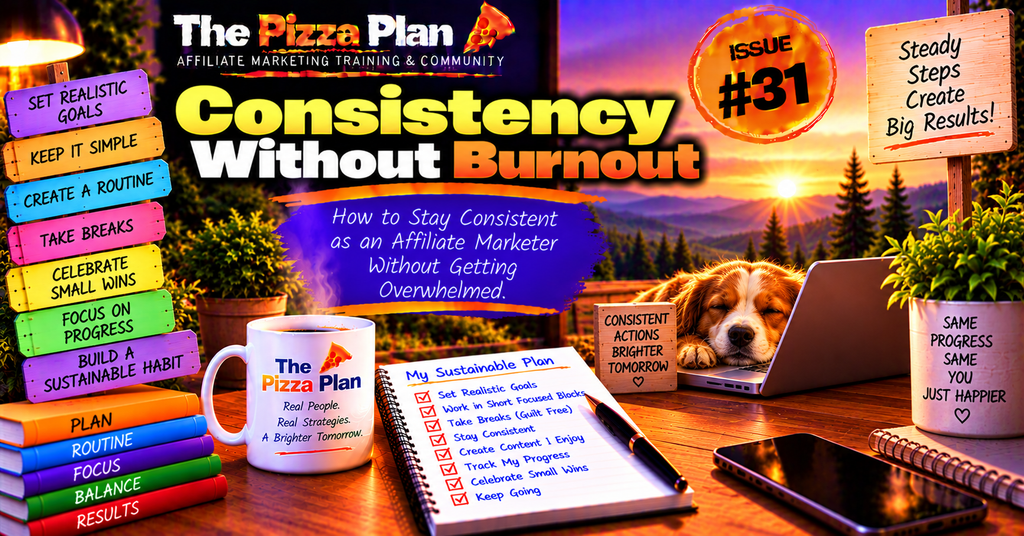
  • Issue #31 Consistency Without Burnout

    Consistency is one of the most common pieces of advice in online business.

    “Post every day.”
    “Send emails regularly.”
    “Show up no matter what.”

    And while consistency does matter…

    There’s a problem.

    Many people try to be consistent in a way that leads straight to burnout.


    The Wrong Way to Be Consistent

    Burnout usually comes from unrealistic expectations.

    Trying to:

    • Do too much too fast
    • Be on every platform
    • Create perfect content every time
    • Maintain a pace you can’t sustain

    This kind of consistency doesn’t last.

    It turns into stress, frustration, and eventually… stopping altogether.


    What Real Consistency Looks Like

    Consistency isn’t about doing more.

    It’s about doing what you can sustain.

    That might look like:

    • 3 posts per week instead of 7
    • 1 email per week instead of daily
    • 30 minutes of focused work per day

    The key is simple:

    Can you keep doing this next week? Next month?

    If not, it’s not sustainable.


    Why Slower Often Wins

    A slower pace that you can maintain will always outperform a fast pace that burns you out.

    Because consistency compounds.

    • One post becomes ten
    • Ten becomes fifty
    • Fifty becomes momentum

    But only if you keep going.


    Build Around Your Real Life

    Your business should fit your life—not fight it.

    Consider:

    • Your schedule
    • Your energy levels
    • Your responsibilities

    Then build a system around that.

    Not someone else’s routine.


    Make It Easier to Show Up

    Consistency becomes easier when you remove friction.

    Try:

    • Creating content in batches
    • Keeping ideas simple
    • Reusing and repurposing content
    • Lowering the pressure for perfection

    The easier it is to start, the more likely you are to continue.


    A Better Definition of Consistency

    Consistency doesn’t mean:

    “Doing everything, all the time.”

    It means:

    Showing up regularly in a way you can sustain.


    Final Thought

    Burnout stops progress.

    Sustainable consistency builds it.

    If you want long-term results, don’t aim for intensity.

    Aim for rhythm.

    Because the people who succeed aren’t the ones who go the hardest…

    They’re the ones who keep going.

  • Issue #30 What to Send When You Have “Nothing to Say”

    Every email marketer hits this moment.

    You sit down to write…
    And nothing comes to mind.

    No big idea.
    No breakthrough insight.
    No exciting update.

    So you don’t send anything.

    And that’s where most people go wrong.

    Because the truth is—you don’t need something “big” to say.

    You just need something useful, relatable, or real.


    The Myth of Needing Something New

    A lot of people believe every email has to be:

    • Original
    • Deep
    • Insightful
    • Perfectly written

    But your audience isn’t expecting perfection.

    They’re just looking for something that helps, reminds, or connects.


    Simple Things You Can Send Anytime

    When you feel stuck, start here:

    1. A Quick Reminder

    Most people don’t need new information—they need reminders.

    Example:

    • “Consistency beats intensity.”
    • “Done is better than perfect.”
    • “Focus on one thing today.”

    Simple ideas, repeated at the right time, are powerful.


    2. A Lesson You Recently Learned

    Share something small:

    • A mistake you made
    • Something that didn’t work
    • Something that surprised you

    It doesn’t have to be groundbreaking—just honest.


    3. Answer a Basic Question

    Think about:

    • What beginners struggle with
    • Questions you’ve seen repeatedly
    • Confusion you’ve had yourself

    If you’ve thought it, others have too.


    4. Share What You’re Working On

    People like seeing progress.

    You can talk about:

    • A post you’re writing
    • A funnel you’re building
    • Something you’re testing

    This builds connection and transparency.


    5. Revisit an Old Idea

    Not everyone saw your last email.

    And even if they did, repetition helps.

    You can:

    • Expand on a previous topic
    • Explain it differently
    • Add a new angle

    The Real Goal of Your Emails

    Your job isn’t to impress.

    It’s to:

    • Stay consistent
    • Stay visible
    • Stay connected

    Silence breaks momentum.

    Simple emails maintain it.


    A Helpful Shift in Thinking

    Instead of asking:

    “What should I say?”

    Ask:

    “What would help someone today?”

    That one shift makes writing easier—and more effective.


    Final Thought

    You don’t need something brilliant.

    You just need to show up.

    Because the people who grow their lists and build trust aren’t the ones who send perfect emails…

    They’re the ones who send emails consistently.

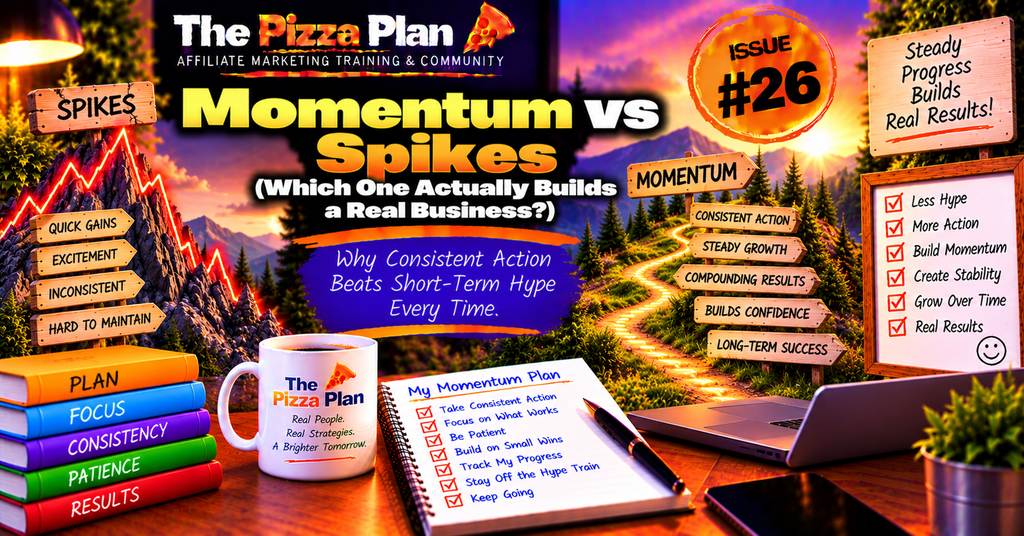
  • Issue #26 Why Traffic Momentum Matters More Than Traffic Spikes

    We’ve all been there.

    You check your traffic statistics and suddenly notice a big jump.

    Maybe one of your blog posts received extra attention. Maybe a traffic exchange delivered a wave of visitors. Or perhaps something you shared on social media got more clicks than usual.

    Exciting, right?

    Of course it is!

    But then you check your statistics the next day.

    And everything is back to normal.

    That big traffic spike disappeared almost as quickly as it arrived.

    It’s easy to feel disappointed when that happens. But here’s something I’ve been learning about building an affiliate marketing business:

    A temporary increase in traffic isn’t nearly as valuable as building momentum that lasts.

    Let’s talk about why.


    The Problem With Chasing Traffic Spikes

    Traffic spikes aren’t necessarily bad.

    They can introduce new people to your content, generate subscribers, and sometimes even produce commissions.

    The problem starts when we depend on them.

    Think about how some affiliate marketers approach traffic.

    They spend one day promoting their links everywhere they can.

    They get a burst of visitors.

    Then they stop promoting because they’re busy working on something else.

    A few days later, traffic drops.

    So they scramble to find another way to generate visitors.

    Sound familiar?

    This creates a frustrating cycle:

    Promote → Traffic Spike → Traffic Drops → Start Over

    You’re constantly working to replace the traffic you just lost.

    And that can become exhausting.

    What Building Momentum Looks Like

    Momentum works a little differently.

    Instead of focusing only on how many visitors you can attract today, you start asking:

    What can I do today that will make my marketing a little stronger tomorrow?

    For example:

    • Publishing one helpful blog post every week
    • Building an email list that you can continue communicating with
    • Sharing useful content consistently
    • Improving an existing landing page
    • Creating Pinterest pins that point to evergreen articles
    • Tracking which traffic sources produce engaged visitors

    None of these activities guarantees immediate results.

    And that’s an important point.

    You might not see a dramatic difference after one week.

    But over time, these activities can work together.

    Your blog grows into a collection of helpful resources.

    Your email list gives you a way to reconnect with interested visitors.

    Your tracking data helps you make better decisions.

    And your marketing becomes less dependent on what happens during any single day.

    That’s the kind of momentum worth building.


    Not All Traffic Is Equal

    Here’s another thing to remember.

    A thousand visitors who have no interest in what you’re offering may be worth less to your business than fifty visitors who genuinely need your help.

    Imagine two situations.

    Scenario A: The Traffic Spike

    You receive 1,000 visitors from a traffic promotion.

    Most leave within seconds.

    A few click your links, but nobody joins your email list.

    The next day, that traffic disappears.

    Scenario B: Steady Momentum

    You receive just 50 visitors from a helpful blog post.

    Five subscribe to your email list.

    A few return later to read another article.

    Some eventually explore a product you’ve recommended.

    Which situation would you rather build on?

    The second one gives you opportunities to develop relationships and learn what your audience wants.

    Of course, those subscribers aren’t guaranteed to become customers.

    But you’ve created a way to continue the conversation.

    And that’s something a traffic spike alone doesn’t necessarily provide.

    Turn Temporary Traffic Into Something Lasting

    Here’s where things get interesting.

    You don’t have to choose between traffic spikes and momentum.

    You can actually use one to help create the other.

    Let’s say you’re using safelists, traffic exchanges, or another low-cost traffic source.

    Instead of sending every visitor directly to an affiliate offer, consider directing interested visitors to a simple lead capture page that offers something useful.

    That could be:

    • A beginner’s guide
    • A helpful checklist
    • A short email course
    • A free ebook
    • A resource that addresses a specific problem

    When someone decides to subscribe, you’ve created an opportunity to help them beyond that first visit.

    Now your traffic campaign isn’t just about generating clicks.

    It’s also about building an audience you can serve over time.

    Just remember that different traffic sources attract different levels of interest. Test your results rather than assuming every source will produce quality subscribers.


    Three Simple Ways to Build Momentum on a Budget

    You don’t need expensive tools or a complicated marketing system.

    In fact, keeping things simple can make consistency much easier.

    1. Focus on One Traffic Strategy You Can Maintain

    It’s tempting to try every traffic method you hear about.

    But constantly switching strategies can make it difficult to learn what actually works.

    Choose one primary traffic method you can reasonably maintain.

    Maybe that’s blogging.

    Maybe it’s Pinterest.

    Maybe it’s a combination of email marketing and low-cost advertising.

    Give yourself enough time to collect meaningful information before deciding whether to continue, improve, or change direction.

    You can experiment with other traffic sources without abandoning your main strategy every week.

    2. Create Content That Keeps Helping People

    A social media post might disappear from someone’s feed within hours.

    But a useful blog article can remain available for months or years.

    That doesn’t mean every article will attract search traffic.

    It means you’re creating something that has the potential to keep providing value after you publish it.

    For example, a beginner-friendly article explaining how to track affiliate links could remain useful long after its original publication date.

    You can also share that same article through Pinterest, email, or other appropriate platforms.

    One useful piece of content can support multiple marketing activities.

    That’s a much better use of your time than constantly starting from scratch.

    3. Track Progress Beyond Visitor Counts

    Traffic statistics are useful, but they’re only part of the story.

    You should also pay attention to things like:

    • How many visitors click your important links
    • How many people subscribe to your email list
    • Which articles attract engaged readers
    • Which emails generate interest
    • Which traffic sources produce meaningful actions
    • Whether your marketing costs are justified by the results

    You don’t need complicated reporting software to begin.

    A simple spreadsheet can help you identify patterns.

    The goal isn’t to obsess over every number.

    It’s to understand whether your efforts are moving your business in the right direction.


    A Small Example of Momentum in Action

    Let’s imagine you decide to publish one useful blog article every week.

    During the first month, you publish four articles.

    Traffic is modest.

    You share the articles with your email subscribers and create a few Pinterest pins.

    Nothing dramatic happens.

    In the second month, you publish four more articles.

    You begin linking related articles together, giving readers an easy way to explore additional topics.

    You also notice that one article generates more email sign-ups than the others.

    So you spend a little time improving its call to action.

    By the third month, you’ve created twelve useful articles.

    Some may attract very few visitors.

    Others may begin bringing in consistent clicks.

    You now have more content to share, more information about your audience, and a growing collection of resources.

    Are you guaranteed to make sales?

    No.

    But you’re building something you can evaluate, improve, and potentially benefit from over time.

    That’s very different from repeating the same one-day traffic promotion without learning anything from the results.

    Don’t Confuse Slow Progress With No Progress

    This might be the hardest part of building momentum.

    Sometimes you’re doing the right activities, but the results aren’t showing up as quickly as you’d hoped.

    That doesn’t mean you should blindly continue something that isn’t working.

    It means you need to separate slow but measurable progress from simply repeating ineffective activities.

    Ask yourself:

    • Am I learning more about what my audience needs?
    • Is my content becoming more helpful?
    • Are my tracking results showing any improvements?
    • Am I building assets I can continue using?
    • Is there something specific I should change based on the evidence?

    Momentum isn’t about doing the same thing forever.

    It’s about making consistent efforts, learning from the results, and improving as you go.


    This Week’s Action Step

    Here’s a simple challenge.

    Choose one activity that can help your affiliate business grow over time.

    It might be writing a blog post, improving a lead capture page, creating a Pinterest pin, or sending a helpful email to your subscribers.

    Then ask yourself:

    How can I make this activity part of a routine I can realistically maintain?

    Start small.

    You don’t need to spend hours every day.

    Even a few focused minutes can help you build a habit that supports your bigger goals.

    Track what happens.

    Make adjustments.

    And keep improving.

    Final Thoughts

    Traffic spikes can be exciting.

    There’s nothing wrong with celebrating a successful promotion or a sudden increase in visitors.

    But don’t let those temporary numbers become your only definition of progress.

    A sustainable affiliate marketing business needs more than occasional bursts of attention.

    It needs useful content, relevant traffic, trustworthy recommendations, and a way to build relationships with interested people.

    Those things take time.

    And that’s okay.

    You don’t need every day to be a record-breaking day. You need enough consistent, useful actions to move your business forward.

    Keep building.

    Keep learning.

    And remember that long-term success is usually the result of many small improvements working together.